
 address:
00-927 Warszawa, ul. Krakowskie Przedmieście 26/28, Szkoła Główna, tel. +48 22 55 22 814, room 3.14
e-mail:
egea@uw.edu.pl
chair:
Dr. hab. Agata Ulanowska, prof. ucz.
staff:
Dr. Stephanie Aulsebrook
Dr. Sylviane Déderix
Dr. hab. Aleksander Dzbyński
Prof. dr hab. Kazimierz Lewartowski
Dr. Kinga Winnicka
Dr. Katarzyna Żebrowska
Dr. Marta Żuchowska
Dr. Zahra Kouzehgari – Marie Skłodowska-Curie Action fellow
doctoral students:
Monika Kaczmarek, MA
Dimitrios Karatzanis, MA
Kelly Macquire, MA
about the Department:
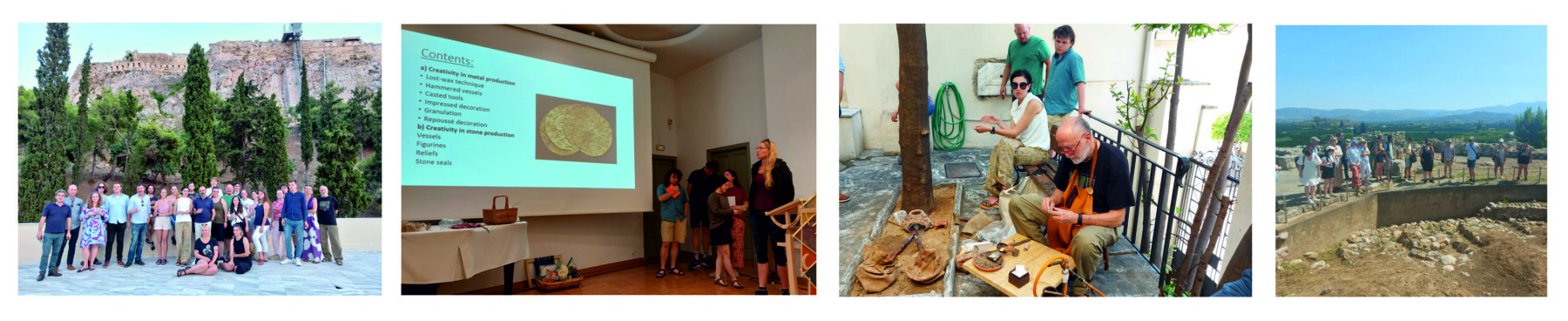
The research of the Department involves the archaeology of Bronze Age Greece, in its broadest sense, and textile archaeology, specifically textile production in Greece, the Eastern Mediterranean and Sicily, as well as cognitive and experimental archaeology.
The Department’s programme of studies reflect the research interests of its staff and doctoral students. We offer courses, seminars and specialised lecture series on Greek, textile and cognitive archaeology in Polish and English. One of our most innovative contributions to the teaching of the WA UW is a course in textile archaeology with elements of hands-on teaching. The Department occasionally organises student trips to Crete and the Mainland that offer participants an introduction to the archaeology of Greece via direct contact with archaeological sites and landscapes, as well as with Greek modern history, traditions and customs.
Fieldwork:
 |
Ancient Skopelos Survey (ASkoS), 2024-2028, AskoS aims to fill a gap in knowledge and improve our understanding of the 3rd and 2nd millennia BCE Northern Sporades by focusing on one of the largest but insufficiently explored islands – Skopelos. The ASkoS project is a collaborative effort (synergasia) with the Ephorate of Antiquities of Magnesia of the Hellenic Ministry of Culture and, under the auspices and research permit of the Polish Archaeological Institute at Athens (PAIA), the Universities of Warsaw, the Charles University in Prague, and Heidelberg. |
Conferences and Publications: The Department organises a series of international Aegean conferences titled ‘Sympozjum Egejskie’, targeted at early career researchers. Since 2017, it has been publishing the peer-reviewed series ‘Sympozjum Egejskie. Papers in Aegean Archaeology‘ (please contact us for copies of the previous volumes).

We are pleased to announce the latest iteration in this conference series: Sympozjum Egejskie: 10th Conference in Aegean Archaeology – more information, including the programme, is available here.
grants:
Stephanie Aulsebrook
2019 – 2022 Forging Society at Late Bronze Age Mycenae: the Relationships between People and Metals.
Research project at the Faculty of Archaeology UW, financed by the programme SONATA 14 of the National Science Centre in Poland (UMO-2018/31/D/HS3/02231, 736,310 PLN)
Agata Ulanowska
|
Ancient Skopelos Survey (ASkoS), 2024-2028, AskoS aims to fill a gap in knowledge and improve our understanding of the 3rd and 2nd millennia BCE Northern Sporades by focusing on one of the largest but insufficiently explored islands – Skopelos. The ASkoS project is a collaborative effort (synergasia) with the Ephorate of Antiquities of Magnesia of the Hellenic Ministry of Culture and, under the auspices and research permit of the Polish Archaeological Institute at Athens (PAIA), the Universities of Warsaw, the Charles University in Prague, and Heidelberg. |
 |
Exploring Textile Imprints on Clay from the 3rd and the 2nd Millennia BCE: Advancing Cutting-Edge Research and Documentation Protocols with Case Studies of Diverse Tex-tile Consumption Contexts (ExplorTIC), 2024-2027, SONATA BIS 13 of the National Science Centre in Poland (UMO-2023/50/E/HS3/00094, awarded funding: 1 935 400 PLN) |
 |
TEXTile digitisAtIon tooLs and mEthodS for cultural heritage (TEXTaiLES), 2024-2027, HORIZON REA, HORIZON-CL2-2023-HERITAGE-ECCCH-01 (ID 01101158328, awarded funding [total]: 3 626 617 EUR). |
 |
EuroWeb. Europe Europe Through Textiles: Network for an integrated and interdisciplinary Humanities, 2020-2024, Horizon 2020 Framework Programme, COST Action (CA 19131, awarded funding: 645 956 EUR). |
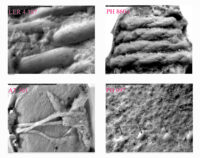 |
Textiles and Seals. Relations between textile production and seals and sealing practices in Bronze Age Greece, 2018–2021, SONATA 13 of the National Science Centre in Poland to the Institute of Archaeology, University of Warsaw (UMO-2017/26/D/HS3/00145, awarded funding: 637 052 PLN). |
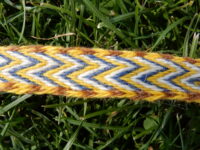 |
Produkcja włókiennicza w Grecji epoki brązu – badania porównawcze egejskich technik tkackich, 2015–2017, FUGA 4, Post-doctoral internship of the National Science Centre in Poland to the Institute of Archaeology and Ethnology, Polish Academy of Sciences, Centre for Research on Ancient Technologies in Łódź (UMO-2015/16/S/HS3/00085, awarded funding: 300 000 PLN). |
Katarzyna Żebrowska
2017-2019 “Sicilian Textile Tools from the Bronze Age: Examination of Finds and Comparative Studies on Their Functionality”
Research project (ref. nr 2016/21/N/HS3/02926) financed by PRELUDIUM 11 program of the National Science Centre, Poland.
Research in Greece – The Polish Archaeological Institute at Athens
former employees:
Dr Małgorzata Siennicka, now University of Göttingen, ORCID ID: https://orcid.org/0000-0002-1974-809X