 Organisers: Agata Ulanowska, Monika Kaczmarek, Kinga Winnicka, Katarzyna Żebrowska (Faculty of Archaeology, University of Warsaw), Magdalena Przymorska-Sztuczka (Archaeological Museum in Biskupin), Gerasimoula Ioanna Nikolovieni (Joukowsky Institute for Archaeology and the Ancient World, Brown University)
Session format: in-person
Session language: English
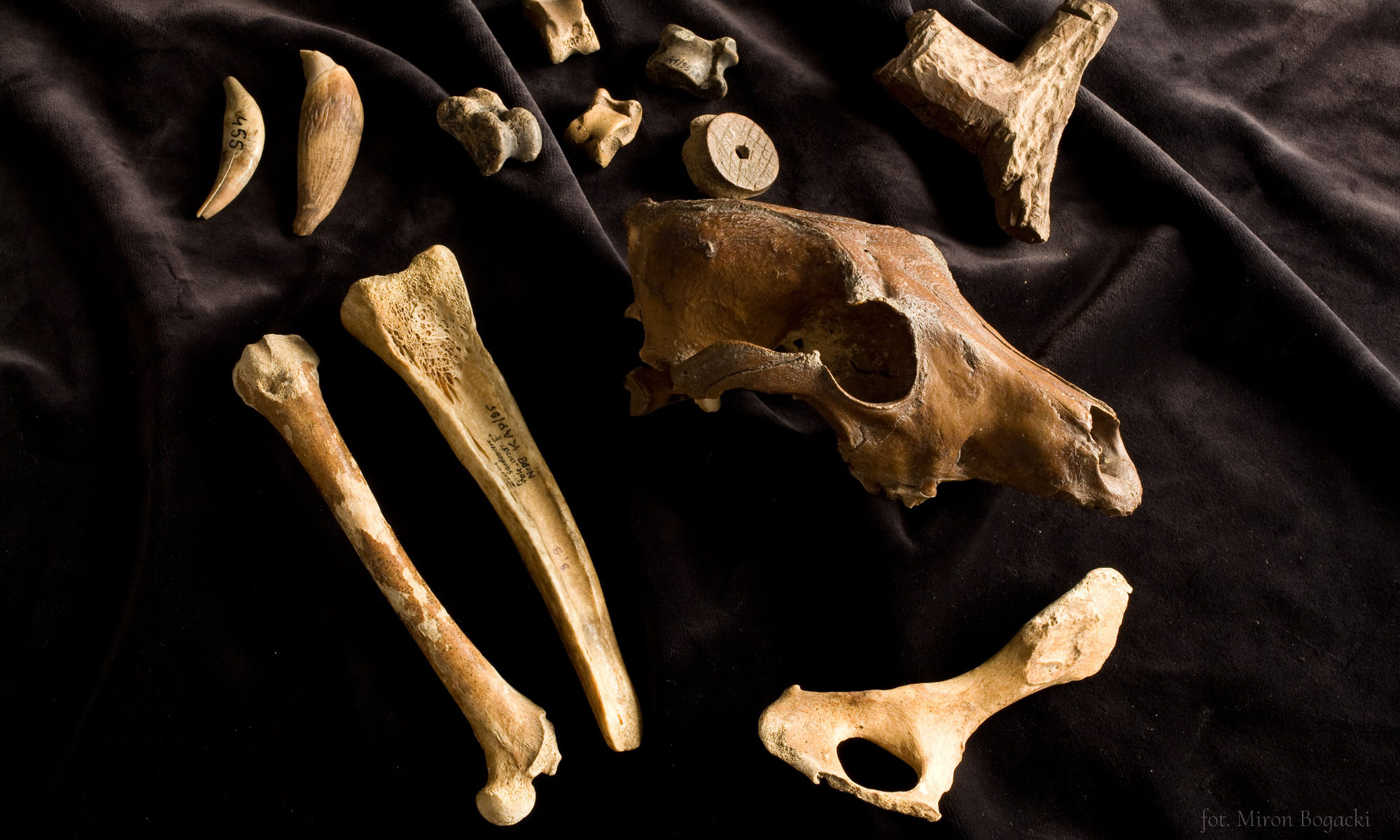
Textile tools, specifically clay spindle whorls and loom weights, frequently comprise the basic, albeit indirect, evidence for textile production in past societies. Over the last 20 years, notable progress in textile tools studies has made them not only informative about the qualities of textiles produced using them, but also brought them into the mainstream of archaeological artefacts, which has led to their publication in more comprehensive and comparative ways. However, both spindle whorls and loom weights are only parts of more complex implements and sets, such as spindles and distaffs, and always many tools were required to produce a textile. Textile tools kits included a series of different instruments, either personal or communal, including, e.g. spinning bowls, dyeing implements, carders, combs, metal scissors, metal and bone needles designed for different purposes, pins, hooks, shuttles, weft beaters, so called pin-beaters, various loom-types, and many more, several of which served multifunctional roles. But textile tools kits are found only occasionally, and since tools were frequently dispersed, they are often published separately according to the material from which they were made, while some may still await proper recognition. In this session, we would like to focus on textile tool kits by asking questions about their contexts – domestic, ritual, funerary; their specific functions and purposes, and use-wear; the particular sets of tools that might constitute a kit; their materiality, including a broad range of materials and tool making techniques, and, finally, possible biographies of textile tool kits that made them such unique finds.
The session program is available here.
ABSTRACTS (alphabetically by author):
Miriam de Diego (L’Escola d’Art i Superior de Disseny Llotja, ESDAPC Higher School of Design and Visual Arts of Catalonia, Spain), Raquel Piqué (Autonomous University of Barcelona, Spain), Antoni Palomo (Autonomous University of Barcelona, Spain), Xavier Terradas (IMF-CSIC, Spain), Ignacio Clemente (IMF-CSIC, Spain)
Tools related to textile production at the Early Neolithic site of La Draga (Spain) (5300-4700 aC)
The early Neolithic waterlogged site of la Draga (Spain) (5300-4900 cal aC.) has yielded a diverse set of tools potentially related to textile production. Although no textile fragments have been preserved, the site provides evidence for knowledge of activities related to the acquisition and processing of fibers, as well as remains of rope fragments and basketry. Among the wooden tools linked to textile production related tasks are combs, spindles, and/or shuttles made of boxwood (Buxus sempervirens). All these instruments are similar to those used by modern and ancient communities during the spinning and weaving processes.
In adition to the wooden tools, the site has provided several bone tools, including eyed needles, awls, bone spindle whorls (for which there is ethnographic evidence) and possible tensioners and rope making devices, all of which may have played a role in textile production. In this presentation, the previously studied wood and bone instruments will be presented, with a particular focus on the results of the use-wear analyses to determine their potential role in textile processes.
Patrycja Godlewska (Institute of Archaeology, Nicolaus Copernicus University in Toruń, Poland)
Connections between Spinning, Weaving, and Aquatic Environments Based on Archaeological and Ethnographic Evidence: Symbolism or Pragmatism?
The use of water in flax processing appears primarily pragmatic, resulting from the compact structure of the fibres – water softened the raw material and facilitated subsequent stages of work. However, relationships between flax and aquatic environments may also be interpreted beyond utilitarian frameworks, particularly in the context of textile production practices. Based on data from prehistoric and early medieval archaeological sites in East-Central Europe, contexts can be identified in which textile tools and their assemblages were deposited in lakes, littoral zones, and wells, suggesting intentional practices. The dispersion of finds and their specific locations points toward non-utilitarian meanings behind these deposits.
Ethnographic sources from Western and Eastern Slavic regions document symbolic and occasionally magical associations between water and spinning and weaving. These are personified by the East Slavic figure of Mokosz, as well as by aquatic demons engaged in textile work within bathhouse spaces. The motif of the symbolic “loss” of needles and spindle whorls in wells was noted by Władimir Propp. The mill likewise functioned as a liminal space connecting water and land; its wheel moved in rotational motion analogous to that of the spindle whorl on the spindle. This paper presents selected archaeological examples of the deposition of textile tools and tool assemblages in aquatic environments and, in comparison with ethnographic data, proposes an interpretation of their functions, contexts, and “biographies”. It argues for understanding these practices within a broader symbolic framework linking water with spinning, weaving, and textile production.
Francisco B. Gomes (School of Arts and Humanities of the University of Lisbon, UNIARQ – Centre for Archaeology of the University of Lisbon, Portugal), Catarina Costeira (Integrated Researcher – Centre for Archaeology of the University of Lisbon, Portugal)
The Many and the Few: Making Sense of Pre- and Protohistoric Textile Tool Kits in Southern Iberia (2nd and 1st millennia BCE)
In recent years, our understanding of textile production during the Bronze and Iron Ages of Southern Iberia (roughly the 2nd and 1st millennia BCE) has progressed significantly. At the basis of this progress is the integrated study of textile tools, and their assessment as part of broader textile chaîne opératoires.
However, throughout these periods there are numerous incongruences in the available documentation which pose interpretive challenges and require careful reconceptualization. This presentation will start from the concept of what the basic “textile tool kit” should have been in this area throughout this period considering what we know of regional textile technologies at the time and discuss the significance of deviations from that expected “standard”.
These deviations can correspond to the lack of specific expected tools – as, for example, spindle whorls in Bronze Age contexts of Southwestern Iberia – or an imbalance between the number of tools – as in the overrepresentation of spindle whorls over loom weights throughout the Iron Age. In this contribution, we will explore the significance of these absences/ imbalances beyond the conventional explanations based on the use of tools in perishable materials.
On the opposite side of the spectrum, these deviations can feature the inclusion of rare and uncommon tools detected in some Iron Age contexts, such as spools, weaving tablets, potentially distaffs, as well as shears and combs. Here we will consider the social and cultural significance of these “rare” tools, and their overall impact in the overall textile technologies and economies of this period.
Monika Kaczmarek (Faculty of Archaeology, University of Warsaw, Poland)
Late Neolithic Textile Tool Kits from the Western Polish Lowlands: Problems of Identification and Interpretation
Textile tools such as spindle whorls, loom weights, and spools are rare finds at Neolithic sites in the western part of the Polish Lowlands. Most are single clay artefacts, and there is no evidence that textile tools were deposited in graves. Consequently, complete sets of textile tools have not been identified at the majority of sites. Rather than treating this absence as a straightforward reflection of past practices, this paper approaches it as a problem of archaeological visibility and interpretation.
The paper examines how the material record of Late Neolithic (ca. 3000–2200 BCE) textile production is constituted, classified, and interpreted. Drawing on data from selected sites, it interrogates the low frequency of textile tools not simply as an empirical fact but as a state of artifact preservation, research traditions, and analytical frameworks. Is the limited number of identified tools the result of the use of perishable materials, or does it point to regionally specific modes of fibre processing and textile production? To what extent do ethnographic analogies structure archaeological reasoning and shape what is recognised as evidence of textile-related activity? Furthermore, how does the dominant practice of analysing artefacts primarily according to raw material limit the identification of function and technological context?
By reframing the issue from one of absence to one of interpretative practice, the paper proposes a methodological approach that foregrounds contextual analysis, chaîne opératoire perspectives, and the integration of indirect evidence. In doing so, it seeks to contribute to broader discussions on craft production, materiality, and the limits of inference in textile archaeology.
Julia Fileš Kramberger (Department of Archaeology, Faculty of Humanities and Social Sciences, University of Zagreb, Croatia), Karina Grömer (Natural History Museum, Vienna, Austria)
Greetings from the Eastern Hallstatt area – common and strange textile tools in use
Textile tools such as spindle whorls and loom-weights are ubiquitous objects in Early Iron Age settlement contexts and are direct evidence of textile manufacture on a given site. Nevertheless, groups of such objects in settlements imply either specialised workshops or places dedicated to textile production within a household. On the other hand, combinations of textile related finds in graves might indicate specialized “kits”, which might have belonged to the deceased (women), and were their personal tool-sets used during life or served as markers of their layered and interconnected identity and textile craftsmanship.
Diverse combinations of such tools and tool-sets are known throughout the Eastern Hallstatt area, so this paper will present recent findings of textile tool sets from Central Europe (Austria, Hungary and Croatia). Especially interesting are such sets and in-situ textile tools found in closed contexts within settlements in relation to burial contexts within the same sites, which offers the opportunity of researching the functional and symbolic dimension of potential sumptuous grave goods. Additionally, some new insights on T-shaped tools resembling pintaderas, found throughout the mentioned area, might open up new questions and speculations related to the textile chaîne opératoire in European prehistory.
Finally, this perspective and research area will further be broadened to finds from North-Eastern Balkans, showing examples of textile production tool kits from mostly elite, female burial contexts outside the borders of the Hallstatt world.
Giulia Muti (Institute of Archaeological Sciences, University of Bern, Switzerland)
Counting whorls, counting hands? Reframing spindle whorl assemblages in Bronze Age Cyprus
Spindle whorls are ubiquitous finds at Bronze Age (BA) sites in Cyprus. They vary in size, shape, material, and often display rich decoration. These artefacts appear in diverse contexts, from domestic spaces to productive areas and burials, frequently occurring in concentrations. Clustering has been interpreted as evidence for spinning ‘sets’ or ‘kits’, defined through spatial grouping, functional homogeneity or variability, or formal similarities such as shared decorative schemes. Larger whorl concentrations have also been linked to increased thread production and to the emergence of “super-household” organisation. However, the definition of a set remains variable in the literature and often overlooks the human dimension of spinning, including the time required to produce sufficient thread for weaving, and the intermittent and portable nature of the activity. Additionally, the intensification in whorl occurrence and clustering corresponds to another broader trend: the general increase in their size during the late Early and Middle BA. Whether these changes are functional, dependent on manufacture, or reflect broader socio-economic choices remains open.
This paper addresses these issues through a longue durée analysis of Cypriot spindle whorls, from their first appearance on the island to the Late BA, when average size declines again. Patterns of clustering will be interpreted by examining contextual associations and functional differences across a large sample. Attention is also given to their relationships with other textile tools, evaluating whether these associations indicate coherent tool sets for specific textile activities. Ultimately, this study uses spindle whorls to reflect on concentrations of textile tools and contribute to broader methodological discussions in textile archaeology regarding productive landscapes and their organisation.
Magdalena Przymorska-Sztuczka (Archaeological Museum in Biskupin, Poland)
Textile Toolkits in Funerary Contexts of the Wielbark Culture
This paper examines textile toolkits from Wielbark culture graves dating from the 1st to 4th centuries AD. Although these tools are usually associated with settlement and domestic work, items like spindle whorls, distaffs, needles, and shears also appear in burials. Their deposition raises questions regarding gender, identity, and symbolic practices.
Using excavation reports from selected cemeteries in present-day northern Poland, this study analyses the typology, material composition, spatial placement, and frequency of textile implements in both inhumation and cremation burials. Special attention is given to their association with other grave goods, such as dress accessories, personal ornaments, and imported Roman items. The analysis assesses whether textile tools primarily served as indicators of gender roles, markers of social status, or symbolic references to household production and continuity. The Wielbark funerary rite is characterised by a general avoidance of weapon deposits, in contrast to contemporary Przeworsk traditions. In this context, textile equipment may have played a distinctive role in expressing identity, particularly in female burials. However, examples from ambiguous or richly furnished graves complicate a strictly gendered interpretation.
By situating textile toolkits within broader discussions of craft production, embodiment, and mortuary display, this paper contends that these artefacts functioned not only as reflections of everyday labour but also as meaningful symbols embedded in the social and cosmological order of Wielbark communities.
Agata Ulanowska (Faculty of Archaeology, University of Warsaw, Poland)
Beyond the Functionality: Minoan Textile Tools from the Site of Sissi on Crete, or How to Approach Dispersed, Varied, yet Numerous Evidence
Spindle whorls, loom weights, and spools from Bronze Age Greece have been the focus of intensive research for more than two decades, both at site-specific and regional, culture-specific levels. These tools constitute the most frequently preserved evidence for textile production in the Aegean contexts, but they always served as parts of more complex implements, such as spindles and looms, which in turn were elements of even more complex tool kits. However, spindle whorls, loom weights and spools themselves provide important insights into production, and specifically into its organisation and scale, as well as the quality of the final products, such as threads and woven textiles.
In this paper, I would like to discuss the assemblage of spindle whorls, loom weights, and spools from the important Minoan site of Sissi on Crete, which I have been studying since 2021, continuing the research of the late Joanne Cutler. This assemblage comprises c. 700 implements in total, with new tools being unearthed through the ongoing excavations, of which 429 tools have been so far examined. The aim of this paper is to present methodological concerns regarding how to approach such evidence – clearly abundant, yet incomplete – with many dispersed, single tools from fill contexts, and only a few potential loom sets, but never entire tool kits. It also addresses the meaning of use-wear marks, as well as the challenge of creating functional typologies, resulting from a Sissi-specific preference for functionally different forms belonging to one general type.
Selena Vitezović, Ivan Vranić (Institute of Archaeology, Belgrade, Serbia)
Textile tools from the Late Iron Age site of Kale – Krševica (southern Serbia)
The site of Kale – Krševica is situated in southern Serbia in vicinity of the modern town of Vranje, with archaeological remains dating from the late 5th till the first half of the 3rd century BCE. Kale – Krševica was a specific settlement site, with peculiar material remains, including portable findings with Greek-like characteristics and structures built in accordance with Late Classical and Early Hellenistic period Greek architectural technology. The site yielded rich and diverse portable finds, that suggest strong trade and exchange with neighbouring regions, as well as significant production of craft goods from diverse raw materials, including perishable materials. One of the particularly important craft activities was textile production. Although the traces of textile were not recovered, diverse tools from clay, bone and metal were found, used in different stages of textile production. These items were usually analysed separately, along with other finds from the same material, and here we will attempt to present the entire tool kit for textile production. We will also discuss the overall organisation and importance of textile production at Krševica, as well as the questions regarding local traditions and Aegean influences.
Kinga Winnicka (Faculty of Archaeology, University of Warsaw, Poland)
Missing tools – missing textiles? The case of the Mierzanowice culture (Early Bronze Age)
An examination of the material culture of the epi-Corded Ware (ECW) horizon, to which the Mierzanowice culture belongs, shows that there are no explicit traces of textile production: no workshops, no specialised tools, no loom weights, and only a handful of possible spindle whorls across the horizon. What we do have are decorative cord impressions on pottery from funerary contexts, which demonstrate the production of cordage – either by spinning or by splicing fibres to create thread, and subsequently plying those threads into cords. If spinning tools or tool kits (such as spindles, spindle whorls, and distaffs) were used, they must have been made from perishable materials and therefore did not survive archaeologically.
What is also present in funerary assemblages are worked bone objects. Mierzanowice culture bone inventories are dominated by ornaments and pointed implements – I argue that the latter may represent the only surviving textile tools of the entire horizon. ECW communities had limited craft specialisation, and cross-crafting was likely – plant-fibre work (continuing earlier bast-fibre traditions) and hide- or leather-working could have been carried out with the same pointed implements, resulting in multifunctional tool kits deposited in graves. In this context, any textile interpretation must be grounded in use-wear rather than typology alone. The pointed objects analysed here exhibit characteristic use-wear patterns (tip rounding, striations and polish) consistent with repeated contact with soft materials and actions such as piercing, pushing, separating threads, and tensioning. These traces offer the most compelling evidence for otherwise invisible textile practices.




 Organisers:
 Organisers:
  Organiser:
  Organisers:
 Organisers:
  Organiser:
  Organisers:
  Organisers:
