The conference website has been updated with new recordings on youtube:
https://www.archeologia.uw.edu.pl/konferencja-przeszlosc-ma-przyszlosc-the-past-has-a-future-2021/
https://www.youtube.com/channel/UCdHizOCUI1nz1KndZuvLLzg

All Astern! …because the past has a future!
The conference website has been updated with new recordings on youtube:
https://www.archeologia.uw.edu.pl/konferencja-przeszlosc-ma-przyszlosc-the-past-has-a-future-2021/
https://www.youtube.com/channel/UCdHizOCUI1nz1KndZuvLLzg
 address:
00-927 Warszawa, ul. Krakowskie Przedmieście 26/28, Szkoła Główna, tel. +48 22 55 22 814, room 3.14
e-mail:
egea@uw.edu.pl
chair:
Dr. hab. Agata Ulanowska, prof. ucz.
staff:
Dr. Stephanie Aulsebrook
Dr. hab. Aleksander Dzbyński
Prof. dr hab. Kazimierz Lewartowski
Dr. Kinga Winnicka
Dr. Katarzyna Żebrowska
Dr. Marta Żuchowska
Dr. Sarah Finlayson – Stanisław Ulam programme grantee, NAWA
Dr. Sylviane Déderix – Stanisław Ulam programme grantee, NAWA
doctoral Students:
Monika Kaczmarek, MA
about the Department:
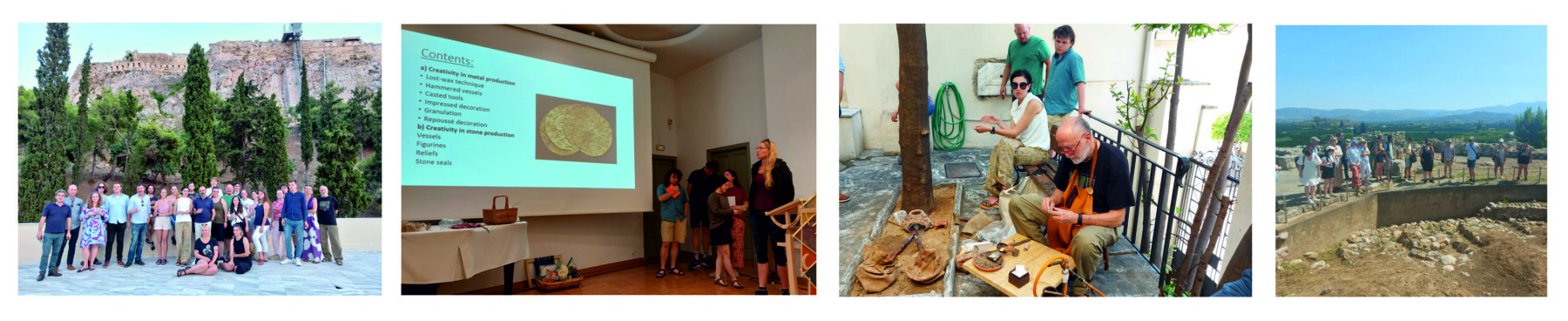
The research of the Department involves the archaeology of Bronze Age Greece, in its broadest sense, and textile archaeology, specifically textile production in Greece, the Eastern Mediterranean and Sicily, as well as cognitive and experimental archaeology.
The Department’s programme of studies reflect the research interests of its staff and doctoral students. We offer courses, seminars and specialised lecture series on Greek, textile and cognitive archaeology in Polish and English. One of our most innovative contributions to the teaching of the WA UW is a course in textile archaeology with elements of hands-on teaching. The Department occasionally organises student trips to Crete and the Mainland that offer participants an introduction to the archaeology of Greece via direct contact with archaeological sites and landscapes, as well as with Greek modern history, traditions and customs.
Fieldwork:
 |
Ancient Skopelos Survey (ASkoS), 2024-2028, AskoS aims to fill a gap in knowledge and improve our understanding of the 3rd and 2nd millennia BCE Northern Sporades by focusing on one of the largest but insufficiently explored islands – Skopelos. The ASkoS project is a collaborative effort (synergasia) with the Ephorate of Antiquities of Magnesia of the Hellenic Ministry of Culture and, under the auspices and research permit of the Polish Archaeological Institute at Athens (PAIA), the Universities of Warsaw, the Charles University in Prague, and Heidelberg. |
Conferences and Publications: The Department organises a series of international Aegean conferences titled ‘Sympozjum Egejskie’, targeted at early career researchers. Since 2017, it has been publishing the peer-reviewed series ‘Sympozjum Egejskie. Papers in Aegean Archaeology‘ (please contact us for copies of the previous volumes).

We are pleased to announce the latest iteration in this conference series: Sympozjum Egejskie: 10th Conference in Aegean Archaeology – more information, including the programme, is available here.
grants:
Stephanie Aulsebrook
2019 – 2022 Forging Society at Late Bronze Age Mycenae: the Relationships between People and Metals.
Research project at the Faculty of Archaeology UW, financed by the programme SONATA 14 of the National Science Centre in Poland (UMO-2018/31/D/HS3/02231, 736,310 PLN)
Agata Ulanowska
|
Ancient Skopelos Survey (ASkoS), 2024-2028, AskoS aims to fill a gap in knowledge and improve our understanding of the 3rd and 2nd millennia BCE Northern Sporades by focusing on one of the largest but insufficiently explored islands – Skopelos. The ASkoS project is a collaborative effort (synergasia) with the Ephorate of Antiquities of Magnesia of the Hellenic Ministry of Culture and, under the auspices and research permit of the Polish Archaeological Institute at Athens (PAIA), the Universities of Warsaw, the Charles University in Prague, and Heidelberg. |
 |
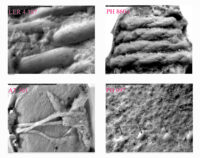
Exploring Textile Imprints on Clay from the 3rd and the 2nd Millennia BCE: Advancing Cutting-Edge Research and Documentation Protocols with Case Studies of Diverse Tex-tile Consumption Contexts (ExplorTIC), 2024-2027, SONATA BIS 13 of the National Science Centre in Poland (UMO-2023/50/E/HS3/00094, awarded funding: 1 935 400 PLN) |
 |
TEXTile digitisAtIon tooLs and mEthodS for cultural heritage (TEXTaiLES), 2024-2027, HORIZON REA, HORIZON-CL2-2023-HERITAGE-ECCCH-01 (ID 01101158328, awarded funding [total]: 3 626 617 EUR). |
 |
EuroWeb. Europe Europe Through Textiles: Network for an integrated and interdisciplinary Humanities, 2020-2024, Horizon 2020 Framework Programme, COST Action (CA 19131, awarded funding: 645 956 EUR). |
 |
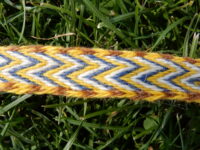
Textiles and Seals. Relations between textile production and seals and sealing practices in Bronze Age Greece, 2018–2021, SONATA 13 of the National Science Centre in Poland to the Institute of Archaeology, University of Warsaw (UMO-2017/26/D/HS3/00145, awarded funding: 637 052 PLN). |
 |
Produkcja włókiennicza w Grecji epoki brązu – badania porównawcze egejskich technik tkackich, 2015–2017, FUGA 4, Post-doctoral internship of the National Science Centre in Poland to the Institute of Archaeology and Ethnology, Polish Academy of Sciences, Centre for Research on Ancient Technologies in Łódź (UMO-2015/16/S/HS3/00085, awarded funding: 300 000 PLN). |
Katarzyna Żebrowska
2017-2019 “Sicilian Textile Tools from the Bronze Age: Examination of Finds and Comparative Studies on Their Functionality”
Research project (ref. nr 2016/21/N/HS3/02926) financed by PRELUDIUM 11 program of the National Science Centre, Poland.
Research in Greece – The Polish Archaeological Institute at Athens
former employees:
Dr Małgorzata Siennicka, now University of Göttingen, ORCID ID: https://orcid.org/0000-0002-1974-809X
Dr. Anna Zapolska
Department of Numismatics and Museology
e-mail:
ao.zapolska@uw.edu.pl
phone number:
+48 22 55 22 827
duty hours:
room 3.27
research interests:
Since 2007 is a researcher at the University of Warsaw. She completed a Ph.D. grant entitled “Finds of Roman coins from the West Balt’s culture circle”. She was engaged in several other projects led by Prof. Aleksander Bursche, i.e. “The Migration Period between the Oder and the Vistula”, “Finds of Roman coins from Poland” or “IMAGMA – Imagines Maiestatis. The barbarian coins, the elites and the birth of Europe” and “Silvers of Antiquity – the use of Roman coins in the Early Middle Ages and Modern Times”. Currently she is realising the project “Die Gräber mit den römischen Münzen aus dem Gräberfeld in ehem. Grebieten (Samland)“ supported by Zentrum für Baltische und Skandinavische Archäologie in Schleswig. Her interests focus on antique numismatic, coin finds, coin in archaeological contexts, late Roman and Early Byzantine solidi imitations, the coinage of Barbarian kingdoms established on the ruins of the Roman Empire. She is also interested in the contacts between the Barbarians and the Roman world especially during the late Roman period and the twilight of the Roman Empire.
Currently, she is working on the archaeological and archival materials from the cemetery of former Grebieten (Sambian Peninsula), which were re-found in the Museum für Vor- and Frühgeschichte in Berlin after the world war II.
bibliography:
Anna Zapolska.pdf
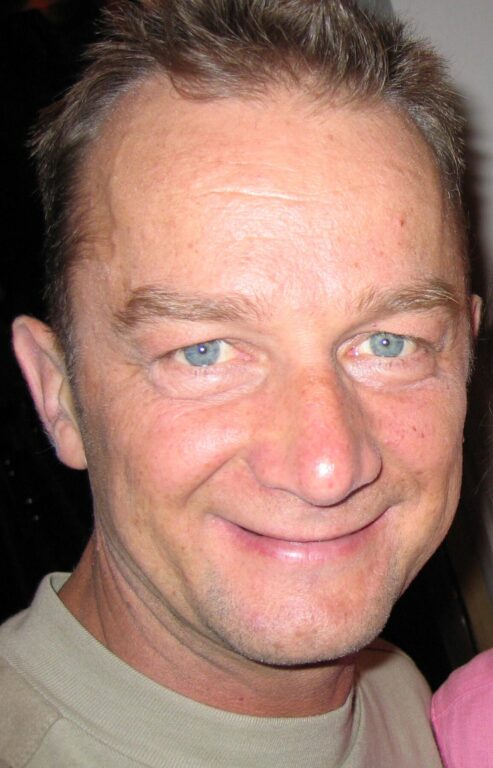
dr hab. Marek Tycjan Olszewski
Katedra Archeologii Klasycznej
(lived in the years 1962–2024)
research interests:
– Archeology of Hellenism (but also of classical Greece), Archeology of Rome and Roman Provinces, Early Christian Archeology; Archeology of Late Antiquity (III-VII century)
– I am interested in geographic areas covering the Hellenistic Monarchies, the Roman Republic and the Roman Empire as a whole
– I am particularly interested in monuments of visual arts: ancient mosaics, but also Hellenistic and Roman paintings, and monuments of funerary art in the context of the architecture of private constructions of the Hellenistic and Roman elites (houses, villas, seaside villas, tombs). I treat the artifacts of visual arts as a pretext for a broader understanding of the historical, social, economic, cultural and religious issues of Hellenistic, Roman and late antique societies
– I use several methods in my researches: interdisciplinary research method, microhistory, and the cognitive method
bibliography and C.V.:
PROFESSIONAL RESUME PROFILE – CV OLSZEWSKI
A DETAILED ACCOUNT OF MY EDUCATION, SKILLS AND WORK EXPERIENCE – CV OLSZEWSKI
PDF’ textes of publications:
Academia.edu
RECENT SCIENTIFIC DISCOVERIES:
1. Discovery of the exact date of the foundation of Pella / Apamea in Syria, one of the largest and most important urban centers in the Hellenistic and Roman period. Discovery and description of the hitherto unknown historical context of the circumstances of the foundation of Pella / Apamea in the early autumn of 320 BCE See author’s articles in French, English and Italian: https://www.academia.edu/38354542 ; https://www.academia.edu/34559128 ; https://www.academia.edu/39501634 ; see articles in the Polish media: https://www.academia.edu/40526115 ; https://naukawpolsce.pap.pl/aktualnosci/news,78036 ; https://www.uw.edu.pl/skradziona-mozaika-zrodlem-wiedzy-historycznej/?highlight=olszewski ; see articles in the English media: https://www.academia.edu/40536908 ; https://www.academia.edu/40593760 ; https://scienceinpoland.pap.pl/node/78097 ; https://archaeologynewsnetwork.blogspot.com/2019/08/photos-of-looted-mosaics-help-pinpoint.html ; see articles in the Greek media: http://www.tapantareinews.gr/2020/02/blog-post_567.html.
2. Identification of the unknown and first portraits of Alexander the Great’s successors: Antipater, Cassander, but also Apama and Archippos; see author’s articles in French, English and Italian: https://www.academia.edu/38354542 ; https://www.academia.edu/34559128 ; https://www.academia.edu/39501634 .
3. Identification of the oldest water wheel, so-called norii, in Roman iconography; the mosaic is from the first half of the 4th century AD; see author’s article in French: https://www.academia.edu/38354542 ; see articles in the Polish media: https://naukawpolsce.pap.pl/aktualnosci/news,84916,polski-badacz-odkryl-wczesne-przedstawienie-mozaikowe-rzymskiego-kola ; https://www.academia.edu/44721187 ; https://www.uw.edu.pl/odkrycie-najstarszego-kola-wodnego-na-rzymskiej-mozaice-z-apamei/?highlight=olszewski ; in English: https://www.academia.edu/44901704 ; in the Turkish media: https://arkeofili.com/mozaikte-antik-roma-su-carkinin-en-eski-temsili-bulundu/ ; https://arkeonews.com/interpol-tarafindan-aranan-mozaik-yasadisi-satis-icin-cevrimici-yayinlandi/ .
4. Discovery of an important historical fact that the founder of Pella / Apamea was not a legendary figure, as previously thought, but a historical figure, namely the former archon eponymus of Athens – Archippus, who held his office from 321 to 320 BC; see the conference announcement from Vienna of the author’s article in English: https://www.academia.edu/44690524.
5. Discovery and explanation of the narrative and complex iconological program of five mythological and allegorical tales in the House of Aion in Cyprus. The mosaic is an anti-Christian polemic and for this purpose it uses numerous rhetorical figures. Most likely it adorned one of the rooms rented by the Neoplatonic society; see author’s articles in English: https://www.academia.edu/5403368 in French: https://www.academia.edu/43058571 ; see articles in the Polish media: https://www.uw.edu.pl/rozwiazanie-zagadki-rzymskiej-mozaiki-z-pafos/?highlight=olszewski ; https://naukawpolsce.pap.pl/aktualnosci/news,83915 ; https://archeologia.com.pl/starozytna-mozaika-z-pafos-byla-krytyka-chrzescijanstwa/ ; in English: https://scienceinpoland.pap.pl/node/84026 ; https://www.express.co.uk/news/science/1339647 ; https://en.mogaznews.com/collection/1583263 ; in the French media: http://decouvertes-archeologiques.blogspot.com/2020/10/une-ancienne-mosaique-dans-une-maison.html ; in Italian: https://www.danielemancini-archeologia.it/studi-sul-mosaico-della-casa-di-aion-a-paphos-cipro/ ; in the German media: https://antikewelt.de/2020/09/28/kritik-am-christentum-in-form-eines-mosaiks/ .
6. Discovery of eight unknown sundials on Roman mosaics. These new identifications contributed to the completion of the catalog of sundial representations on mosaics to fifteen, as only seven were known previously; see author’s article in French: https://www.academia.edu/19421274; see articles in the Polish media: https://naukawpolsce.pap.pl/aktualnosci/news,79854 ; https://www.uw.edu.pl/nowe-odkrycia-zegarow-slonecznych-na-mozaikach-rzymskich/?highlight=olszewski ; in English: : https://www.archaeology.org/news/8303-191218-ancient-mosaic-sundials ; https://scienceinpoland.pap.pl/node/79958 ; https://en.uw.edu.pl/new-discoveries-of-sundials-on-roman-mosaics/ .
head of the Department:
Dr. Maciej Sobczyk
faculty:
Dr. Marta Żuchowska
associates:
Dr. Emilia Smagur
PhD Candidates:
mgr Katarzyna Czapska (promoter: dr hab. Anna Wodzińska, auxiliary promoter: Dr. Marta Żuchowska)
 address:
00-927 Warszawa, ul. Krakowskie Przedmieście 26/28, Szkoła Główna, room: 3.18, phone: 22 55 22 818
head of the department:
dr hab. Bartosz Kontny, prof. ucz.
staff:
Artur Brzóska, MA
Magdalena Nowakowska, MA
Dr. Michał Grabowski
associates:
Dr. Karolina Trusz
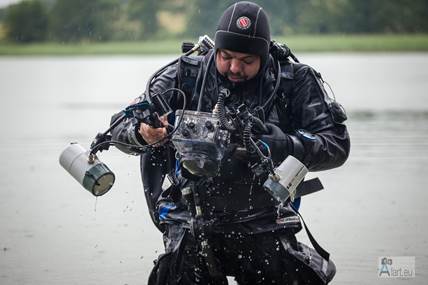
Information on research conducted by employees and associates of the Department for Underwater Archaeology (DUA), Faculty of Archaeology, UW:
The Department, since 2012, has been conducting research in two directions:
field research on various water reservoirs in Poland and abroad. For the most part, members of the Department are involved in underwater archaeology of lakes and rivers of the Polish Lowlands, where they research lake dwellings and conduct searches in rivers and lake beds.
Field research in Kuwait is carried out by Magdalena Nowakowska MA, Małgorzata Mileszczyk, MA, participated in underwater works in Guatemala, she also conducted underwater research on the river near Iganiami and deals with the identification of early Iron Age lake dwellings in Warmian-Masurian Voivodeship. Artur Brzóska, MA, together with Piotr Prejs, MA, conducts research in Ukraine, on the Vistula as part of the NID funding, and in Poland’s lakes and rivers. Karolina Trusz, MA, has been participating in underwater research in Turkey for several years, conducts underwater research in Ukraine and Romania, and deals with harbour facilities. DUA employees also participate in field research conducted by prof. Bartosz Kontny, among others in Bornholm (Denmark) and at the ritual site in the Lake Lubanowo in Poland.
The second direction of research is the work on archaeological material in Spanish museum deposits led by Professor Iwona Modrzewska-Pianetti. She deals with ancient trade and the reconstruction of trade routes. The research was conducted within the framework of a grant by the National Science Centre on the material culture of the Region of Murcia, specifically in Puerto de Mazarron, and is continued in cooperation with museums in the region.
Since 2014, the UW Institute of Archaeology, now the Faculty, is a member of the UNESCO UniTwin Network for Underwater Archaeology, represented by M. Nowakowska, MA, and K. Trusz, MA.
Since the establishment of the Department, Double Master students from the University of Catania, Sicily, have collaborated with Department and the Head. So far 14 Masters in Archaeology have been promoted with the title of Italian dottore as well. Their work is published in the Ad Rem journal affiliated by Department for Underwater Archaeology and Humanica Student Scientific Association supervised by Iwona Modrzewska-Pianetti. Student Scientific Association Hispania also cooperates with the Department, under the supervision of the writer. Prof. Bartosz Kontny is a tutor of the Underwater Archaeology Student Scientific Association at WA UW.
Dr Bartosz Kontny Prof. UW runs the scientific editorial board of “Archaeology: Just Add Water” “Światowit” Suppl. Series U, which publishes texts on underwater research presented as part of the Underwater Archaeology Forum of international scope, held in Warsaw. The next international forum is planned for 2021.
Prof. Bartosz Kontny runs the scientific editorial board of “Archaeology: Just Add Water” “Światowit” Suppl. Series U, which publishes texts on underwater research presented as part of the Warsaw Seminar on Underwater Archaeology of international range, held in Warsaw. The next Seminar is planned for 2021.
Radosław Karasiewicz-Szczypiorski, PhD, cooperating with DUA, organized postgraduate studies in underwater archaeology for divers, where lecturers were employees of the Department. From 2021, the supervisor of the postgraduate studies is Magdalena Nowakowska, MA. Details about the postgraduate program are available in the Postgraduate Studies – Underwater Archaeology tab.
On English-language studies at IA UW, now WA UW, lectures are conducted by M. Nowakowska, MA, M. Mileszczyk, MA, and until 2017 Karolina Trusz, M.A. Since 2020, English-language classes have also been taught by prof. Bartosz Kontny.
Museum classes are assisted by Karina Kowalska, MA, who honourably accepts student groups for classes at the Diving Museum in Warsaw, which she conducts.
At the WA UW classes in underwater archaeology are conducted by prof. Bartosz Kontny, prof. Iwona Modrzewska-Pianetti, Magdalena Nowakowska, MA, and Artur Brzóska, MA.
This is only a summary of the activities of DUA employees, which is decentralized but very diverse.
Iwona Modrzewska-Pianetti
24th February 2021
Grants:
prof. Iwona Modrzewska-Pianetti
grant HARMONIA program of the National Science Centre, Poland (2016-2019) Trade contacts of the Region of Murcia (Spain) with the Mediterranean world in antiquity based on archaeological and historical sources (2015/18/M/HS3/00248).
mgr Artur Brzóska
“Vistula monuments of Warsaw and the surrounding area. Recognition of underwater archaeological sites within AZP research” – financed by the Ministry of Culture and National Heritage under the program “Protection of archaeological monuments – Edition 2019”
mgr Małgorzata Mileszczyk
“Lake Grid Dwelling in Rybno, Piłakno Lake (Warmian-Masurian Voivodeship). New Ideas for Interpretation of the Lake Dwelling Phenomenon” (financed by PRELUDIUM program of the National Science Centre, Poland) 2018/29/N/HS3/02949), contractor mgr Magdalena Nowakowska.
grant “Excellent Science” Ministry of Science and Higher Education DNK/SN/464684/202 Małgorzata Mileszczyk, Magdalena Nowakowska, Joanna Staniszewska, Magdalena Sugalska, the Explorers Club: “4th Warsaw Seminar on Underwater Archaeology”
prof. Bartosz Kontny
– 2019 – ongoing – underwater survey in Bornholm, Denmark
– 2014 – ongoing – Lake Lubanowo – ritual place
mgr Artur Brzóska
– 2015 – ongoing – Research on the Vistula River in Warsaw and its vicinity in cooperation with the Association of Tomorrow’s Archaeologists (Stowarzyszeniem Archeologów Jutra) – wrecks and bridge crossings
– 2019 ongoing – Research on the lakes of the Augustów Plain in cooperation with the Augustów Land Museum and Association of Tomorrow’s Archaeologists (Stowarzyszeniem Archeologów Jutra) – wrecks of the Augustów Canal
mgr Magdalena Nowakowska
– 2013 – continuation, “Waterfront and Underwater Archaeology of Kuwait. Archeorisk on the Coastal Zone around Failaka Island, Kuwait”
– 2010 – continuation, Project “Island”, Leginy site IX municipality Reszel, Warmian-Masurian voivodeship
prof. dr hab. Jerzy Miziołek
room: 3.28
Michał Dąbski (retired)
e-mail: studiomd@op.pl
phone number: +48 22 55 22 828
Miron Bogacki
e-mail: miron.bogacki@uw.edu.pl
phone number: +48 22 55 22 828
room: 1.19, 1.20
Marek Truszkowski
e-mail: marektruszkowski@uw.edu.pl
phone number: +48 22 55 22 804
Ireneusz Nazaruk
e-mail: ireneusznazaruk@uw.edu.pl
phone number: +48 22 55 22 840
Direction:
Faculty of Archeology, 00-927 Warsaw, ul. Krakowskie Przedmieście 26/28, ‘Main School’
Employees:
dr hab. Paweł Szymański, prof. ucz.
Dr. Karolina Blusiewicz
Ireneusz Nazaruk, MA
address:
00-927 Warsaw, ul. Krakowskie Przedmieście 26/28, Szkoła Główna, tel. 22-55-22-816, room 3.16
employees:
Dr. Miron Bogacki
Wiesław Małkowski, MA
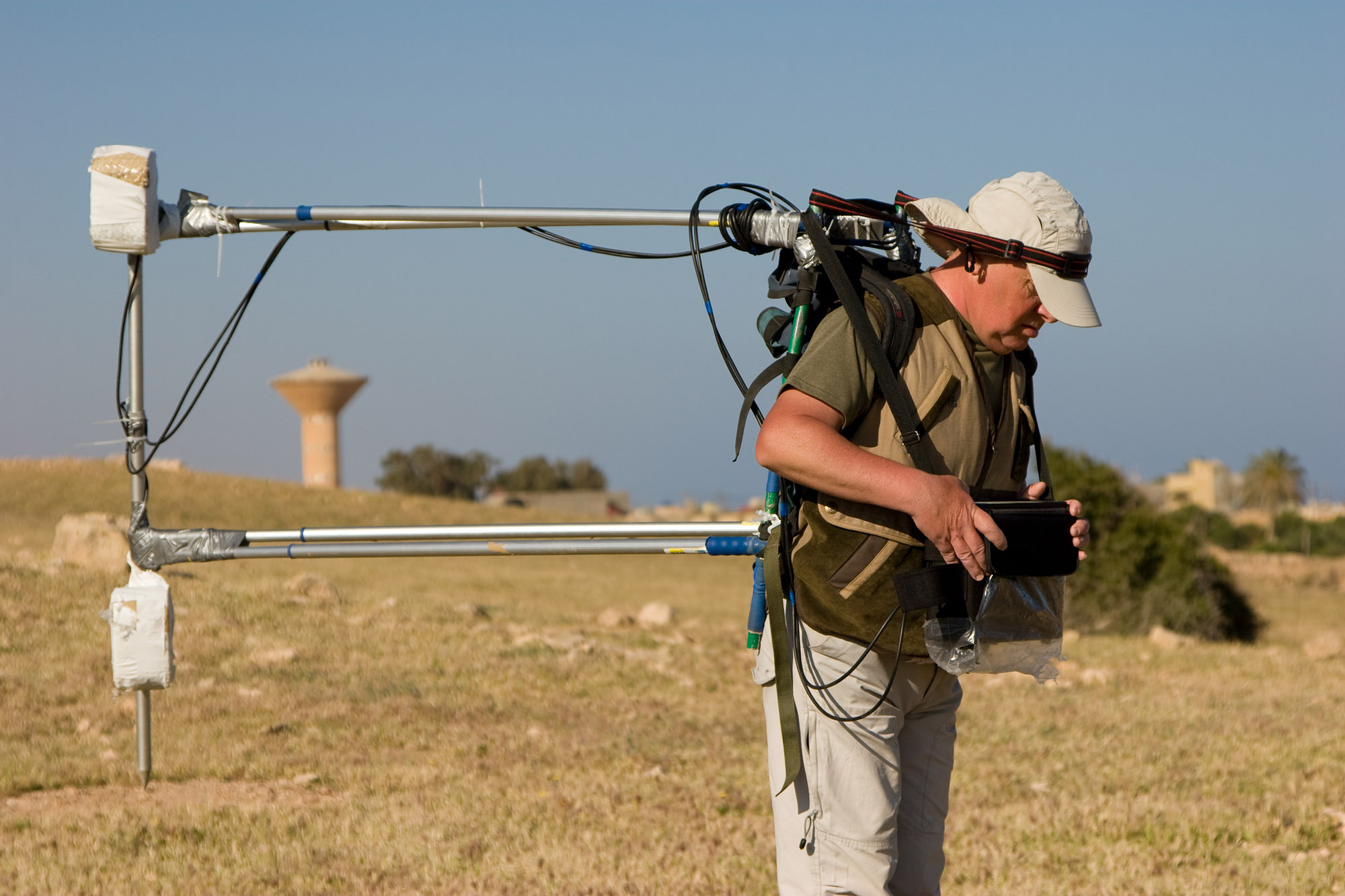
information
The Department conducts activities concerned with:
● geophysical methods applied to archaeology (geo-electric, magnetic and electromagnetic) ;
● integration of physical and geophysical methods for non-destructive analysis of archaeological sites and historical monuments;
in collaboration with the Department of hydrogeology and engineering geophysics the Faculty of Geology of the University of Warsaw
● integrated geophysical studies for geological, geotechnical, hydrogeological and environmental issues;
● acquisition and processing of seismic reflection and electro tomography data for archaeological purposes as well as for physical and mechanical characterization of materials;
● geophysical methods applied to non-invasive diagnosis of reinforced concrete structures;
● landslide study;
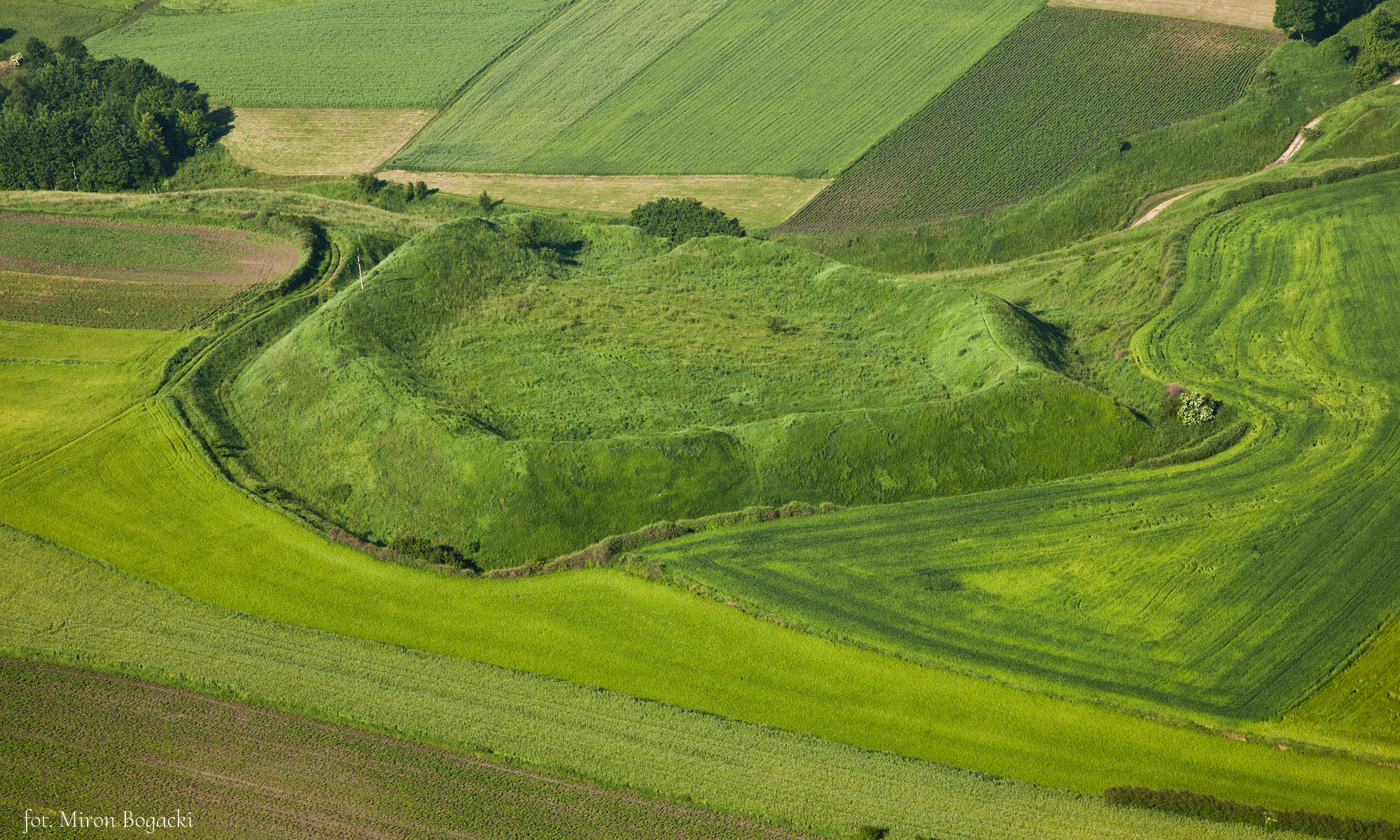
We conduct also studies related to airborne photography by means of drones, satellites or planes, Airborne Laser Scanning(ALS)and Light Detection and Ranging (LiDAR)with the purpose to take aerial prospection to another level by converting photographs into precise 3D terrain-mapping models with horizontal and vertical resolutions.