
Zapraszamy do udziału w 7. Konferencji Naukowej Wydziału Archeologii „Przeszłość ma przyszłość!/ The Past Has a Future!”, która odbędzie się w dniach 13–17 kwietnia 2026 r. na Wydziale Archeologii UW. Wzorem poprzednich lat konferencja została zaplanowana jako wydarzenie o zasięgu międzynarodowym i krajowym.
Książka abstraktów do pobrania tutaj.
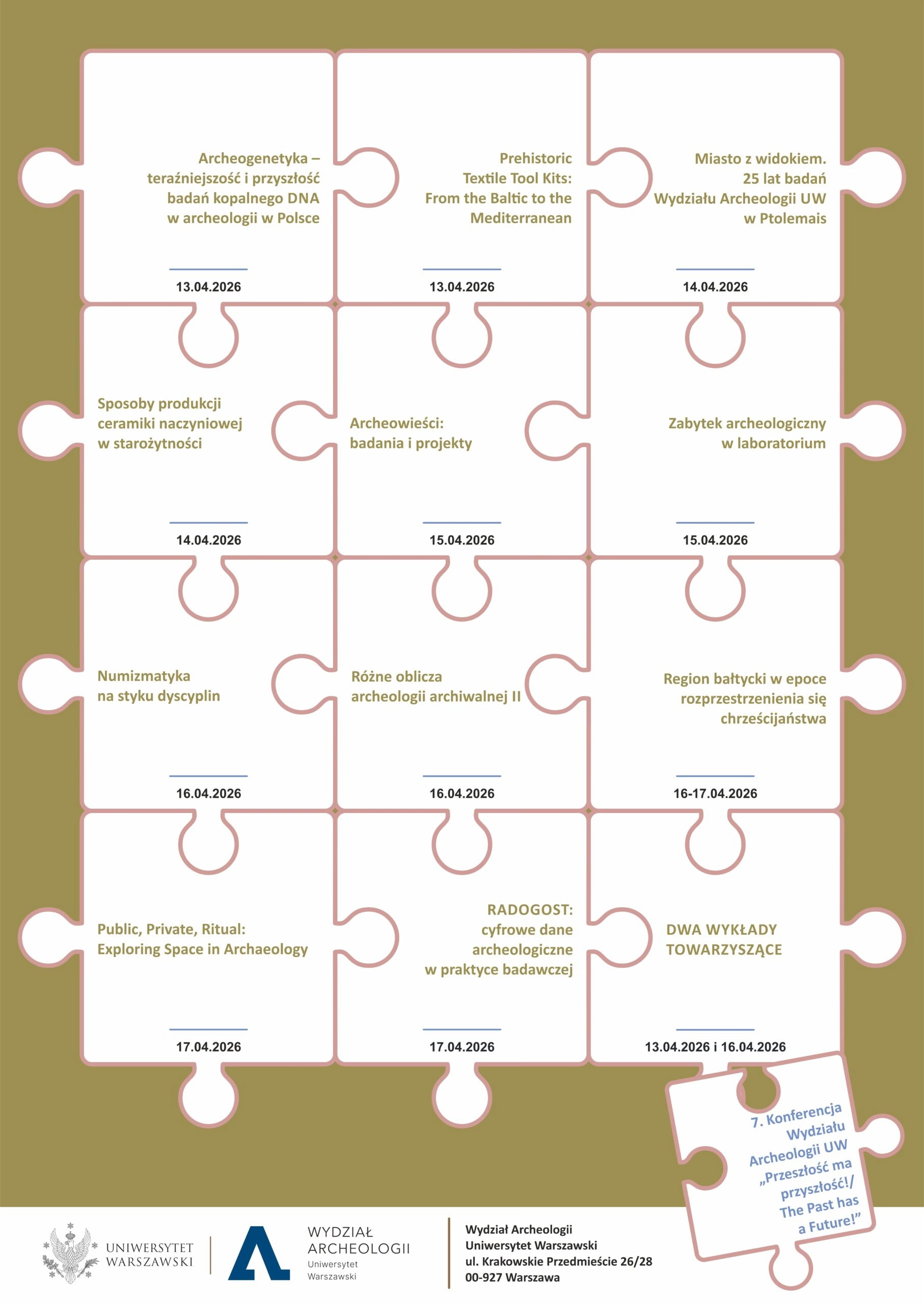
Plakat konferencji wraz z harmonogramem sesji
WYKŁADY TOWARZYSZĄCE:
Poniedziałek 13.04.2026, godz. 18:30
Ahmad Emrage (Uniwersytet w Bengazi, Libia)
Libyan Archaeological Heritage: Significance, Challenges, and Preservation Approaches
Libya’s archaeological heritage offers an extraordinary record of human civilisation, spanning tens, if not hundreds, of thousands of years of cultural development and exchange across the Mediterranean and the Saharan regions. From prehistoric sites such as Haua Fteah, one of North Africa’s most significant sequences of human occupation, to the renowned Greek and Roman cities of Cyrene and Leptis Magna, Libya offers a complex, multilayered cultural landscape of exceptional importance. These sites record early human adaptation, urban development, artistic achievement, and extensive trade networks linking Africa to the wider Mediterranean world. Collectively, they form a shared cultural legacy that strengthens national identity, advances academic research, promotes intercultural dialogue, and supports sustainable tourism opportunities.
However, Libya’s archaeological heritage remains at significant risk from both natural and human-induced threats. Natural threats include coastal erosion, desertification, climate change, and other environmental factors that accelerate deterioration, particularly in fragile archaeological contexts. Human threats, on the other hand, include looting, illicit trafficking, uncontrolled urban expansion, and inadequate site management, which further endanger these invaluable cultural resources. Political instability in recent years has further exposed sites to neglect and insufficient protection, while limited funding, inadequate infrastructure, and shortages of specialised expertise continue to constrain effective conservation efforts.
This presentation will highlight the cultural and historical significance of Libya’s archaeological heritage, examine the principal threats to it, and discuss local and international initiatives to protect it. Emphasis will be placed on documentation, capacity building and community engagement as essential components for safeguarding Libya’s rich archaeological legacy for future generations.
Czwartek 16.04.2026, godz. 18:45
Anthi Batziou (Ephorate of Antiquities of Magnesia, Hellenic Ministry of Culture, Grecja), Agata Ulanowska (Wydział Archeologii, Uniwersytet Warszawski, Polska), Filip Franković (Instytut Prehistorii i Protohistorii oraz Archeologii Bliskiego Wschodu, Uniwersytet w Heidelbergu, Niemcy), Peter Pavúk, Instytut Archeologii Klasycznej, Uniwersytet Karola w Pradze, Czechy), Dimitris Agnousiotis (Ephorate of Antiquities of Magnesia, Hellenic Ministry of Culture, Grecja), Iacovos Georgiou (Ephorate of Antiquities of Magnesia, Hellenic Ministry of Culture, Grecja)
Gates of the Wind: Connectivity and Interaction in the North Aegean from the Perspective of a New Research Project on Skopelos, Northern Sporades
The Bronze Age Eastern Mediterranean is characterised by increase in social complexity and urbanisation level, state formation processes and the intensification of interregional interaction, accompanied by the movement of objects, practices, and people. Although often regarded as peripheral to region-wide development, the Aegean played a significant role in the creation of interaction networks linking the Near East, Cyprus, Anatolia, and Egypt. Aegean islands formed critical nodes within these networks, shaping various interpretative frameworks centred on conquest, migration, colonisation, and acculturation within and beyond the borders of the region.
Among the Aegean islands, the Northern Sporades occupy an exceptionally favourable position for maritime communication within the Aegean and beyond, owing to the configuration of the archipelago and well-documented wind and sea-current patterns. Surprisingly, however, the Northern Sporades remain one of the least systematically investigated regions of the Bronze Age Aegean, despite the archaeological evidence pointing to their significance for the formation of regional interaction networks in both earlier and later periods.
The Ancient Skopelos Survey project (ASkoS, 2024–2028) addresses this gap by examining the role of the Northern Sporades during the third and second millennia BCE, with particular focus on Skopelos, the largest yet still insufficiently explored island of the archipelago. The project is a collaborative endeavour (synergasia) with the Ephorate of Antiquities of Magnesia of the Hellenic Ministry of Culture and is conducted under the auspices of the Polish Archaeological Institute at Athens, in collaboration with the Universities of Warsaw, Heidelberg, and Charles University in Prague.
This keynote presents the project’s objectives and first results, situating Skopelos within wider Aegean and Eastern Mediterranean interaction networks and assessing its potential contribution to current debates on connectivity, mobility, and local agency in the Bronze Age.
 Organizatorzy:
Renata Ciołek, Anna Zapolska (Wydział Archeologii UW)
Forma sesji: stacjonarna
Język sesji: polski
Monety to jedne z najciekawszych świadectw starożytności i późniejszych epok: łączą w sobie obraz, tekst i materię, a przez to niosą informacje zarówno o propagandzie i tożsamości wspólnot, jak i o gospodarce czy technikach menniczych. W badaniach nad nimi spotykają się różne perspektywy: ikonograficzna, archeologiczna, epigraficzna, metaloznawcza czy ekonomiczna oraz antropologiczna. Ta interdyscyplinarność sprawia, że numizmatyka wykracza daleko poza rolę nauki pomocniczej, stając się samodzielnym narzędziem interpretacji procesów historycznych.
Proponowana sesja ma na celu ukazanie monety jako obiektu funkcjonującego równocześnie w przestrzeni idei i codziennego obiegu. Zapraszamy referaty poświęcone znaczeniu ikonografii i inskrypcji, analizom stopów metali i technologii menniczych, a także interpretacji znalezisk monetarnych w kontekście archeologicznym i społecznym. Ważnym polem refleksji będzie także historia numizmatyki jako dyscypliny oraz pytania o jej miejsce we współczesnym pejzażu badań nad przeszłością.
Sesja ma charakter otwarty i globalny, obejmuje studia nad monetami antycznymi, średniowiecznymi i nowożytnymi, a także pozaeuropejskimi. Jej celem jest stworzenie przestrzeni do dyskusji nad tym, w jaki sposób monety, dzięki swojej podwójnej naturze, materialnej i symbolicznej, mogą stanowić pomost między archeologią, historią, historią sztuki i naukami ścisłymi, otwierając nowe perspektywy interpretacyjne.
Program sesji jest dostępny tutaj.
ABSTRAKTY (alfabetycznie według nazwisk):
Katarzyna Balbuza (Wydział Historii, Uniwersytet im. Adama Mickiewicza w Poznaniu, Polska)
Monety rzymskie jako komentarz numizmatyczny do przekazu epigraficznego. Casus pryncypatu cesarza Augusta
Referat pt. „Polityka małżeńska młodego Cezara/ Augusta w świetle monet późno republikańskiego i cesarskiego Rzymu oraz królestwa Mauretanii. Przyczynek do ideologii cesarskiej” jest numizmatycznym komentarzem do polityki młodego Cezara, późniejszego cesarza Augusta w kontekście inicjowanych przez niego małżeństw politycznych. Treścią wystąpienia będzie interpretacja ikonografii monetarnej emisji odnoszących się do zawartych małżeństw w kontekście ówczesnej ideologii państwowej.
Marcin Bohr (Instytut Archeologii, Uniwersytet Wrocławski, Polska)
Znalezisko sesterców z Lubawki w Górach Kruczych w kontekście innych depozytów monetarnych okresu rzymskiego w Sudetach
Strefa gór średnich środkowej Europy, wliczając w to Sudety, jawi się w od niesieniu do okresu rzymskiego jako niemal kompletna pustka osadnicza. Taki obraz postrzegania Sudetów zmienia nieco odkrycie i następujące po nim prace wykopaliskowe przeprowadzone w latach 2017–2019 w rejonie Świętej Góry w Górach Kruczych: zadokumentowano depozyt, na który składa się 13 wczesnorzymskich sesterców (Marek Aureliusz, Kommodus). Skład tego depozytu na terenie środkowoeuropejskiego Barbaricum jest zupełnie wyjątkowy, zarówno jeżeli chodzi o liczbę monet, jak i surowiec, z jakiego zostały wykonane. Znalezisko z Lubawki wpisuje się w szerszy kontekst odkryć monet rzymskich w rejonie Sudetów. Jednym z ciekawszych jest eksplorowany w latach 2024–2025 depozyt ponad 30 denarii subaerati z okolic Bukowa w rejonie Sudeckiego Uskoku Brzeżnego. Zwraca uwagę duża spójność chronologiczna jego składu (praktycznie wyłącznie emisje Trajana) oraz liczba i jednolitość nominałów, ponownie nie mająca w środkowoeuropejskim Barbaricum analogii. Zarówno znalezisko z Bukowa, jak i z Lubawki zlokalizowane są niejako pośród „pustki” osadniczej, w niekorzystnych warunkach środowiskowych. Wyjątkowa jest, szczególnie w przypadku znaleziska z Lubawki jego lokalizacja w rejonie górskiej przełęczy i w bezpośrednim sąsiedztwie źródła. W przypadku obu (ale także szeregu innych sudeckich) znalezisk należy brać pod uwagę ich symboliczny charakter, mający na celu próbę rytualnego zawładnięcia nad niedostępnym, obcym obszarem anekumeny.
Renata Ciołek (Wydział Archeologii, Uniwersytet Warszawski, Polska)
Dynamika mennictwa prowincjonalnego w miastach Tracji i Mezji
Referat dotyczy znaleziska monet rzymskich prowincjonalnych odkrytych podczas badań wykopaliskowych w Novae, na odcinku IV oraz odcinku XII, prowadzonych przez Ośrodek Badań nad Antykiem Europy Południowo-Wschodniej UW. W ramach projektu wykonano szczegółowy katalog monet bitych w prowincjach rzymskich, uwzględniający ich identyfikację menniczą i chronologiczną, a także podstawowe cechy typologiczne.
Integralną część opracowania stanowią tablice ilustracyjne zawierające fotografie wybranych, najlepiej zachowanych egzemplarzy, które umożliwiają analizę ikonografii oraz ocenę stanu zachowania monet. Materiał ilustracyjny ma charakter dokumentacyjny i porównawczy i pozwala na bezpośrednie odniesienie analiz do konkretnych zabytków. Na podstawie zgromadzonego materiału przygotowano zestawienia statystyczne, obejmujące strukturę zespołu monet prowincjonalnych pod względem chronologicznym i menniczym. Analiza ilościowa pozwala na uchwycenie udziału monet prowincjonalnych w całym materiale numizmatycznym z badanych odcinków oraz na obserwację zmian w ich obecności w kolejnych fazach funkcjonowania obozu.
Opracowanie to stanowi próbę uporządkowania i interpretacji zespołu monet prowincjonalnych z Novae oraz przyczynek do dalszych badań nad obiegiem monetarnym w środowisku wojskowym Dolnego Dunaju w okresie Cesarstwa Rzymskiego.
Maryna Filatova (Wydział Archeologii, Uniwersytet Warszawski, Polska)
Znaleziska denarii flati z Lewobrzeżnej Ukrainy w kontekście badań technologicznych i archeologicznych
Referat poświęcony będzie problematyce znalezisk kopii denarów rzymskich wykonywanych techniką odlewania (denarii flati), odkrywanych na obszarze Lewobrzeżnej Ukrainy. Przez długi czas egzemplarze wykazujące formalne podobieństwo do oficjalnych emisji denarowych były bezrefleksyjnie zaliczane do produkcji mennic Imperium Romanum. Najnowsze badania, obejmujące analizy składu chemicznego stopów, badania metalograficzne oraz rekonstrukcję technologii wykonania, pozwalają jednak na wyraźne wyodrębnienie grupy wyrobów, które powstawały w warsztatach barbarzyńskich i były wykonywane w technice odlewu. Denarii flati produkowane były najczęściej ze stopów miedzi i ołowiu, rzadziej natomiast z wysokiej próby srebra. Początki tego zjawiska należy najprawdopodobniej wiązać z połową III w. n.e., przy czym jego największe natężenie przypada na schyłek III oraz początek IV w. n.e. Chronologia ta pozostaje w ścisłym związku z narastającym deficytem oficjalnej monety srebrnej poza granicami Imperium. Analiza rozmieszczenia znalezisk umożliwia wyodrębnienie głównych stref koncentracji denarii flati na obszarze Lewobrzeżnej Ukrainy. Wstępne szacunki wskazują, iż odlewane kopie denarów mogą stanowić około 10% ogółu znalezisk denarów z tego regionu. Dane te znajdują potwierdzenie w materiałach pochodzących z wybranych stanowisk archeologicznych, w szczególności z osady Wijtenky w obwodzie charkowskim, gdzie obecność denarii flati została jednoznacznie potwierdzona na podstawie analiz badań składu pierwiastkowego stopów.
Robert Janiszewski (Gabinet Monet i Medali, Muzeum Narodowe w Warszawie, Polska)
Medale jednostronne dynastii konstantyńskiej. Przekaz propagandowy i adresaci w świetle analogii numizmatycznych
Wśród numizmatycznych emisji dynastii konstantyńskiej interesującą grupę stanowią złote medale jednostronne. Chociaż znane badaczom od połowy XIX w., jednak ze względu na swój unikalny charakter w wielu opracowaniach nie były uwzględniane. W połowie lat dziewięćdziesiątych ubiegłego wieku większość znanych egzemplarzy skatalogował G. Depeyrot, a blisko dekadę później stan badań uaktualnił R. Bland przy okazji publikacji grupy znalezisk z Wysp Brytyjskich, nieuwzględnionych w opracowaniu G. Depeyrot.
Na chwilę obecną zespół medali jednostronnych liczy ok. 60 egzemplarzy, wykonanych ze złota w nieregularnym standardzie wagowym, w większości przypadków niższym od wagi solida. Większość z nich pochodzi z czasów panowania Konstantyna Wlk., a najpóźniejsza chronologicznie seria, wyemitowana przez jego następców, powstała tuż po jego śmierci. Wprawdzie zaledwie niewielka część medali pochodzi ze znanego kontekstu archeologicznego, ale koncentracja znalezisk na obszarach Barbaricum (Newgrange, Brestov, Jutlandia) lub w strefie przylimesowej (Reims, Tracja) pozwoliły na przypuszczenie, że była to grupa przeznaczona głównie jako środek wymiany prestiżowej dla barbarzyńskich sojuszników obozu konstantyńskiego. Nieeksploatowanym polem dla określenia przeznaczenia tej grupy numizmatów jest analiza porównawcza przedstawień portretowych i legend awersów. W swojej pracy zestawiam je z analogiami monet i multiplów, by wykazać na jakich emisjach wzorowane były egzemplarze tej grupy zabytków, co pozwola wskazać ich przeznaczenie i potencjalnych adresatów, a także doprecyzować czas ich emisji.
Piotr Jaworski (Wydział Archeologii, Uniwersytet Warszawski, Polska)
Skarb z Ptolemais: 20 lat później
W 2006 r., w ruinach domu badanego przez ekspedycję Instytutu Archeologii UW pod kierunkiem prof. Tomasza Mikockiego w Ptolemais, odkryty został skarb monet rzymskich. Składał się on z blisko 600 sesterców (tpq 253 n.e.) oraz rulonu 15 monet srebrnych (tpq 238 n.e.). Znalezisko to odbiło się szerokim echem w świecie numizmatyki, był to bowiem pierwszy znany z Cyrenajki skarb datowany na III w. W ostatnich latach w handlu antykwarycznym pojawił się drugi, analogiczny skarb sesterców, którego pochodzenie z Cyrenajki zdaje się nie budzić wątpliwości. W referacie zaprezentowana zostanie nowa interpretacja skarbu z Ptolemais, w której znalezisko zostanie wpisane w szerszy kontekst gospodarczy, związany ze zjawiskiem tezauryzacji sesterców w Afryce Północnej w okresie zapaści tradycyjnej monety rzymskiej.
Valery Kabrynets (badacz niezależny)
O wartości skarbów z lat 1650–1667 (na przykładzie skarbów z monetami rosyjskimi na terytorium Białorusi)
W okresie wojny polsko-rosyjskiej 1654–1667 jest obserwowany masowy wpływ rosyjskich monet na ziemie białoruskie. Znano jest co najmniej 160 skarbów datowanych na trzecią ćwierć XVII w., spośród których w 27 przypadkach stwierdzono obecność rosyjskich kopiejek drutowych. W 14 skarbach one występują razem z monetami innych państw.
Skarby z okresu poprzedzającego wybuch wojny reprezentowane są jedynie przez pojedyncze znaleziska o wielkości powyżej średniej (501–1000 groszy) oraz dużej (powyżej 1001 grosz). W ich strukturze monety rosyjskie stanowią znikomą część zarówno pod względem liczby egzemplarzy, jak i wartości nominalnej skarbu.
W latach wojny wyraźnie wzrosł udział monet rosyjskich w składzie skarbów. W większości przypadków takie znaleziska pochodzą z terytorium okupowanego przez wojska rosyjskie. W skarbach o wartości nominalnej do 500 groszy cześć rosyjska wynosi co najmniej 80% (4 przypadki) i nie przekracza 6% (2 przypadki). W skarbach o wartości powyżej 501 grosz ona stanowi co najmniej 78% (3 przypadki) i 1,65% (1 przypadek).
W skarbach o wartości do 500 groszy kopiejki drutowe współwystępują przede wszystkim z drobnymi nominałami, spośród których najliczniej reprezentowany jest solid (szeląg). W skarbach wielkości powyżej średniej i dużej te monety rosyjskie najczęściej występują razem z monetami bitymi z dobrego srebra, począwszy od półtoraków i wyższych nominałów.
Agata Kluczek (Instytut Historii, Uniwersytet Śląski w Katowicach, Polska)
Historyczno-numizmatyczne vitae et res gestae eponimów miast w imperium rzymskim (III wiek)
„Alabandenses quidem sanctius Alabandum colunt, a quo est urbs illa condita, quam quemquam nobilium deorum” — zauważył Cyceron (Nat. 3.19). Wspomniany przezeń i lokalnie tak honorowany Alabandus należy do licznej grupy eponimów, postaci historycznych albo mitycznych, których imiona są odnajdywane w nazewnictwie ośrodków imperium rzymskiego. Te odantroponimiczne nomina propria niejako z założenia przywodziły pamięć o minionych bohaterach i jako takie — prowadząc wstecz do postaci założycieli i konkretnych aktów fundacji miejskich lub wyrażając związki (historyczne, fikcyjne bądź nieweryfikowalne) z dawnymi herosami, miastami, ludami — są świadectwem kultury i wyznacznikiem tożsamości wybranej społeczności. Sami zaś owi eponymoi odgrywają ważną, chociaż symboliczną, rolę w sferze pamięci zbiorowej, zwłaszcza jej aspektów skupionych wokół idei założycielskiej.
W odniesieniu do tych szerokich zagadnień referat koncentruje się na przypadkach dotyczących frygijskich ośrodków, wśród których są Akmoneia, Dokimeion, Dorylaion, Nakoleia, Temenothyrai. Zasadniczego materiału źródłowego do rozważań dostarczają monety, szczególnie te wyemitowane w miejscowych mennicach w III stuleciu. Niekiedy są one jedynie w skromnym zakresie wsparte danymi innych testimoniów, wówczas to przede wszystkim źródła numizmatyczne stają się świadectwem na bieżąco aktualizowanej tradycji i pomnikiem pamięci zbiorowej, na swój sposób kreowanej, ale też będącym instrumentem kształtującym tę pamięć czy to poprzez selekcję informacji, czy w efekcie natury komunikatu umieszczonego na monecie jako takiej.
Przedmiotem zainteresowania będą więc konkretni bohaterowie eponimiczni, ślady ich obecności w starożytnej literaturze i innych źródłach, a nade wszystko modele i sposoby ich prezentowania w mennictwie prowincjonalnym.
Karolina Kozłowska (Wydział Historyczny, Uniwersytet Warszawski, Polska)
Moneta w służbie ideologii – chrześcijańska propaganda w mennictwie Konstantyna i jego synów w świetle analizy ilościowej monet z katalogu OCRE (Online Coins of Roman Empire)
Moneta od starożytności pełniła nie tylko funkcję środka wymiany, lecz także ważnego nośnika komunikacji między władzą a poddanymi. Była doskonałym posłańcem, którego awers i rewers mógł przekazywać wiadomości pod postacią symboli, w dużym mierze zrozumiałych tylko dla nielicznych. A symbole są – jak mówi główny bohater książki Dana Browna, Robert Langdon – językiem, dzięki któremu możemy zrozumieć przeszłość.
W niniejszym referacie zostaną krótko omówione symbole chrześcijańskie pojawiające się w mennictwie Konstantyna I Wielkiego oraz jego synów i przedstawione zostaną wyniki analizy ilościowej wykonanej na potrzeby niniejszego badania. Analiza opiera się na danych zaczerpniętych z katalogu Online Coins of the Roman Empire (OCRE), z którego brane były pod uwagę typy monetarne bite w latach 312–361 n.e. Należy mieć na uwadze, że znajdujące się w katalogu online monety obejmują jedynie część emisji wyprodukowanych za życia Konstantyna i jego następców. Na podstawie wyników analizy dyskusji poddane zostaną takie aspekty jak: wybór symboliki przez Konstantyna i jego synów; różnice w preferencjach w mennicach zachodnich i wschodnich oraz relacje między konkretnym metalem a symboliką.
Wyniki wskazują, że choć monety z chrześcijańskimi symbolami stanowią niewielki procent emisji, ich obecność jest znacząca: dokumentuje początki nowego „języka wizualnej władzy”, który zdominuje późniejsze wieki. Referat pokazuje, jak analiza ilościowa źródeł numizmatycznych pozwala uchwycić subtelne, lecz kluczowe zmiany w polityce religijnej dynastii konstantyńskiej oraz jak moneta staje się narzędziem komunikacji, które łączy ideologię, władzę i religię.
Roman Krytsuk (Gabinet Monet i Medali, Muzeum Narodowe w Warszawie, Polska)
Andrzej Snitko – nieznany białoruski numizmatyk z przełomu wieków
Andrzej Snitko urodził się w 1866 r. w Wilnie. Pomimo ważnej roli, jaką odgrywał w życiu archeologicznym i muzealnym Mińska na początku XX w., oraz jego rozległych powiązań rodzinnych z przedstawicielami polskiej, rosyjskiej i białoruskiej inteligencji, jego nazwisko pozostaje do dziś praktycznie nieznane badaczom. W 1892 r. Andrzej wraz z Fiodorem Pokrowskim brał udział w wykopaliskach kurhanów w okolicy Radoszkowic. W 1893 r. wygłasza referat na IX Kongresie Archeologicznym w Wilnie. Od 1907 r. wstępuje do Mińskiego Komitetu Cerkiewno-Archeologicznego i pełni funkcję starszego członka komitetu. Następnie jest jednym z redaktorów i autorów wydawanego przez komitet czasopisma „Minskaja Starina” („Mińskie Starożytności”). Uczestniczy również w pracach archeologicznych na terenie mińskiego, borysowskiego i ihumeńskiego powiatów, a także w takich miastach, jak Turów, Pińsk i Słuck. Bierze udział w tworzeniu muzeum Komitetu Kościelno-Archeologicznego, którego otwarcie ma miejsce w 1913 r. Wraz z wybuchem pierwszej wojny światowej działalność naukowa komitetu zostaje wstrzymana, a wkrótce potem Andrzej Snitko wraz z rodziną wyjeżdża na ewakuację. W 1920 r. umiera w miejscowości Hłuchów pod Sumami.
Beata Miazga (Instytut Archeologii, Uniwersytet Wrocławski, Polska)
A jednak różne? Dyskusja nad stopem menniczym skarbu wczesnorzymskich sesterców z rejonu Świętej Góry w Górach Kruczych
Depozyt monet wczesnorzymskich został odnaleziony w trakcie prospekcji terenowej zapoczątkowanej przez Stowarzyszenie Przymierze oraz w toku dalszych badań archeologicznych w rejonie obecnej miejscowości Lubawka (Dolny Śląsk) w latach 2017–2019. Teren ów zakładano, że jest wolny od osadnictwa rzymskiego. Dlatego odnalezienie grupy 13 sesterców okazało się dla archeologów dość zaskakujące. Zbiór został dość szybko opracowany naukowo i opublikowany w Notae Numismaticae kilka lat później (Bohr i Maciejczuk, 2023). Kiedy jednak przystąpiono do organizacji przekazania skarbu monet do muzeum w Kłodzku, postanowiono przygotować je konserwatorsko, a przy tej okazji także nadarzyła się okazja na przeprowadzenie ich studiów archeometrycznych, które zrealizowano metodami nieniszczącymi i małoinwazyjnymi, żeby ochronić te wyjątkowo cenne znaleziska. Dlatego wybrano spektrometrię fluorescencji rentgenowskiej oraz skaningową mikroskopię elektronową połączoną ze spektrometrią energodyspersyjną, co miało dać asumpt do poznania składu stopu menniczego, który był głównym celem badań chemicznych. Badania wykonano, a ich ustalenia okazały się na tyle interesujące, że stało się to przyczyną do kontynuacji dalszych studiów numizmatyczno-archeometrycznych, co częściowo zostanie zaprezentowane w niniejszym wystąpieniu.
Kyrylo Myzgin (Wydział Archeologii, Uniwersytet Warszawski, Polska)
Czy numizmatyk i chemik naprawdę się słyszą? Refleksje nad interdyscyplinarnymi badaniami składu monet antycznych
We współczesnych badaniach numizmatycznych analiza składu chemicznego metalu monetarnego stanowi, jeśli nie warunek konieczny, to z całą pewnością jeden z najbardziej pożądanych i dynamicznie rozwijających się kierunków badawczych. Do dyspozycji badaczy pozostaje dziś szerokie spektrum metod analitycznych – od stosunkowo prostych i mobilnych, takich jak XRF, po bardziej zaawansowane i wyspecjalizowane techniki, w tym PIXE oraz NAA/PAA. W praktyce jednak kosztowne i technicznie złożone metody analityczne nie zawsze wykorzystywane są w pełni zgodnie z ich rzeczywistym potencjałem poznawczym. Nierzadko wyniki uzyskane przy użyciu najbardziej zaawansowanych technik sprowadzane są w publikacjach do ogólnikowych stwierdzeń, a możliwości, jakie oferuje wysokoprecyzyjna analiza składu stopu, pozostają w istocie niewykorzystane. W konsekwencji zastosowanie skomplikowanych metod badawczych traci swoje metodologiczne uzasadnienie i nie prowadzi do pogłębionej interpretacji numizmatycznej. W swoim wystąpieniu chciałbym podjąć problem współpracy chemika i numizmatyka w badaniach składu metalu monetarnego oraz zastanowić się, w jaki sposób może ona zostać zorganizowana, aby uczynić ją możliwie jak najbardziej efektywną i naukowo produktywną.
Andrzej Romanowski (Gabinet Monet i Medali, Muzeum Narodowe w Warszawie, Polska)
Osierocone skarby: Konteksty „luźnych”, kumulatywnych znalezisk monetarnych. Studium przypadków znalezisk monet rzymskich z prawobrzeżnego Mazowsza, Podlasia i zachodniego Polesia
Artykuł podejmuje problematykę skarbów monetarnych pozbawionych kontekstu archeologicznego. Analizie poddano gromadne (ale także pojedyncze monety o wysokiej wartości) znaleziska monet rzymskich z prawobrzeżnego Mazowsza, Podlasia i zachodniego Polesia, odkryte poza skupiskami osadniczymi i cmentarzyskami. Traktowane formalnie jako znaleziska „luźne”, są jednak osadzone w szerszym kontekście, zarówno przyrodniczym, jak i kulturowym. Podjęte tu studia wskazują, że w przypadku depozytów odkrytych poza stanowiskami archeologicznymi i pozornym brakiem kontekstu, możliwe jest odtworzenie ich charakteru, poprzez wielowymiarową analizę danych bezpośrednich, przestrzennych, środowiskowych i historycznych. Podstawą badań jest zbiór 34 znalezisk, obejmujący 25 skarbów oraz 9 pojedynczych monet złotych, zróżnicowanych pod względem chronologii, kruszcu i nominałów. Zwrócono uwagę na reprezentatywność materiału, okoliczności odkryć oraz wpływ czynników społecznych i technicznych na stan rejestracji znalezisk. Zdecydowana większość depozytów z omawianych terytoriów pochodzi spoza skupisk osadniczych, przy czym znaczna część z nich charakteryzuje się rozproszeniem monet w wyniku późniejszych ingerencji. Analiza wybranych przypadków wskazuje na zróżnicowane okoliczności ukrycia i funkcje takich skarbów – deponowanych w sytuacji zagrożenia lub zwykłych oszczędnościach. Mogły mieć także charakter symboliczny lub wotywny, związany z wodą, torfowiskami, kamieniami lub drzewami. Podkreślono znaczenie pogłębionych badań kontekstowych dla interpretacji znalezisk monetarnych i rekonstrukcji mikrohistorycznych aspektów funkcjonowania depozytów w kulturach barbarzyńskich.
Vital Sidarovich (Wydział Archeologii, Uniwersytet Warszawski, Polska)
Osobliwości rozpowszechnienia brązowych monet Cesarstwa Rzymskiego z I – połowy III wieku na obszarze dzisiejszej Białorusi
Na terytorium Białorusi dominują znaleziska cesarskich denarów., Brązowe monety z I – połowy III w. stanowią drugą pod względem liczebności grupę monet antycznych. W zdecydowanej większości są to znaleziska pojedyncze, liczące około 120 monet. Skarby i zespołowe znaleziska dużych „brązów” na Białorusi są bardzo rzadkie – obecnie znane są tylko trzy takie znaleziska, które łącznie zawierały 22 monety. Większość dużych monet brązowych Cesarstwa Rzymskiego znalezionych na terytorium Białorusi to emisje centralne, głównie sesterce z II w. Niecała jedna trzecia białoruskich znalezisk brązowych monet z I – połowy III w. to emisje z prowincji wschodnich, datowane zazwyczaj na pierwszą połowę III wieku.
Rozrzut brązowych monet z I – połowy III w. wskazuje na pewne prawidłowości. Na północnym zachodzie Białorusi, czyli w dorzeczu Niemna i na przyległych terenach, absolutnie dominują monety wybite w mennicy centralnej. Natomiast na południu i południowym wschodzie Białorusi, czyli w dorzeczu Dniepru, Prypeci i Bugu, liczba znalezisk monet prowincjonalnych jest mniej więcej równa liczbie znalezisk brązów cesarskich. Prawdopodobnie należy to tłumaczyć źródłami napływu brązowych monet z I – połowy III w. na terytorium Białorusi. Podczas gdy na południową i południowo-wschodnią Białoruś monety napływały głównie z obszaru kultury czerniachowskiej, gdzie szeroko rozpowszechnione były emisje wschodnich prowincji Cesarstwa Rzymskiego, to na północny zachód dzisiejszej Białorusi rzymskie sesterce i dupondie trafiały przede wszystkim z terytorium zamieszkałego przez zachodnich Bałtów, którzy posiadali ogromną ilość dużych monet, wybitych w centralnej mennicy rzymskiej. Najprawdopodobniej przepływ monet nie zatrzymywał się na terytorium dzisiejszej Białorusi: niektóre rzymskie monety z regionu bałtyckiego docierały dalej na południe, aż do obszaru kultury czerniachowskiej, a do Bałtów z południowego wschodu trafiały nieliczne monety prowincjonalne.
Tomasz Teinert (Gabinet Monet i Medali, Muzeum Narodowe w Warszawie, Polska)
Problematyka napływu rzymskich silikw na tereny Polski w okresie późnorzymskim
Mianem silikwy określa się srebrny nominał wprowadzony po reformie monetarnej Konstantyna I Wielkiego w latach 20. IV w. n.e. Nazwę swą zawdzięcza Theodorowi Mommsenowi, który w swojej pracy Geschichte des römischen Münzwesens opublikowanej w 1860 r., zastosował ten termin, nazywając nim jednostkę monetarną odpowiadającą 1/144 rzymskiego funta srebra. Monety te były naturalną kontynuacją rzymskiego mennica srebrnego i były emitowane aż do początku Cesarstwa Bizantyńskiego.
Obecność silikw na obszarze Barbaricum, zwłaszcza środkowoeuropejskiego, można tłumaczyć jako formę napływającego z Cesarstwa kruszcu. Przypuszczalnie proces ten kontynuował wcześniejszą tradycję sprowadzania srebra wysokiej próby z Imperium. Nasuwa się jednak pytanie o skalę i mechanizmy tego zjawiska.
Na terenie Polski jak dotąd odkryto 24 silikwy (w tym 2 imitacje). Największym, a zarazem najstarszym odkrytym zespół monet, liczący 16 egzemplarzy skarb z Zamościa, jednak z powodu jego przechowywania (Sankt-Petersburg), jest niedostępny dla badaczy. Kolejne pochodzą z okolic Suwałk (3 szt.), Wielkopolski (2 szt.), Kujaw (1 szt.), Dolnego Śląska (1 szt.) i okolic Łęczycy (1 szt.). Tak mała liczba monet srebrnych wydaje się nieproporcjonalnie mała do odnalezionych emisji srebrnych i złotych z tego okresu. W swoim referacie chciałbym przybliżyć poszczególne znaleziska silikw z terenu Polski wraz z ich kontekstem i datowaniem. Zamierzam również zastanowić się nad potencjalnymi drogami i przyczynami ich napływu. Ponadto chciałbym przedstawić analizę statystyczną znalezisk monet tego nominału na tle znalezisk follisów i solidów z IV i V w.
Mateusz Wełna (Instytut Archeologii, Uniwersytet Mikołaja Kopernika w Toruniu, Polska)
Wokół skarbu monet z Wielkiego Bukowca – analiza i interpretacja znaleziska w kontekście napływu monet rzymskich na ziemie polskie
W 2023 r. członkowie Międzywojewódzkiego Stowarzyszenia Detektorystyczno-Eksploracyjnego „UNIA” – Maciej Milewicz i Kamil Witkowski – w trakcie legalnych poszukiwań dokonali odkrycia gromady monet rzymskich, głównie sesterców. Znalezisko zostało zgłoszone do właściwego organu ochrony zabytków i podjęte przez służby konserwatorskie. W następstwie zorganizowano archeologiczne badania weryfikacyjne oraz wykonany zachowawczą konserwację materiału, które poddano analizie numizmatycznej.
Efektem dotychczasowych studiów nad zbiorem jest przede wszystkim określenie jego chronologii. Wszystkie monety zostały wybite w czasie panowania dynastii Antoninów, co otwiera dyskusję nad zagadnieniem fali napływu monet na tereny Barbaricum. Zebrane dane metryczne wskazują na zaniżone wagi poszczególnych egzemplarzy, a pojedyncze numizmaty noszą ślady zagadkowych nacięć na powierzchniach. Odkryte podczas badań weryfikacyjnych fragmenty ceramiki zostały zidentyfikowane jako tygle, co w połączeniu z powyższymi informacjami sugeruje, że monety miały zostać przetopione w lokalnej pracowni odlewniczej.
Na obecnym etapie rozpoznania stanowiska archeologicznego skarb składa się z 32 nominałów brązowych i jednego denara. Znaleziska tego typu należą do rzadkich – to piąte znalezisko gromadne sesterców odkryte na ziemiach Polski i pierwsze w regionie Pojezierza Starogardzkiego. W całej północnej Europie istnieje natomiast więcej analogicznych znalezisk, które pozwalają na umieszczenie zbioru z Wielkiego Bukowca we wspominanym już horyzoncie napływu pieniądza rzymskiego do Barbaricum.
 Organizatorzy:
Mikołaj Pławiński, Ludwika Jończyk (Wydział Archeologii UW), Rytis Jonaitis, Irma Kaplūnaitė (Instytut Historii Litwy)
Forma sesji: stacjonarna
Język sesji: polski/ angielski
Rozpowszechnianie się chrześcijaństwa w różnych częściach rozległego regionu bałtyckiego było długim procesem, który trwał ponad pół tysiąca lat i powoli, w mniejszym lub większym stopniu zmieniał wszystkie aspekty życia ludzkiego, postrzeganie śmierci i koncepcji eschatologicznych, a skutkiem tego także rytuały pogrzebowe.
Tematem sesji będzie omówienie przemian – lub ich braku – w poszczególnych elementach życia codziennego, kultury materialnej i obrządku pogrzebowego, w całej ich różnorodności.
Celem sesji jest opisanie i wyjaśnienie mechanizmów zmian spowodowanych rozprzestrzenianiem się chrześcijaństwa w różnych częściach regionu bałtyckiego w ostatnich wiekach I tysiąclecia oraz pierwszych stuleciach II tysiąclecia.
Program sesji jest dostępny tutaj.
ABSTRAKTY (alfabetycznie według nazwisk):
Dovilė Baltramiejūnaitė (The State Reserve of Kernavė, Lithuania)
Distribution Routes and Adaptation Models of the Earliest Wheel-Finished Pottery in Lithuania (10th–12th Century)
The emergence and production of the earliest wheel-finished pottery (the so-called “Baltic ware”) in the territory of present-day Lithuania are generally dated to the 10th–11th/12th centuries. Extensive collections of early wheel-finished pottery preserved in museums in Lithuania and neighbouring regions provide a solid basis for reassessing the spread of this production technology and its local adaptations.
The presentation is based on a comprehensive analysis of early wheel-finished pottery in Lithuania, complemented by comparative data from other Baltic regions and by the context of local handmade pottery traditions. The collected material enabled reconstruction of the main routes of distribution of wheel-finished pottery and the identification of distinct models of its adaptation.
The spread of wheel-finished pottery was shaped by both internal social and cultural factors and broader geopolitical processes beyond the Baltic region. Differences in the intensity and nature of contacts resulted in uneven adoption of the new technology and stylistic forms: in peripheral areas its dissemination was slow and fragmented, whereas in zones of active interaction rapid and profound changes in pottery production were observed during the 10th–12th centuries. Eastern and Western Slavic communities played a significant role in the development of these processes in Lithuania.
Dariusz Błaszczyk (Wydział Archeologii, Uniwersytet Warszawski, Polska)
Początki chrześcijaństwa na Mazowszu w świetle datowań radiowęglowych oraz badań trwałych izotopów strontu, tlenu i węgla
Na średniowiecznych ziemiach polskich archeologicznym wskaźnikiem przyjęcia i rozprzestrzenienia się chrześcijaństwa są cmentarzyska rzędowe ze szkieletowym obrządkiem pogrzebowym, pojawiające się od końca X w. Pod tym względem specyficzna sytuacja występuje na Mazowszu, gdzie na tym samym obszarze i w podobnym czasie występują dwa odmienne rodzaje cmentarzysk inhumacyjnych, które można wiązać z chrześcijaństwem – z pochówkami jamowymi i z pochówkami w grobach z konstrukcjami kamiennymi w postaci obstaw i bruków kamiennych. Zgodnie z dotychczas przyjętą chronologią, pomimo pojedynczych odmiennych głosów, pojawienie się chrześcijańskich cmentarzysk inhumcyjnych na Mazowszu było datowane na połowę XI w., czyli 150 lat później niż w innych częściach Polski.
W ramach wystąpienia zostaną przedstawione wyniki pierwszych większych serii datowań radiowęglowych obu typów cmentarzysk i w ich świetle zostaną omówione początki ich funkcjonowania oraz wzajemna relacja. Dodatkowo w oparciu o wyniki badań trwałych izotopów strontu, tlenu i węgla zostanie omówiona kwestia pochodzenia i mobilności ludzi chowanych na obu typach cmentarzysk – czy chowani byli na nich przedstawiciele tej samej, czy innej populacji, oraz czy istniał między nimi przepływ osób.
Rūdolfs Brūzis (Faculty of Humanities, University of Latvia, Institute of Latvian History, Latvia)
Unusual burials in Courland, at Kazdanga cemetery
In written historical sources, the place name was first mentioned in 1392. Then Kazdanga was included in the bishopric of Courland. In the first quarter of the 15th century, Kazdanga was a relatively large inhabited manor and village, which could also have its own chapel and cemetery.
In 2015, a cemetery was discovered in the Kazdanga Castle Park, where 30 burials were explored, most of which date back to the second half of the 16th–17th centuries.
In the periphery of the cemetery, the burials were quite intensive – the dead were buried even in three layers. Such a density of burials in manor or village cemeteries indicates exceptional conditions in the local society, closely related to high lethality. It is believed that this reflects the consequences of the “war on Piltene heritage”.
The proportion of atypical burials was high. Several deceased were laid on their right sides. Four of them were buried with their heads to the north, five to the south, and one with its head facing east. This could indicate the location of a special, consecrated object within the cemetery territory – a crucifix or a chapel. Archaeological studies in the Kazdanga Castle Park cemetery provided valuable information about the organization of the cemetery space, the burial traditions of the southern part of Courland in the late Middle Ages and early modern times, the demographics of the population, and the consequences of various historical events.
Olena Chernenko (Wydział Archeologii, Uniwersytet Warszawski, Polska)
Ofiary budowlane w monumentalnym budownictwie Rusi
Początki budownictwa murowanego na Rusi są bezpośrednio związane z przyjęciem chrześcijaństwa. Wznoszenie świątyń stanowi najbardziej wiarygodny i jednoznaczny dowód rozpowszechniania się nowej religii w poszczególnych regionach państwa Rurykowiczów. Jednocześnie badania architektury monumentalnej ujawniają obecność praktyk rytualnych, takich jak ofiary budowlane, które pozornie pozostają w sprzeczności z tradycją chrześcijańską.
Zjawisko to można prześledzić na podstawie materiałów archeologicznych z obszaru księstwa czernihowskiego. W budowli o charakterze pałacowym z przełomu XII i XIII w. w Nowogrodzie-Siewierskim odkryto pochówek młodej kobiety, złożony w trakcie wznoszenia budowy. Zmarła została pogrzebana pod podłogą w płytkim dole, zorientowanym na osi północ–południe, w pozycji z podkurczonymi nogami. W wyposażeniu grobu zachowały się kolczyki, naszyjnik ze szklanych paciorków oraz krzesiwo. Przykładem tzw. „niekrwawej” ofiary budowlanej są: kielnia wmurowana w fundamenty soboru Spaso-Preobrażenskiego z lat trzydziestych XI w. oraz brązowa szpila z pierścieniowatą główką, odkryta w fundamentach dobudówki z początku XII w. Zwyczaj ofiar budowlanych należał do szeroko rozpowszechnionych praktyk, obecnych także w społeczeństwach chrześcijańskich. Również był znany w Bizancjum, ponieważ został odnotowany w zakazie zawartym w Nomokanonie 14 tytułów. W świetle tych danych brak podstaw do łączenia omawianych przykładów wyłącznie z oddziaływaniem słowiańskich praktyk pogańskich.
Marcin Engel, Cezary Sobczak (Państwowe Muzeum Archeologiczne w Warszawie, Polska)
… Ietuesi … de facili baptizantur. Archeologiczne ślady recepcji chrześcijaństwa na Jaćwieży
Celem wystąpienia jest przedstawienie zjawiska recepcji chrześcijaństwa wśród Jaćwingów w świetle źródeł archeologicznych. Prowadzona od początku XIII w. na ziemiach pruskich akcja chrystianizacyjna przynosiła efekt w postaci rosnącej liczby neofitów, a co za tym idzie miała wpływ na przeobrażenia w lokalnym systemie wierzeń. Procesy te dotyczyły nie tylko terenów objętych strukturami powstającego państwa krzyżackiego. Autor Descriptiones Terrarum, który był misjonarzem, napisał, że Litwini, Jaćwingowie i Nalsani z łatwością przyjmują chrzest, ponieważ są wykarmieni od kolebki przez mamki chrześcijańskie i dlatego mógł bezpiecznie u nich przebywać. Badania archeologiczne na terenie historycznej Jaćwieży wykazały obecność chrześcijańskich dewocjonaliów, w postaci krzyżyków i zawieszek w depozytach kultowych na terenie warowni a także w inwentarzach grobowych.
Jan Gryz (Badacz niezależny, Polska)
Czy ludność z Trullhalsar (parafia Anga, Gotlandia, Szwecja) osiedliła się na południowo-wschodnich wybrzeżach Bałtyku we wczesnym średniowieczu? Powrót do dawnej hipotezy
Trullhalsar to cmentarzysko z okresu Vendel (ok. 550–800 r.), położone blisko wschodniego wybrzeża Gotlandii. W artykule w Gotländsk Arkiv z 2007 r. zwrócono uwagę, że najbardziej intensywna faza użytkowania cmentarzyska kończy się ok. 650 r., co zbiega się w czasie z pojawieniem się cmentarzysk o gotlandzkim charakterze w Grobinie (Łotwa) i Elblągu (Polska). Zasugerowano więc, że ludność z tej części wyspy mogła uczestniczyć w ekspansji osadniczej Gotlandczyków. Trullhalsar zostało częściowo przebadane archeologicznie w 1888 r. oraz w latach 1915–1916, jednak rezultaty wykopalisk nie zostały opublikowane, w związku z czym cmentarzysko pozostaje słabo znane w obiegu naukowym. Analiza materiałów archiwalnych pozwala przyjrzeć się Trullhalsar jako nekropolii społeczności, która w VII w. mogła wyruszyć na wschodnie oraz południowe wybrzeża Morza Bałtyckiego, skąd znane są groby wykazujące związki z Gotlandią.
Jakub Jagodziński (Muzeum Archeologiczno-Historyczne w Elblągu, Polska)
Kim byli chrześcijanie z Truso? O śladach nowej religii w starym porządku
Celem wystąpienia jest zaprezentowanie nielicznej kategorii świadectw archeologicznych związanych z religią chrześcijańską we wczesnośredniowiecznym emporium Truso. Omówione zostaną najważniejsze przedmioty, które łączone są z chrześcijaństwem, a także ich kontekst i znaczenie w odniesieniu do rzeczywistości społecznej i religijnej Skandynawów okresu wikińskiego.
Rytis Jonaitis, Irma Kaplūnaitė (Lithuanian Institute of History, Lithuania)
Archaeological research at Verkiai: grand dukes estate in the surroundings of Vilnius?
Vilnius was first mentioned in written sources in 1323, however, archaeological data indicates that the city began to emerge earlier. In addition, the area was already inhabited by the time of its founding. The evidence also shows that Vilnius was not located in an empty spot, as traces of human activity have been found in its surroundings. One such place is Verkiai, located about 8 km from Vilnius’ Old Town. Verkiai was first mentioned in written sources in 1387, in the privilege of the grand duke of Lithuania Jogaila, although it is also associated with a pagan cult center and the priest Lizdeika, who appears in the legend of the founding of Vilnius. During archaeological research, graves were discovered in Verkiai, and although only 20 were found in total, the variety of the grave goods, as well as the cremation burial method and other burial features, aroused interest. Based on the radiocarbon method, the graves date back to the second half of the 13th century and the 14th century, when pagans still cremated their dead.
Ludwika Jończyk (Wydział Archeologii, Uniwersytet Warszawski, Polska)
Szkielety wśród popiołów. Najstarsze pochówki chrześcijańskie na ciałopalnych cmentarzyskach wczesnośredniowiecznych Prusów
Celem wystąpienia jest przedstawienie zjawiska występowania na wczesnośredniowiecznych pruskich cmentarzyskach ciałopalnych, w ich najmłodszej fazie użytkowania, pochówków szkieletowych. Zachowane informacje są skąpe, jednak do tej pory w ogóle nie były omawiane w literaturze. Na niektórych cmentarzyskach, użytkowanych przez społeczności pruskie na przestrzeni nawet kilku stuleci, zaobserwowano pojawienie się zwyczaju grzebania zmarłych niespalonych w XIII i na początku XIV w. Zmianę tę należy uznać za jeden z przejawów wprowadzania chrześcijaństwa i wpływów zakonnej władzy na lokalne społeczności.
Arkadiusz Koperkiewicz (Instytut Archeologii, Uniwersytet Gdański, Polska)
Zmartwychwstanie neofitów. Obrzędowość pogrzebowa na średniowiecznych cmentarzyskach w Prusach
Archeologia ziem pruskich to nauka o bogatej tradycji, oparta w dużym stopniu na badaniu starożytnych cmentarzysk. Są one sztandarowym wyznacznikiem kulturowej tożsamości Bałtów. Paradoksalnie w odniesieniu do czasów średniowiecza, przy dostępności źródeł pisanych, archeologiczne rozpoznanie praktyk funeralnych jest najsłabsze. W traktacie dzierzgońskim z poł. XIII w. Prusowie pod presją Zakonu Krzyżackiego zobowiązali się grzebać swoich zmarłych po chrześcijańsku i tylko na wyznaczonych cmentarzach. Co to mogło oznaczać i gdzie się podziały cmentarze z czasów konwersji ? Gdzie i jak możemy identyfikować fizyczne szczątki Prusów. Dziś najstarsze cmentarze średniowieczne to zaledwie kilka obiektów. Co na tej kruchej podstawie możemy powiedzieć o zmarłych, praktykach grzebalnych, wierzeniach (?) w epoce całkowitej przemiany cywilizacyjnej?
Wiktoria Makowska (Szkoła Doktorska Nauk Humanistycznych, Uniwersytet Warszawski, Polska)
Zmiany wyposażenia grobowego pochówków dziecięcych na terytorium zachodniej Rusi i wschodniej Polski w XI–XIII wieku w kontekście chrystianizacji
Jednym z najważniejszych źródeł archeologicznych dotyczących procesu chrystianizacji są zmiany w obrządku pogrzebowym, przejawiające się między innymi w zaniku jednych typów cmentarzysk oraz pojawianiu się innych.
Celem referatu jest odpowiedź na pytanie, co zmiany w wyposażeniu grobowym dzieci różnych grup wiekowych mówią o procesie dorastania oraz o sposobach postrzegania i traktowania dzieci w XI–XIII w. przez społeczności użytkujące odmienne typy i grupy cmentarzysk.
Obszar badań obejmuje zachodnią część dzisiejszej Białorusi (zachodnią część ziemi połockiej, dorzecze Bugu oraz białoruską część dorzecza Niemna) oraz wschodnią część Polski (Podlasie, Mazowsze i Lubelszczyznę). Na wskazanym obszarze w XI–XIII w. funkcjonowały cmentarzyska kurhanowe, groby w obudowach kamiennych, cmentarzyska płaskie nieprzykościelne oraz przykościelne/przycerkiewne, które na potrzeby analizy podzielono na osiem grup porównawczych według charakteru społecznego nekropoli oraz chronologii.
W ramach każdej z grup, z zastosowaniem wielowymiarowej analizy wzajemnych relacji, określono elementy wyposażenia grobowego charakterystyczne dla mężczyzn, kobiet oraz dzieci w trzech przedziałach wiekowych: 0–3, 3–7 i 7–14 lat.
Analiza wykazała zróżnicowane tendencje w wyposażaniu dzieci w odniesieniu do osób dorosłych pomiędzy poszczególnymi grupami cmentarzysk oraz regionami. We wszystkich grupach widoczne były różnice w tradycjach wyposażania dzieci w wieku 0–3, 3–7 i 7–14 lat. Można stwierdzić, że zespół zabytków grobowych dzieci starszych niewiele się różnił od osób dorosłych, co sugeruje, iż granica wieku między postrzeganiem jednostki jako dziecka a jako osoby dorosłej przypadała na przełom wczesnego i późnego infans II. Zidentyfikowano również wybrane kategorie przedmiotów, które można interpretować jako wskaźniki przejścia między dzieciństwem a dorosłością.
Tomasz Nowakiewicz (Wydział Archeologii, Uniwersytet Warszawski, Polska)
Yatvingian war trophies: the case of cemeteries on Szczeberka River
The second edition of Marcin Murinius’s 16th century “Chronicle of the Prussian Masters” included the motto: ‘Read with grace, for it says: Prussia was paid for with great bloodshed.’ This phrase indicates that the perspective at that time – to a much greater extent than today – took into account the costs of conquest incurred by the Teutonic Order during its takeover of the tribal lands of Prussia and Yatvingia.
The military strength of the Baltic inhabitants of these areas in the 12th and 13th centuries has long been poorly documented. The situation has changed in recent years with the progress of research in the area of the former historical Yatvingia. The paper will present examples of archaeological evidence of the military triumphs of Yatvingian warriors from the final phase of their tribal organisation.
Michał Parczewski (Instytut Archeologii, Uniwersytet Jagielloński, Instytut Archeologii, Uniwersytet Rzeszowski, Polska)
Pierwsi chrześcijanie w dorzeczu Odry i Wisły? Próba interpretacji wybranych źródeł archeologicznych sprzed połowy X w.
Głos w debacie nad archeologicznymi świadectwami obecności chrześcijan przed 966 r. na północ od Karpat i Sudetów. W szerszej świadomości społecznej dominuje znalezisko domniemanych napisów na polepie z Podebłocia nad środkową Wisłą, o interpretacji wciąż wysoce dyskusyjnej. Jesteśmy jednak w stanie wskazać również inne, w mojej opinii bardziej wiarygodne pozostałości, tak IX-wieczne, jak i – mam świadomość pewnego ryzyka takiego poglądu – nawet starsze. Część tych źródeł pozostaje w cieniu, niektóre wręcz poza obiegiem naukowym.
Mikołaj Pławiński (Wydział Archeologii, Uniwersytet Warszawski, Polska)
Cmentarzysko kurhanowe przy stacji kolejowej Radoszkowicze w rejonie mińskim. Materiały z wykopalisk w 1892 roku
Pod koniec sierpnia 1892 r., w ramach działalności Wileńskiego Oddziału Moskiewskiego Komitetu Przygotowawczego ds. organizacji IX Zjazdu Archeologicznego w Wilnie w 1893 r., Fiodor Pokrowski odbył „wycieczkę archeologiczną” po okolicach miasteczka Radoszkowicze, które w tym czasie należało do powiatu wilejskiego w guberni wileńskiej (dzisiaj – osiedle typu miejskiego w rejonie mołodeckim obwodu mińskiego). Podczas tej „wycieczki” Pokrowski odwiedził cmentarzysko kurhanowe położone w pobliżu stacji kolejowej Radoszkowicze i zbadał tam trzy kurhany z pochówkami o charakterze inhumacyjnym. Należy zauważyć, że stacja Kolei Libawsko-Romeńskiej Radoszkowicze znajdowała się dziewięć kilometrów od miasteczka, na terenie powiatu mińskiego guberni mińskiej. Być może trudności w ustaleniu lokalizacji cmentarzyska spowodowały, że po opublikowaniu przez Pokrowskiego w 1893 r. wstępnych informacji o jego wykopaliskach stanowisko to zostało praktycznie „zagubione” przez kolejne pokolenia archeologów i nie wzbudzało większego zainteresowania.
Wyposażenie grobowe, odkryte podczas badań w 1892 r., znajduje się obecnie w zbiorach Muzeum Narodowego Litwy i jest dostępne do badań. Analiza tych materiałów dostarcza wielu nowych informacji, przede wszystkim w kontekście badań nad funeralnymi stanowiskami pierwszych wieków II tysiąclecia n.e., położonymi w górnym biegu Wilii i na przedziale wodnym Wilejsko-Świsłockim.
Wiktoryja Tarasewicz (Szkoła Doktorska Nauk Humanistycznych, Uniwersytet Warszawski, Polska)
Na peryferiach regionu bałtyckiego: zmiany w garniturze ozdób kobiecych Krywiczów w drugiej połowie X – pierwszej połowie XI wieku
Kultura długich kurhanów smoleńsko-połockich (KDKSP), której stanowiska obejmują regiony Podnieprza i Podźwinia Smoleńskiego, Podźwinia Białoruskiego oraz międzyrzecza Dźwiny i Niemna, jest pewnie identyfikowana z Krywiczami znanymi ze źródeł pisanych. Kultura ta funkcjonowała od połowy VIII do trzeciej ćwierci X w. (Podnieprze i Podźwinie Smoleńskie) oraz do początku / pierwszej połowy XI w. (Podźwinie Białoruskie i międzyrzecze Dźwiny i Niemna).
Kultura materialna tej ludności jest poznana przede wszystkim na podstawie danych z pochówków, wśród których najbardziej reprezentatywną kategorię zabytków stanowi wyposażenie grobów kobiecych.
Rozległy zasięg oraz długi okres trwania kultury mogły wpłynąć na lokalne i chronologiczne zróżnicowanie cech garnituru ozdób kobiecych KDKSP, jednak dotychczas brak jest specjalistycznych badań poświęconych tym zagadnieniom.
W wyniku analizy kobiecego wyposażenia grobowego tej kultury udało się wyodrębnić zestaw ozdób występujący wśród ludności KDKSP przez ograniczony czas: od połowy X w. do początku/połowy XI w. Jego podstawę stanowiły rozdzielacze z trzema otworami, zawieszki w kształcie rombów, plecione łańcuszki, duże trapezowate rozdzielacze oraz duże spirale. Część tych elementów była wytwarzana w dużych osadach handlowo-rzemieślniczych (Gniezdowo, Uswiaty, Kardon, Horodok nad Łowacią oraz, być może, Połock).
Referat poświęcony jest charakterystyce tego zestawu oraz analizie topografii występowania jego elementów w obrębie i poza zasięgiem KDKSP. Badania te pozwalają nie tylko uzupełnić dotychczasowe wyobrażenia o ozdobach ludności wczesnośredniowiecznej strefy leśnej Europy Wschodniej, lecz także prześledzić kontakty Krywiczów z mieszkańcami terenów sąsiednich.
Perla Valančiūtė (Institute of Baltic Region History and Archaeology, Klaipėda University, Lithuania)
Burial Practices in Western Lithuania during the Early Christianisation Period
This paper focuses on burial practices in Western Lithuania (the territories traditionally associated with the Curonians and Skalvians) during the period of Christianisation. Based on archaeological material and historical sources, the study explores regional ethnocultural characteristics and the coexistence of different funerary traditions in a transitional period. Particular attention is paid to the persistence of cremation practices and interpretation of them within the context of early Christianisation. The paper also addresses cases in which pagan and Christian elements appear intertwined in the archaeological record, as well as issues of social identity reflected in burial practices.
This research is a part of an ongoing master’s thesis and is presented as a preliminary analysis aimed at outlining key research directions and interpretative issues that may be explored in greater depth in future work.
Sławomir Wadyl (Wydział Archeologii, Uniwersytet Warszawski, Polska)
Między formą a rytuałem. Problemy definicyjne cmentarzysk kurhanowych na Pomorzu w XI wieku
Cmentarzyska kurhanowe Pomorza z XI w. należą do najbardziej intrygujących i jednocześnie problematycznych zjawisk funeralnych wczesnego średniowiecza. Tradycyjnie ujmowane w ramach tzw. typu Orzeszkowo, wykazują jednak znaczne zróżnicowanie pod względem formy architektonicznej (kurhany czworoboczne, owalne, wieloboczne), konstrukcji nasypów, organizacji przestrzeni sepulkralnej oraz obrządku pogrzebowego (inhumacja, kremacja, praktyki birytualne).
Zróżnicowanie to rodzi pytania o zasadność dotychczasowych klasyfikacji oraz o same kryteria definiowania tej kategorii stanowisk. Czy o przynależności do określonego typu decyduje forma nasypu, konstrukcja wewnętrzna, dominujący obrządek, czy raczej kombinacja tych elementów? Na ile mamy do czynienia z jednorodnym zjawiskiem kulturowym, a na ile z lokalnymi wariantami wspólnej tradycji?
Referat podejmie próbę uporządkowania problemów definicyjnych poprzez krytyczną analizę źródeł archiwalnych (w tym dokumentacji dawnych badań w Orzeszkowie i Strzykocinie) oraz konfrontację ich z wynikami nowych, interdyscyplinarnych badań terenowych i laboratoryjnych prowadzonych w ostatnich latach na cmentarzysku w Nowym Chorowie. Szczególne znaczenie mają tu precyzyjna dokumentacja stratygraficzna, analizy przestrzenne oraz weryfikacja chronologii.
Celem wystąpienia jest wskazanie zakresu zmienności form i praktyk pogrzebowych, a następnie zaproponowanie bardziej elastycznych, wielokryterialnych ram interpretacyjnych dla cmentarzysk kurhanowych Pomorza w XI w. Próba ta ma znaczenie nie tylko regionalne, lecz również metodologiczne – dotyczy bowiem sposobów definiowania zjawisk archeologicznych na styku typologii, rytuału i tożsamości kulturowej.
Zuzanna Wyczółkowska (Wydział Archeologii, Uniwersytet Warszawski, Polska)
Cmentarzysko pruskie z XIII–XV w. w Barcianach, pow. kętrzyński
Badania archeologiczne przeprowadzone w 2025 r. w Barcianach, pow. kętrzyński, w związku z remontem czternastowiecznego kościoła, doprowadziły do odkrycia reliktów nieznanego dotąd cmentarzyska pruskiego, datowanego na XIII–XV w.
Stanowisko to odsłonięto w obrębie późniejszego cmentarza przykościelnego, gdzie zarejestrowano dwie fazy użytkowania nekropolii: starszą, związaną z osadnictwem pruskim, oraz młodszą, związaną z okresem użytkowania kościoła. Pochówki z najstarszej fazy były w znacznym stopniu zniszczone, znajdowały się poniżej poziomu posadowienia stopy fundamentowej budowli. Z najstarszej pruskiej fazy, zachowały się w większości jedynie fragmenty szkieletów, ułożone w porządku anatomicznym, zniszczone przez wkopy późniejszych grobów bądź też podczas budowy kościoła. Pomimo znacznych zniszczeń możliwe było uchwycenie powtarzalnych cech obrządku pogrzebowego. Przeważająca część przedmiotów związanych z najstarszą fazą cmentarzyska to zabytki luźne, odkryte w obrębie wypełnisk późniejszych grobów oraz w częściowo zachowanych pochówkach. Do interesujących odkryć należą m. in.: fragment zapinki ażurowej, zawieszka z pazurem niedźwiedzia, pierścionki oraz krzesiwo i żelazne sprzączki.
Zarejestrowane cechy obrządku wpisują się w zróżnicowany obraz praktyk sepulkralnych obserwowanych na inhumacyjnych cmentarzyskach z XIII–XV w. na obszarze dawnych ziem pruskich. Materiał z Barcian stanowi istotny punkt odniesienia dla dalszych analiz porównawczych dotyczących form pochówków funkcjonujących w tym okresie.
 Organizatorzy:
Anna Juga-Szymańska, Paweł Szymański (Wydział Archeologii UW)
Forma sesji: stacjonarna
Język sesji: polski
Zgodnie z nazwą Sesja „Różne oblicza archeologii archiwalnej” ma za zadanie przedstawić wieloaspektowość pracy z archiwaliami. Są one w wielu wypadkach nieodzownym a niekiedy jedynym źródłem informacji dla archeologów próbujących odtworzyć wyniki dawnych badań i poszukiwań. Dotyczy to wszystkich terytoriów i okresów chronologicznych począwszy od epoki kamienia do nowożytności. Organizatorom zależy na pokazaniu zarówno metodyki pracy nad tymi danymi, jak i prezentacji nowych źródeł wiedzy. Przedstawione zostaną wyniki badań prowadzonych zarówno na Wydziale Archeologii, jak i w innych placówkach naukowych, zarówno w Polsce, jak i za granicą.
Program sesji jest dostepny tutaj.
ABSTRAKTY (alfabetycznie według nazwisk):
Marta Adessi (Università La Sapienza, Rzym, Wlochy)
The Preservation Puzzle: Metadata, Provenance and the Challenge of Digitalising the INASA Photographic Archive
In September 2024, an agreement between the Chair of Egyptology and Coptic Studies at the Department SARAS of Sapienza University (Prof Paola Buzi), the Faculty of Archeology of the University of Warsaw (Dr hab. Dobrochna Zielińska) and the Istituto Nazionale di Archeologia e Storia dell’Arte (Prof. Adriano La Regina) has been signed.
The main objective of the agreement was to valorise the work of one of the most important Italian archaeologists and architects of the 20 th century, Ugo Monneret de Villard (1881–1954), through the study and digitalization of his vast photographic archive, now kept at the Istituto Nazionale di Archeologia e Storia dell’Arte (INASA) in Rome. It became part of the INASA heritage following the death of the Milanese architect, which occurred in Rome in 1954. Specifically, it was donated by Monneret de Villard’s siblings, Adolfo and Emma between late 1955 and early 1956.
The present paper aims to provide a brief description of the activities already carried out and those in progress, highlighting both the challenges that such a complex work entails and the importance of the photographic archive especially for Egyptological and Nubian studies.
Jacek Andrzejowski (Państwowe Muzeum Archeologiczne w Warszawie, Polska)
Grot wędrujący, albo Babsk versus Beszowa
W 1962 r. Teresa Liana wprowadziła do obiegu naukowego zespół zabytków kultury przeworskiej z Beszowej w dzisiejszym powiecie staszowskim w Małopolsce, przechowywanych w Państwowym Muzeum Archeologicznym w Warszawie. Wśród nich są dwa żelazne groty broni drzewcowej z liśćmi zdobionymi przy pomocy puncy. Obecnie wiemy już, że wcześniej groty te były w zbiorach dawnego Muzeum Przedhistorycznego Erazma Majewskiego i należeć miały do inwentarza „zrujnowanego grobu” z Beszowej. W 2021 r. Anna Juga-Szymańska zakwestionowała proweniencję większego z tych grotów, uznając, że jest on tożsamy z grotem z miejscowości Babsk w dzisiejszym powiecie rawskim na zachodnim Mazowszu, zilustrowanym przez Zygmunta Glogera już w 1903 roku. Zdobiony grot z Babska był wielokrotnie przywoływany w literaturze, m.in. przez Martina Jahna (1916) i Rudolfa Jamkę (1933); według Bartosza Kontnego (2017) groty z Babska i Beszowej to jedyne dwa okazy ornamentowane tzw. wzorem parkietowym.
Analiza opublikowanych i archiwalnych informacji dotyczących odkryć z Babska i Beszowej pozwala stwierdzić, że grot z Babska i większy ze zdobionych grotów z Beszowej to w rzeczywistości jeden i ten sam egzemplarz, odkryty w 1903 (lub 1902?) r. w Babsku. Od 1903 r. znajdował się on w kolekcji Zygmunta Glogera, ale co najmniej od 1911 roku był już – razem z innymi zabytkami ze „zrujnowanego grobu” z Beszowej – w posiadaniu Erazma Majewskiego, który jednak nie był pewien ich pochodzenia. Niestety nie wiemy, kiedy i w jakich okolicznościach zabytki te pozyskał Majewski, ani też dlaczego w katalogu swego muzeum jako miejsce odkrycia wpisał Beszową, na lata replikując w ten sposób zdobiony grot z Babska.
Rasa Banytė-Rowell (Instytut Historii Litwy, Wilno, Litwa)
Between text and image or, how we discover the value of old notes and sketches. A few examples
Everyone who has worked with archival material related to prehistorical finds has experienced astonishing discoveries. Information from texts and drawings allows us to unveil the history af archaeological science and to see long lost artefacts recorded in drawings. The task of this paper is to present several examples and aspects of the value of archival records which were discovered by the author when studying archival material. Even a short description of artefacts brings us the very interesting history of the activity of Eduard Gisevius in the surroundings of former Tilsit and Ragnit on the Memel/Nemunas river. When part of Rombinus/Rambynas sacred hill collapsed into the Nemunas in 1835 Gisevius was ordered by the Landrat to describe this event to the Prussian king. Gisevius along with his letter sent artefacts from this area and his drawings to the king. The Book of entries of the Königliches-Museum in Berlin contains a list of those artefacts which were passed to the Museum in 1841 by the king.
Drawings by Herbert Jankuhn with their pedantic detail allow to update our knowledge even about artefacts which were published in well-illustrated of books Eastern Prussian archaeology. A good example of this is provided by neckrings of the Pre-Roman Iron Age from Heydekrug/Šilutė. Looking through the archival legacy of H. Jankuhn or Marta Schmiedehelm, we can follow their scholarly thinking – their cards present valuable insights which are still relevant today. The archival legacy of Tadeusz Dowgird contains description of excavations of a Barrow cemetery at Bohuciszki/Baušiškiai near Kamajai in 1882 – an early attempt to record the information about how the site was plundered by amateurs with the involvement of a local policeman…
Magdalena Bilewicz (Muzeum Północno-Mazowieckie w Łomży, Polska)
Stara Łomża – grodzisko na Górze Królowej Bony. Co nam daje archiwalna dokumentacja z badań
Co zrobić, gdy po niemal czterech dekadach odnajduje się „zaginiona” dokumentacja z jednego z największych grodzisk na północno-wschodnim Mazowszu? I jak czytać zapiski innego archeologa, gdy nie mamy dostępu do jego warsztatu, decyzji terenowych i sposobu myślenia?
W latach 1982–1985 E. Twarowska z ramienia Instytutu Archeologii Uniwersytetu Warszawskiego (obecnie Wydział Archeologii UW) prowadziła wykopaliska na grodzisku w Starej Łomży. Choć stanowisko należało do najważniejszych tego typu założeń w regionie, przez lata funkcjonowało w literaturze jedynie w oparciu o krótki artykuł podsumowujący wyniki badań. Uznawano, że pełna dokumentacja zaginęła. Dopiero po niemal 40 latach materiały zostały przekazane do archiwum WA UW, otwierając zupełnie nowy rozdział w badaniach nad tym stanowiskiem.
Prezentacja będzie poświęcona pracy z nieuporządkowanymi rysunkami, dziennikami polowymi i opisami, próbie odtworzenia logiki dokumentacyjnej badaczki oraz wyzwaniom metodologicznym związanym z reinterpretacją dawnych wykopalisk. Czy możliwe jest ponowne „wejście w teren” poprzez archiwum? Jak przywrócić kontekst materiałom, które przez dekady pozostawały poza obiegiem naukowym?
Dzięki odnalezieniu „zaginionej” dokumentacji możliwy pył powrót na stanowisko, aby zweryfikować wnioski, które wysunęła E. Twarowska.
To historia nie tylko jednego grodziska, lecz także pamięci badań archeologicznych i odpowiedzialności za ich dokumentację.
Katarzyna Czarnecka (Państwowe Muzeum Archeologiczne w Warszawie, Polska)
O pożytkach z korzystania z Archiwum. Cmentarzysko kultury przeworskiej w Kraszewie, pow. ciechanowski, i kurhan w Święcicy, pow. sandomierski, w świetle materiałów archiwalnych
Celem prowadzonych badań wykopaliskowych powinno być udostępnienie nauce (badaczom) wyników badań w postaci publikacji pozyskanych materiałów. Niestety, w praktyce nie zawsze tak jest i niekiedy bardzo ważne i ciekawe znaleziska pozostają poza obiegiem naukowym nawet ponad 50 lat. Często jedynym źródłem informacji pozostaje dokumentacja polowa przechowywana w archiwach.
Cmentarzysko kultury przeworskiej w Kraszewie, pow. ciechanowski, zostało odkryte podczas badań wykopaliskowych na stanowisku kultury łużyckiej prowadzonych przez J. Miśkiewicza w 1962 r. Materiały z cmentarzyska łużyckiego zostały opublikowane w Wiadomościach Archeologicznych w 1968 r., natomiast groby kultury przeworskiej pozostały w magazynie Państwowego Muzeum Archeologicznego. Niestety, brakowało dokumentacji polowej, której część odnalazła się w Archiwum Wydziału Archeologii Uniwersytetu Warszawskiego, co umożliwi publikację.
W Archiwum WA UW została odnaleziona niekompletna dokumentacja polowa (bez dokumentacji rysunkowej) badań kurhanu w miejscowości Święcica, pow. sandomierski. Krótka informacja o badaniach wykopaliskowych prowadzonych w latach 1973–1975 pojawiła się w Informatorze Archeologicznym z 1975 r. jednak wyjaśnienie skomplikowanej sytuacji stratygraficznej tego obiektu i wynikające z niej ustalenia chronologiczne i kulturowe było możliwe dopiero na podstawie zachowanych archiwaliów.
Artur Grabarek (Wydział Archeologii Uniwersytet Warszawski, Polska)
Problematyka źródeł archiwalnych w kontekście wybranych badań wykopaliskowych
Przystąpienie do prac badawczych lub powrót do nich po dekadach przerwy, poza problemami związanymi z logistyką, wiąże się głównie z wybraniem odpowiedniej metodyki prowadzenia wykopalisk, które są immanentną cechą archeologii. Finalnym efektem tego wysiłku powinno być rzetelnie wykonane opracowanie, w którym zaprezentowane zostaną analizy interdyscyplinarne, za pośrednictwem których możliwe będzie lepsze zrozumienie przeszłości. Niestety, bardzo często ogromnym problem jest dostępność do dokumentacji z tychże badań . W niniejszym referacie zostaną zaprezentowane wybrane stanowiska, które będą omówione od strony dostępności archiwaliów i ogólnej bazy źródłowej.
Mirosław Hoffmann (Muzeum Warmii i Mazur w Olsztynie, Polska)
Materiały archeologiczne Georga Vogta z b. Kreis Sensburg
Celem wystąpienia jest zasygnalizowanie istnienia oraz ogólna charakterystyka materiałów archeologicznych z b. Kreis Sensburg, które trafiły w 2006 r. do Działu Archeologii Muzeum Warmii i Mazur w Olsztynie. Informację o istnieniu tych materiałów przekazał mi w rozmowie na posiedzeniu KAFU w 2005 r. dr. Jasper von Richthofen, dyrektor Kulturhistorisches Museum Görlitz. W roku następnym, podczas zebrania KAFU w Opolu dr. von Richthofen przekazał – ku mojemu osłupieniu – dużą teczkę opatrzoną napisem w ołówku, że jest to przekaz dokonany w 1953 r. przez Frau Elisabeth Wagner, córkę Katasterdirektor’a Georga Vogta.
W prezentowanym zbiorze znajdują się dominujące liczebnie materiały archiwalne, ale także nieliczne zabytki będące świadectwem badań wykopaliskowych, terenowych prac poszukiwawczych i weryfikacyjnych oraz prac geodezyjnych, realizowanych w latach 30. XX w. na terenie b. Kreis Sensburg przez powiatowego geodetę Katasterdirektor’a Georga Vogta. Wspomniany Vogt był jednym z trzech – obok nauczycieli Gustava Brodowskiego-Broden oraz Willy’ego Otto Strehlau’a – społecznych opiekunów zabytków archeologicznych na Kreis Sensburg. W skali Prus Wschodnich był to ewenement, bowiem z reguły w ramach powiatu funkcję tę sprawowała jedna osoba.
W analizowanym zbiorze dominują liczebnie materiały z okresu wpływów rzymskich i wędrówek ludów (nekropole w Babiętach, Jakubowie, Jędrychowie, Lasowcu, Nowym Zyzdroju, Tałtach i Wymysłach), natomiast w zdecydowanej mniejszości są źródła z innych epok chronologicznych, np. młodszej epoki brązu (cmentarzysko w Pustnikach) oraz wczesnego średniowiecza (Krutyń).
Ireneusz Jakubczyk (Wydział Archeologii, Uniwersytet Warszawski, Polska)
Dzbany Eggers 122 z Dzikowa i Węglewic – kilka uwag na temat identyfikacji tych zabytków
Wystąpienie koncentruje się na aktualnym stanie badań nad dzbanami typu Eggers 122, ze szczególnym uwzględnieniem egzemplarzy odkrytych na ziemiach polskich. Analiza opiera się przede wszystkim na materiałach archiwalnych, dawnych publikacjach oraz dokumentacji fotograficznej i rysunkowej, które pozwalają ponownie zweryfikować historię poszczególnych znalezisk oraz ich identyfikację muzealną.
Dzbany typu Eggers 122 należą do grupy metalowych naczyń o charakterystycznym, profilowanym uchwycie zakrzywionym ku dołowi. W klasycznym opracowaniu H. J. Eggers wskazywał, że w strefie Barbaricum występują one stosunkowo rzadko, a ich znaleziska koncentrują się w pasie między Łabą a Wisłą. Na obszarze Polski zarejestrowano dotychczas pięć egzemplarzy tych naczyń, przy czym większość z nich została odkryta już pod koniec XIX i na początku XX w.
Szczególna uwaga poświęcona zostanie dwóm znaleziskom z Węglewic i Dzikowa. Analiza archiwalnych fotografii opublikowanych przez W. Antoniewicza oraz ich porównanie z zabytkiem przechowywanym obecnie w zbiorach Muzeum Archeologicznego i Etnograficznego w Łodzi sugerują możliwość błędnej identyfikacji tego naczynia.
Porównanie materiałów archiwalnych, rysunków wykonanych przez W. Kasińskiego oraz późniejszych publikacji wskazuje z dużym prawdopodobieństwem, że dzban przechowywany dziś w Łodzi może być w rzeczywistości egzemplarzem z Dzikowa, uznawanym dotąd za zaginiony. Jednocześnie rodzi to pytania o rzeczywisty los znaleziska z Węglewic oraz o wiarygodność części przekazów dotyczących jego odkrycia.
Maria Krajewska (Państwowe Muzeum Archeologiczne w Warszawie, Polska)
Odkrycia w zbiorach dokumentacji archiwalnej Państwowego Muzeum Archeologicznego w Warszawie i ich znaczenie dla archeologii
Praca w instytucji gromadzącej historyczne zbiory archiwalne dostarcza odkryć dokumentów, które często okazują się być unikatowymi źródłami naukowymi. Proces ich włączenia do obiegu naukowego wymaga poznania kontekstu historycznego oraz dziejów odkrytych dokumentów, rekonstrukcji procesu ich powstawania, opracowania naukowego i poznania życiorysu ich autorów, o których często niewiele albo wręcz nic nie wiadomo.
Do najciekawszych archiwaliów odkrytych przez autorkę referatu w zbiorach dokumentacji naukowej Państwowego Muzeum Archeologicznego w Warszawie należą: „Inwentarz archeologiczny guberni kowieńskiej” Michała Eustachego Brensztejna (1874–1938), sprawozdania z badań powierzchniowych i wykopaliskowych, przeprowadzonych przez Zdzisława Rybkę (1893–1971) w latach 1911–1914, dokumenty z lat 1940–1945 związane z archeologią w obozie koncentracyjnym Gusen oraz inwentarze, wizerunki i opisy nieistniejących już zabytków, kolekcji i stanowisk archeologicznych.
Wszystkie dokonane przez autorkę referatu odkrycia zostały przez nią opisane w publikacjach, w których znalazły się informacje o archiwaliach, ich znaczeniu oraz o ich twórcach, a w aneksach – teksty rękopisów in extenso bez żadnych zabiegów modernizacyjnych, aby nie naruszać oryginalnego stylu oraz indywidualnych cech języka. Każda opublikowana jednostka rękopiśmienna została opatrzona metryką, która zawiera: informację o miejscu przechowywania, sygnaturę oraz opis zewnętrzny (format, wymiary i charakterystykę papieru oraz stan jego zachowania).
Archiwalia te były – i ciągle są pomocne przy weryfikacji stanowisk archeologicznych oraz przy opracowywaniu zabytków z archeologicznych kolekcji historycznych, natomiast unikatowe dokumenty z Gusen są cennym materiałem źródłowym dla mało znanego tematu o archeologii w tym obozie.
Andrzej Maciałowicz (Wydział Archeologii, Uniwersytet Warszawski, Polska)
„Wykopano dziś kościotrupa”, czyli ostatnie sto trudnych lat niedużej birytualnej nekropoli kultury przeworskiej na wzgórzu Batkówko/Batkówek w Inowrocławiu
W referacie przedstawiona zostanie trudna historia przypadkowych odkryć i dorywczych badań prowadzonych przez Aleksandrę Karpińską i Józefa Kostrzewskiego w 1926 roku na wyrywkowo rozpoznanym birytualnym cmentarzysku kultury przeworskiej z okresu wpływów rzymskich, położonym na wzgórzu zwanym Batkówko (lub Batkówek), na ówczesnych południowo-zachodnich obrzeżach Inowrocławia. Mimo dwukrotnej publikacji pozyskanych wówczas materiałów (A. Karpińska 1933; B. Zielonka 1970) informacje na ich temat nie zostały dotąd w pełni wykorzystane naukowo i pomijano je np. w zestawieniach importowanych zapinek typu Almgren 18. Niewątpliwie przyczynił się do tego fakt, że opracowanie A. Karpińskiej ukazało się w trudno dostępnym przedwojennym periodyku „Revue anthropologique”, a ponadto zarówno ten artykuł, jak i późniejsza publikacja B. Zielonki cechowały się istotnymi deficytami, szczególnie w warstwie ilustracyjnej. W piśmiennictwie archeologicznym widoczne są również trudności związane z właściwą identyfikacją tej nekropoli i jej odróżnieniem od innych licznych cmentarzysk kultury przeworskiej z grobami szkieletowymi, zarejestrowanych w rejonie Inowrocławia.
Konfrontacja źródeł archiwalnych, oryginalnych zabytków z tej nekropoli – w większości szczęśliwie zachowanych w Muzeum Archeologicznym w Poznaniu – oraz danych z ówczesnej prasy codziennej umożliwia dokładną lokalizację stanowiska, a także pozwala uzupełnić wiele białych plam w jego historii i uporządkować informacje dotyczące zarówno samej nekropoli, jak i pochodzących z niej znalezisk. Prezentacja wyników tego „naukowego śledztwa” może z kolei wzmocnić świadomość istnienia tych – obecnie nieco zapomnianych – materiałów wśród badaczy późnej epoki żelaza.
Marcin Matera (Wydział Archeologii, Uniwersytet Warszawski, Polska), Tomasz Dziurdzik (Muzeum Narodowe w Warszawie, Polska), Kacper Laube (Muzeum Narodowe w Warszawie, Polska)
Historia polskiej archeologii klasycznej zapisana na szkle. Przezrocza z wykopalisk w Myrmekionie w Muzeum Narodowym w Warszawie
Początki powojennej archeologii klasycznej w Polsce związane są z postacią profesora Kazimierza Michałowskiego i prowadzonymi przez niego wykopaliskami w Myrmekionie. Ta położona na Krymie antyczna kolonia grecka badana była przez wspólną polsko-radziecką ekspedycję archeologiczną w latach 1956–1958. Efektem tych prac było między innymi powstanie trzytomowej publikacji prezentującej rezultaty wspólnych wykopalisk. Co roku w Muzeum Narodowym w Warszawie odbywały się również wystawy zabytków odkrytych przez polskich archeologów. Artefakty te pozostały w Warszawie wzbogacając kolekcję sztuki starożytnej.
W Muzeum Narodowym w Warszawie znajduje się również archiwalna dokumentacja wykopalisk z lat 1956–1958. Wśród niej znajduje się między innymi pokaźny zbiór niezwykle ciekawych szklanych przezroczy prezentujących nie tylko odkrycia polskich archeologów w Myrmekionie, lecz również przebieg prac wykopaliskowych i sceny z życia codziennego polsko-radzieckiej ekspedycji archeologicznej. Jest to wyjątkowe świadectwo minionej epoki, dokonań polskich naukowców i początków polskiej archeologii klasycznej. Wśród osób znajdujących się na przezroczach rozpoznajemy choćby prof. Kazimierza Michałowskiego, prof. Marię Ludwikę Bernhard czy prof. Zofię Sztetyłło – postaci, które na stałe zapisały się złotymi zgłoskami w dziejach nie tylko polskiej, ale i światowej archeologii.
Michał Pieńkowski (Filmoteka Narodowa – Instytut Audiowizualny, Warszawa, Polska), Mirela Tomczyk (Wydział Archeologii, Uniwersytet Warszawski, Polska), Anna Juga-Szymańska (Wydział Archeologii, Uniwersytet Warszawski, Polska)
Film. Unikalne i nieoczekiwane źródło do historii archeologii
Filmowcy często sięgają do tematyki związanej z archeologią. Jaskrawym przykładem są bardzo popularne serie „Mumia” lub „Indiana Jones”. Jest to jednak luźne nawiązanie do prawdziwej pracy archeologa. Nieco bardziej realne są filmy odtwarzające historię prawdziwych badań – jak ma to miejsce np. w filmie „Wykopaliska” ukazującym historię celowo zapomnianego badacza – odkrywcy bogatego pochówku w Sutton Hoo. Najciekawsze w aspekcie historii archeologii są jednak filmy dokumentalne. Niewątpliwie są w nich ustawiane ujęcia, podczas których archeolodzy odnajdują spektakularne zabytki właśnie w trakcie wizyt filmowców, ale cały pozostały kontekst wydaje się być prawdziwy lub tylko odrobinę zniekształcony. Referat ma na celu przedstawienie filmów dokumentalnych z zasobów FINA, które nie tylko prezentują prawdziwe wykopaliska, ale również wystawy zabytków pozyskanych przez polskich archeologów. Zarówno naukowcy, jak i filmowcy odnosiły z tej współpracy korzyści. Co my jednak możemy dowiedzieć się ze starych filmów dokumentalnych, czy mogą być pomocne przy opisie wyników dawnych badań?
Aleksandra Siuciak, Ewa Fudzińska (Muzeum Zamkowe w Malborku, Polska)
Zbiory archeologiczne zamku malborskiego do 1945 roku w świetle źródeł archiwalnych
Do roku 1945 w murach zamku malborskiego funkcjonowało wiele kolekcji zgromadzonych staraniem Towarzystwa Odbudowy i Upiększania Zamku Malborskiego oraz Zarządu Odbudowy Zamku. Pośród nich znajdowały się również zabytki archeologiczne, których główny trzon stanowiły obiekty z kolekcji warmińskiego kolekcjonera Theodora Josepha Blella, zakupionej do zamku w roku 1894. O ile materiał archiwalny jest niezbyt obszerny, szczęśliwie do naszych czasów przetrwał inwentarz kolekcji Blella, który dzisiaj jest nieocenionym źródłem wiedzy.
Autorki dokonają analizy zachowanej dokumentacji archiwalnej oraz ikonografii w kontekście funkcjonowania w murach zamku malborskiego zbiorów archeologicznych.
Wiktoria Tarasewicz (Szkoła Doktorska Nauk Humanistycznych, Wydział Archeologii, Uniwersytet Warszawski, Polska)
Materiały z wykopalisk cmentarzyska kurhanowego Rudnia z 1928 r. (Podźwinie połockie) nie/utracona kolekcja archeologiczna
W latach 20. XX w. na terytorium BSRR wyraźnie wzrosło zainteresowanie badaniami stanowisk archeologicznych. Dzięki pracom terenowym A. Laudańskiego, S. Dubińskiego, K. Polikarpowicza i innych zgromadzono liczne kolekcje, które do II wojny światowej przechowywano w Mińsku: w Państwowym Muzeum Białoruskim (zał. w 1923 r.) oraz w Białoruskiej Akademii Nauk (utworzonej w 1928 r. na bazie Instytutu Kultury Białoruskiej).
W 1937 r. czołowi archeolodzy padli ofiarą stalinowskich represji: aresztowano ich, oskarżono o udział w Polskiej Organizacji Wojskowej i rozstrzelano. To doprowadziło do „zapomnienia” ich dorobku naukowego i materiałów badawczych. Sytuacja zbiorów z lat 20.–30. XX w. skomplikowała się podczas niemieckiej okupacji BSRR: w 1944 r. kolekcje wywieziono prawdopodobnie do Bawarii. Choć wróciły, przez długi czas uważano je za zaginione.
Jedną z takich „utraconych” kolekcji do niedawna były materiały z badań prowadzonych w 1928 r. przez A. Laudańskiego i S. Dubińskiego na cmentarzysku kurhanowym Rudnia (rejon połocki, obwód witebski). Obecnie cmentarzysko to uznawane jest za wzorcowe dla kultury długich kurhanów smoleńsko-połockich (utożsamianej ze znanymi z kronik Krywiczami), co nadaje materiałom z jego badań szczególną wartość naukową.
W wyniku kwerendy przeprowadzonej w latach 2017–2018 w zbiorach Narodowego Muzeum Historycznego w Mińsku oraz w Instytucie Historii Narodowej Akademii Nauk Białorusi udało się zidentyfikować część zabytków pozyskanych podczas wykopalisk na cmentarzysku Rudnia w 1928 r. Celem niniejszego referatu jest prezentacja i analiza zachowanej części tej kolekcji, która stanowi nie tylko cenne źródło do badań nad kulturą materialną Krywiczów, lecz także istotny materiał do rekonstrukcji dziejów archeologii oraz specyfiki funkcjonowania muzealnictwa w BSRR.
Adam Wawrusiewicz (Muzeum Podlaskie w Białymstoku, Polska), Michał Przeździecki (Wydział Archeologii, Uniwersytet Warszawski, Polska), Marcin Frączek (Wydział Nauk Ścisłych i Przyrodniczych, Uniwersytet Jana Kochanowskiego w Kielcach, Polska)
Potencjał analityczny i interpretacyjny źródeł archiwalnych na przykładzie wyników badań stanowiska Grądy-Woniecko 1, gm. Rutki, pow. zambrowski, woj. podlaskie
Celem wystąpienia jest prezentacja potencjału poznawczego źródeł archiwalnych związanych z badaniami stanowiska 1 w Grądach-Woniecko, gm. Rutki, pow. zambrowski, woj. podlaskie. Punktem wyjścia są materiały pozyskane podczas pierwszego sezonu badań wykopaliskowych przeprowadzonych w 1974 r. pod kierunkiem Krzysztofa Burka, obejmujące bogaty zbiór zabytków ruchomych oraz dokumentację terenową, w tym plany, rysunki, notatki oraz inwentarze. Pomimo upływu ponad czterdziestu lat kolekcja ta zachowała wysoką wartość źródłową i stanowi podstawę do formułowania nowych, a przede wszystkim ważnych wniosków wykraczających poza granice stanowiska i mikroregionu.
W wyniku wspomnianych badań pozyskano m.in. kilka tysięcy fragmentów ceramiki naczyniowej oraz zabytków krzemiennych (ok. 10 tys. okazów!) w większości łączonych z osadnictwem subneolitycznych społeczności kultury niemeńskie. Wspomnieć też należy o unikatowych depozytach szczątków ludzkich i zwierzęcych, pochówkach oraz obiektach gospodarczych. Analizy tych materiałów wskazują na współwystępowanie elementów tradycji mezolitycznej i neolitycznej, co odzwierciedla skomplikowane procesy kulturowe zachodzące w strefie leśnej środkowo-wschodniej Europy u schyłku epoki kamienia i prologu epoki brązu.
Wykonane w 2017 r. interdyscyplinarne i wieloaspektowe opracowanie materiałów, obejmujące m.in. analizy technologiczne, typologiczne stylistyczne zabytków krzemiennych oraz ceramicznych, badania fizykochemiczne, traseologiczne, a także szczegółową rekonstrukcję warunków paleośrodowiskowych ujawniło niezwykły potencjał poznawczy zapomnianej przez wiele lat kolekcji. W świetle uzyskanych wyników wydma w Grądach-Woniecko jawi się nie tylko jako miejsce krótkotrwałego obozowania, lecz jako przestrzeń o złożonych funkcjach osadniczych i obrzędowych, związanych z aktywnością ostatnich społeczności łowiecko-zbierackich w dorzeczu środkowej Narwi.
Marzena Woźny (Muzeum Archeologiczne w Krakowie, Polska)
Fotografia jako źródło wiedzy. Wnętrza Muzeum Archeologicznego PAU w obiektywie Feliksa Nowickiego
W przechowywanej w Archiwum Muzeum Archeologicznego w Krakowie spuściźnie archeologa Gabriela Leńczyka (1885–1977), zachował się zbiór ponad czterdziestu fotografii autorstwa Feliksa Nowickiego (1905–1977), dokumentujących wygląd wnętrz Muzeum Archeologicznego Polskiej Akademii Umiejętności prawdopodobnie z 1944 i 1946 r.
Muzeum Archeologiczne PAU było jednym z najstarszych i najbogatszych muzeów archeologicznych w Polsce. Czasy II wojny światowej należały – podobnie jak w przypadku wielu innych instytucji – do najtrudniejszych okresów w jego historii. Fotografie, które zostaną przedstawione w referacie, stanowią niezwykłe źródło, dokumentujące ten dramatyczny rozdział w dziejach krakowskiego muzealnictwa. Zaprzyjaźniony z pracownikami placówki autor zdjęć utrwalił wnętrza Muzeum najpierw w okresie chaosu, a później w stanie, do jakiego przywrócono placówkę po zakończeniu wojny.
Fotografie ukazują obraz miejsca, do którego dostęp miało wówczas bardzo niewiele osób. Dawne sale ekspozycyjne, które w czasie wojny przestały pełnić funkcje wystawiennicze i zamieniły się w magazyny, zapełnione skrzyniami i pudłami. Niedostępne zwykle dla osób postronnych pracownie muzealne, gabinety i laboratoria. Jedynie na kilku zdjęciach można dostrzec postaci. To pracownicy Muzeum, uchwyceni w trakcie rozmowy, przy biurku. Zdjęcia nie mają wartości wyłącznie ilustracyjnej, pokazują więcej, niż wiadomo ze wspomnień spisanych przez świadków tamtych wydarzeń. Zdjęć z okresu okupacji nikt nie upiększał. Wręcz przeciwnie. Z brutalną szczerością pokazują one stan chaosu, w jakim znajdowała się wówczas instytucja. Zupełnie inaczej wyglądają fotografie wykonane w 1946 roku. Lśniące czystością sale ekspozycyjne, schludne gabinety, a w nich muzealnicy pracujący w uporządkowanych pomieszczeniach.
Celem referatu będzie omówienie zbioru fotografii jako źródła wizualnego, wraz z komentarzem przybliżającym okoliczności jego powstania.
Wojciech Wróblewski (Wydział Archeologii, Uniwersytet Warszawski, Polska)
Czarny notes. Kiedy teraźniejszość staje się przeszłością
Włodzimierz Hołubowicz (1908–1962) był jedną z najbardziej znaczących postaci polskiej archeologii okresu powojennego. Powszechnie jest kojarzony z wykopaliskami na Ślęży w Niemczy i przede wszystkim w Opolu; jest wiązany z badaniami ośrodka wrocławskiego. Mniej osób wie, że jeszcze przed II wojną światową W. Hołubowicz zaczynał swoją karierę zawodową w Wilnie.
W 2017 r. zostałem poproszony przez Redakcję IV tomu projektu Ostbalticum (Aestiorum Hereditas) o napisanie biogramu tego archeologa, ze szczególnym uwzględnieniem początków jego pracy zawodowej. Termin opracowania był krótki, a środki finansowe zdecydowanie skąpe. Ostateczną kwerendę źródłową prowadziłem w Archiwum Uniwersytetu Wrocławskiego w listopadzie 2018 r. Nie miałem możliwości kopiowania dokumentów, wszystkie informacje zapisywałem ręcznie w notesie. Tytułowym „Czarnym notesie”.
Minęło kilka lat i ten notes także stał się źródłem archiwalnym. Lektura kart z teczki osobowej W. Hołubowicza sprawiła, że początkowy pomysł na biogram nie przetrzymał presji faktów. Jak to czasami w życiu bywa – sytuacja wymknęła się nieco spod kontroli. W tym referacie chciałbym wyjaśnić, jakie wątki (i dlaczego) pominąłem w opublikowanym dwa lata temu artykule (Ostbalticum. Lingua Archaeologica, Aestiorum Hereditas IV).
 Organizator: Dariusz Błaszczyk (Wydział Archeologii UW)
Forma sesji: stacjonarna
Język sesji: polski
Jedną z subdyscyplin archeologii, która przeżywa bujny rozwój w ostatnich czasach jest archeogenetyka. Polega ona na badaniu DNA dawnych ludzi na podstawie ich szczątków kostnych (aDNA – badanie DNA kopalnego), jak i współczesnych ludzi, aby rekonstruować zjawiska biologiczne i kulturowe w przeszłości.
Badania DNA okazały się niezwykle przydatnym narzędziem, które dostarcza archeologii wielu istotnych, a wcześniej niemożliwych do uzyskania danych. Między innymi pozwala określić pokrewieństwo, pochodzenie, czy migracje ludzi. Jak każda metoda naukowa posiada ona swoje możliwości, ale też ograniczenia. Wymaga też współpracy i wzajemnego zrozumienia między genetykami i archeologami.
Badania nad kopalnym, jak i współczesnym DNA mające na celu rekonstrukcję przeszłości dawnych populacji ludzkich prowadzone są również od wielu lat w Polsce. W związku z rozwojem tej dyscypliny i wynikami jakie przynosi, ale też problemami interpretacyjnymi, nadszedł czas by porozmawiać o stanie badań i dalszych możliwościach rozwoju analiz DNA w Polsce.
Celem sesji jest omówienie tego, co do tej pory przyniosły badania tego typu w Polsce, jakich wyników możemy się spodziewać w przyszłości oraz z jakimi wyzwaniami i ograniczeniami muszą się zmagać archeogenetycy.
Program sesji jest dostępny tutaj.
ABSTRAKTY (alfabetycznie według nazwisk):
Dariusz Błaszczyk (Wydział Archeologii, Uniwersytet Warszawski, Polska)
Wprowadzenie do sesji. Badania DNA w archeologii mają przyszłość
Jedną z najprężniej rozwijających się obecnie subdyscyplin archeologii jest archeogeneytyka. Badając DNA pozyskane ze szczątków kopalnych, jak i ze współcześnie żyjących ludzi, pozwala badać wiele zjawisk dotyczących dawnych populacji ludzkich, w tym ich pochodzenie i migracje. Metoda ta, jak wszystkie metody naukowe, posiada swoje możliwości i ograniczenia, ale już teraz pozwoliła rozwiązać wiele kwestii badawczych w archeologii, takich jak np. pochodzenie i migracje Indoeuropejczyków. Badania nad DNA rozwijają się również w Polsce. W wystąpieniu zostanie przedstawiony i omówiony aktualny stan badań nad DNA, jakie projekty dotychczas zrealizowano, jaki osiągnięto wyniki i co one mówią o populacjach zamieszkujących ziemie polskie w przeszłości, jakie rezultaty mogą przynieść badania tego typu w przyszłości i z jakimi wyzwaniami będą się musiały zmierzyć. Nie ma jednak wątpliwości, że badania DNA stanowią przyszłość archeologii.
Paulina Borówka (Katedra Antropologii, Uniwersytet Łódzki, Polska), Jerzy Sikora (Instytut Archeologii, Uniwersytet Łódzki, Polska), Michał Seweryn (Centrum Biologii Cyfrowej i Nauk Biomedycznych, Uniwersytet Łódzki, Polska), Wiesław Lorkiewicz (Katedra Antropologii, Uniwersytet Łódzki, Polska), Dominik Strapagiel (Centrum Biologii Cyfrowej i Nauk Biomedycznych, Uniwersytet Łódzki, Polska), Błażej Marciniak (Centrum Biologii Cyfrowej i Nauk Biomedycznych, Uniwersytet Łódzki, Polska)
Kim byli zmarli z cmentarzyska w Lutomiersku?
Cmentarzysko w Lutomiersku nad Nerem (woj. łódzkie), datowane na pierwszą połowę XI w., należy do najważniejszych stanowisk archeologicznych w Polsce Środkowej związanych z okresem wczesnego średniowiecza. Nekropolia została odkryta przypadkowo pod koniec II wojny światowej, a po wojnie była przedmiotem badań archeologów z Uniwersytetu Łódzkiego pod kierownictwem K. Jażdżewskiego. Już w pierwszych opracowaniach materiałów oraz w monografii stanowiska z 1959 r. wskazywano na możliwość obcego pochodzenia części pochowanych tam osób, interpretowanych jako „Rusowie lub zruszczeni Waregowie”. W kolejnych latach proponowano także inne interpretacje, łączące lutomierskie pochówki m.in. z migrantami ze Skandynawii czy populacjami bałtyjskimi, choć pojawiały się również próby osadzenia ich w lokalnym środowisku zachodniosłowiańskim. Dyskusje te opierały się głównie na analizie materiałów archeologicznych, w tym form grobów i wyposażenia. Nowe dane do tej debaty wnoszą badania interdyscyplinarne przeprowadzone przez zespół z Katedry Antropologii, Centrum Biologii Cyfrowej i Nauk Biomedycznych oraz Katedry Archeologii Historycznej i Bronioznawstwa. Analiza DNA pozyskanego ze szczątków kostnych wykazała znaczne zróżnicowanie genetyczne populacji pochowanej na cmentarzysku. Wśród badanych osobników zidentyfikowano zarówno osoby wykazujące podobieństwo do populacji lokalnych, jak i takie o powiązaniu genetycznym z populacjami skandynawskimi z okresu wikińskiego, a także jednostki o pochodzeniu mieszanym. Analiza tych danych w zestawieniu z obrządkiem pogrzebowym i wyposażeniem grobowym sugeruje procesy akulturacji osób o obcym pochodzeniu w lokalnym środowisku kulturowym.
Marek Figlerowicz, Luiza Handschuh, Ireneusz Stolarek, Małgorzata Marcinkowska-Swojak (Instytut Chemii Bioorganicznej, Polska Akademia Nauk, Poznań, Polska)
Genomika populacyjna w poznawaniu procesów i zjawisk kształtujących złożone struktury społeczne
Genomika populacyjna jest jednym z najnowszych, dynamicznie rozwijających się kierunków biologii populacyjnej. Podstawowymi obiektami jej zainteresowań są duże grupy przedstawicieli jednego gatunku zamieszkujące ściśle zdefiniowany obszary, np. krainy geograficzne lub państwa. Poprzez poznawanie i porównywanie sekwencji genomowych osobników tworzących tzw. kohorty, genomika populacyjna stara się dostarczyć informacji zarówno o strukturze genetycznej danej populacji, jaki i o mających miejsce w przeszłości wydarzeniach demograficznych.
Ze względu na swoje położenie geograficzne i polityczne, Polska funkcjonowała na przestrzeni dziejów jako jedno z najważniejszych skrzyżowań dróg migracyjnych w Europie. Łącząc Wschód z Zachodem oraz Północ z Południem była miejsce przenikania się kultur, narodowości i religii, a w XX w. – areną masowych przesiedleń. Wszystkie te fakty sprawiają, że populacje, które w przeszłości zamieszkiwały i obecnie zamieszkują obszar współczesnej Polski stanowią niezwykle interesujący model badawczy. Z jednej strony pozwala on analizować mechanizmy i procesy związane z ciągłym przepływ ludności i kształtowaniem się homogennej struktury genetycznej. Z drugiej umożliwia testowanie specyficznych scenariuszy migracyjnych poprzez badania izolowanych mniejszości. W referacie, na przykładzie wielkoskalowych badań genomów mitochondrialnych mieszkańców Polski, zaprezentujemy w jaki sposób podejścia stosowane w genomice populacyjnej mogą zostać wykorzystane do lepszego poznania historii biologicznej mieszkańców Europy Centralnej.
Michał Golubiński (Centrum Nowych Technologii, Uniwersytet Warszawski, Instytut Chemii Bioorganicznej, Polska Akademia Nauk, Poznań, Polska), Barbara Bujalska (Centrum Nowych Technologii, Uniwersytet Warszawski, Polska), Kacper Martyka (Muzeum Warmii i Mazur w Olsztynie, Polska), Izabela Mellin-Wyczółkowska (Mazurska Pracownia Archeologiczna „Rudka”, Kętrzyn, Polska), Martyna Molak (Centrum Nowych Technologii, Uniwersytet Warszawski, Polska), Łukasz Maurycy Stanaszek (Państwowe Muzeum Archeologiczne w Warszawie, Polska), Zuzanna Wyczółkowska (Wydział Archeologii, Uniwersytet Warszawski, Polska), Mateusz Baca (Centrum Nowych Technologii, Uniwersytet Warszawski, Polska)
Struktura genetyczna i dynamika demograficzna zachodnich Bałtów w świetle badań paleogenomicznych
Zachodni Bałtowie należą do jednej z najsłabiej scharakteryzowanych genetycznie populacji Europy Środkowej epoki żelaza i średniowiecza. Celem projektu była rekonstrukcja struktury genetycznej oraz dynamiki demograficznej społeczności zachodniobałtyjskich od okresu rzymskiego po wczesną nowożytność, ze szczególnym uwzględnieniem zmian przed i po podboju krzyżackim.
Analizie poddano materiał kostny pochodzący od ponad 130 osobników z cmentarzysk szkieletowych z obszaru północno-wschodniej Polski, datowanych od schyłku starożytności po XVII w. Przeprowadzono sekwencjonowanie całogenomowe o niskim pokryciu oraz ukierunkowane wzbogacanie markerów genomowych istotnych w analizach populacyjnych. W przypadku osobników płci męskiej wykonano rozszerzoną analizę chromosomu Y w celu precyzyjnej klasyfikacji haplogrup.
Populacja średniowieczna z Równiny Dolnej, utożsamiana z Prusami, wykazuje wyraźną ciągłość komponentu zachodniobałtyjskiego zarówno na poziomie autosomalnym, jak i w liniach ojcowskich. Wśród mężczyzn dominuje haplogrupa R1a-Z92, charakterystyczna dla populacji bałtyjskich, przy ograniczonym udziale linii typowych dla populacji germańskich i zachodnioeuropejskich. Z kolei populacja z Doby (schyłek średniowiecza – XVII w.) cechuje się większym udziałem komponentów autosomalnych związanych z populacjami słowiańskimi i północno-zachodnioeuropejskimi oraz większą różnorodnością haplogrup chromosomu Y, co wskazuje na intensyfikację przepływu genów w późnym średniowieczu i okresie nowożytnym. Widoczny jest także znacznie mniejszy udział haplogrupy N1c, charakterystycznej m.in. dla wschodnich Bałtów.
Wyniki wskazują na względną stabilność zachodniobałtyjskiego substratu przed XIII w. oraz wyraźną transformację struktury genetycznej po podboju krzyżackim, dostarczając nowych danych do badań nad etnogenezą Prusów i relacjami między Bałtami, Słowianami i ludnością napływową z północno-zachodniej Europy.
Michał Golubiński (Centrum Nowych Technologii, Uniwersytet Warszawski, Instytut Chemii Bioorganicznej, Polska Akademia Nauk, Poznań, Polska), Łukasz Maurycy Stanaszek (Państwowe Muzeum Archeologiczne w Warszawie, Polska), Mikołaj Pławiński (Wydział Archeologii, Uniwersytet Warszawski, Polska)
Ludność wczesnośredniowieczna z zachodniej Białorusi (cmentarzyska Podroś i Orłowicze) w świetle badań aDNA
Zachodnia Białoruś stanowi obszar o kluczowym znaczeniu dla badań nad wczesnośredniowiecznymi kontaktami między Europą Środkowo-Wschodnią a strefą bałtycko-skandynawską pozostaje słabo rozpoznana archeogenomicznie. Celem pracy było określenie struktury pokrewieństwa oraz powiązań populacyjnych osób pochowanych na cmentarzyskach w Podrosi i Orłowiczach, datowanych na XI–XII w. n.e.
Analizie poddano szczątki pięciu osobników. Uzyskane dane genomowe pozwoliły na określenie płci biologicznej, identyfikację haplogrup uniparentalnych (mtDNA i Y-DNA), analizę pokrewieństwa biologicznego oraz osadzenie próby w szerszym kontekście porównawczym na podstawie zmienności autosomalnego DNA. W badanej serii zidentyfikowano czterech mężczyzn i jedną kobietę. W obrębie cmentarzyska w Padrosi stwierdzono relację pokrewieństwa drugiego stopnia między dwoma mężczyznami, co wskazuje na użytkowanie cmentarzyska przez powiązane więzami rodzinnymi.
Analizy autosomalne sytuują wszystkich badanych w obrębie zmienności genetycznej typowej dla populacji Europy Środkowo-Wschodniej. Wśród mężczyzn zidentyfikowano haplogrupy chromosomu Y: R1a-L1029 (Orłowicze) oraz I-Y17391 (Podroś). Pierwsza jest szeroko rozpowszechniona w Europie Środkowo-Wschodniej. Druga, współcześnie najczęstsza w północno-zachodniej Europie, może odzwierciedlać wcześniejsze kontakty w regionie z obszarem Skandynawii. Brak wykrywalnej domieszki półnoeuropejskiej w komponentach autosomalnych sugeruje, że ewentualne wprowadzenie tej linii do lokalnej puli genetycznej nastąpiło przed XI–XII wiekiem.
Wyniki wskazują na zasadniczo lokalny charakter badanej populacji z Podrosi przy ograniczonych, wcześniejszych powiązaniach z północną Europą, zgodnie z danymi archeologicznymi.
Tomasz Grzybowski (Katedra Medycyny Sądowej Collegium Medicum w Bydgoszczy, Uniwersytet Mikołaja Kopernika w Toruniu, Polska)
Zalety i ograniczenia dotychczasowych badań historii populacji Europy środkowej i wschodniej
Badania populacji zamieszkujących dzisiejsze obszary Europy środkowej i wschodniej prowadzone są z wykorzystaniem różnych markerów genetycznych od blisko trzech dekad. Początkowo były to badania populacji współczesnych, o których historii wnioskowano przy użyciu różnych modeli ewolucji DNA. W ostatnim czasie uzyskano szereg interesujących wyników z materiałów szkieletowych z różnych stanowisk, a badaniom kopalnego DNA sprzyjał m.in. szybki rozwój technologii sekwencjonowania wysokoprzepustowego (MPS, ang. „massively parallel sequencing”). Dzięki temu powstały nowe zbiory danych, które poddaje się interpretacji w świetle wyników uzyskanych wcześniej przez przedstawicieli innych nauk, w tym antropologii fizycznej, archeologii i paleojęzykoznawstwa. Zarówno nowe, jak i starsze dane mają jednak swoje ograniczenia. W przypadku badań populacji współczesnych uzyskiwano często jedynie wyniki z markerów haploidalnych oraz datowania molekularnego, co odzwierciedlało historię niewielkich części genomu. W odniesieniu natomiast do nowszych badań polimorfizmów autosomalnych, ograniczeniem jest często słaba jakość wyników sekwencjonowania oraz niewielka liczebność próbek populacyjnych. Niniejsze wystąpienie jest próbą odpowiedzi na pytanie, czy z danych opublikowanych do tej pory wyłania się jakiś nowy obraz historii populacji Europy środkowej i wschodniej. Szczególny nacisk zostanie położony na weryfikację jakości danych populacyjnych oraz zasadność wniosków, które wyciąga się na ich podstawie.
Michał Milewski (Zakład Genetyki Medycznej, Instytut Matki i Dziecka, Warszawa, Polska)
Zróżnicowanie haplogrup Y-DNA w dzisiejszej Polsce w kontekście (pre)historii Słowian
Wcześniejsze badania poświęcone zróżnicowaniu haplogrup chromosomu Y (Y-DNA) w Polsce ograniczały się zwykle do oceny występowania stosunkowo starych filogenetycznie makrohaplogrup, pomijając tym samym analizę znacznie młodszych gałęzi (subkladów), mogących przybliżyć nam wyjaśnienie procesów demograficznych związanych ze stosunkowo niedawną historią populacji polskiej. W celu wypełnienia tej luki poddano głębokiemu genotypowaniu 598 sekwencji chromosomu Y z próbek pochodzących z terenu całego kraju. Porównując rozmieszczenie geograficzne zidentyfikowanych subkladów w Europie wykazano, że około 60% mężczyzn w Polsce można przypisać do relatywnie młodych a jednocześnie bardzo szeroko rozpowszechnionych wśród Słowian kladów, potwierdzając w ten sposób scenariusz zakładający masowe migracje towarzyszące terytorialnej ekspansji wczesnych Słowian, datowanej przez archeologów i historyków na okolice połowy pierwszego tysiąclecia naszej ery. Choć większość tych młodych, związanych ze Słowianami subkladów należy do haplogrupy R1a, niektóre z nich stanowią bardzo specyficzne gałązki innych makrohaplogrup, takich jak I2a, R1b oraz E1b, co łącznie powinno ułatwić nam w przyszłości zlokalizowanie hipotetycznej ojczyzny Słowian w oparciu o wyniki badania starożytnego/kopalnego DNA (aDNA).
Martyna Molak (Centrum Nowych Technologii, Uniwersytet Warszawski, Polska)
Kosmopolityzm w głębi Barbaricum. Grupa Masłomęcka i kultura wielbarska w świetle badań archeogenomicznych
Europa późnej epoki żelaza nacechowana jest wysoką mobilnością i rozległymi kontaktami handlowymi i militarnymi. Niezwykle bogate znaleziska archeologiczne dotyczące grupy masłomęckiej – zbiorowości związanej z gockim kręgiem kulturowym, kwitnącej między II a IV w. n.e. na terenach dzisiejszej wschodniej Polski – od dawna dostarczają dowodów na ich szerokie kontakty międzykulturowe. Jednakże kwestia, w jakim stopniu były one efemeryczne, a w jakim wiązały się z długotrwałą imigracją i asymilacją, pozostawała nierozstrzygnięta.
Dzięki uzyskanym przez nas danym archeogenomowym z 37 pochówków oraz ponownej analizie danych publikowanych dowodzimy, że chociaż grupa masłomęcka w większości charakteryzowała się pochodzeniem związanym ze Skandynawią, to w znacznym stopniu asymilowała osoby pochodzące z różnych, czasem znacznie oddalonych, kierunków, w tym z krajów bałtyckich, Bałkanów, a nawet z dalszych regionów śródziemnomorskich, tworząc populację o wysokiej heterogeniczności genetycznej. Ponadto rzucamy więcej światła na zwyczaje pogrzebowe tej społeczności, nie znajdując bliskich powiązań rodzinnych w pochówkach wieloosobowych.
Nasze odkrycia dostarczają dowodów na dalekosiężną mobilność społeczności daleko spoza granic Cesarstwa Rzymskiego. Grupa masłomęcka była społecznością bardzo otwartą na kontakty zewnętrzne i imigrację. Uzyskane przez nas wyniki rzucają nowe światło na tzw. „barbarzyńców”, w tym popularne założenie o głównie antagonistycznych relacjach między ich poszczególnymi grupami. Badania kontynuujemy w ramach nowego projektu badawczego, którego założenia również przedstawimy w referacie.
Monika Patrzyk (Muzeum i Instytut Zoologii, Polska Akademia Nauk, Warszawa, Polska), Martyna Molak (Centrum Nowych Technologii, Uniwersytet Warszawski, Polska), Michał Golubiński (Centrum Nowych Technologii, Uniwersytet Warszawski, Instytut Chemii Bioorganicznej, Polska Akademia Nauk, Poznań, Polska), Wiesław Bogdanowicz (Muzeum i Instytut Zoologii, Polska Akademia Nauk, Warszawa, Polska)
Paleogenetyczny obraz średniowiecznych pochówków z Mazowsza i Podlasia
Problem pochodzenia etnicznego ludności Mazowsza i Podlasia, pochowanej w grobach z tzw. obudowami kamiennymi, od ponad 160 lat pozostaje przedmiotem debaty. W literaturze funkcjonują dwie główne interpretacje. Pierwsza uznaje tę formę pochówku za lokalny wytwór kultury mazowieckiej, związany z przemianami obrządku pogrzebowego w toku chrystianizacji. Druga wiąże ją z napływem osadników w okresie kształtowania się struktur wczesnopaństwowych i interpretuje jako tradycję przeniesioną ze Skandynawii lub ze wschodu, a następnie zaadaptowaną przez miejscową ludność.
Celem niniejszej pracy było zastosowanie nowoczesnej antropologii molekularnej w badaniach archeologicznych w celu ustalenia pochodzenia ludności pochowanej na cmentarzach z obstawami kamiennymi. Dodatkowo, analiza genetyczna miała na celu porównanie pochówków z Mazowsza i Podlasia, aby zweryfikować hipotezę o istnieniu biologicznych powiązań między populacjami obu regionów.
Analiza polimorfizmów pojedynczych nukleotydów (ang. „single nucleotide polymorphisms”, SNP) w całym genomie wykazała większą jednorodność genetyczną populacji podlaskiej w porównaniu z mazowiecką, co sugeruje wyższą mobilność mieszkańców Mazowsza. Z kolei badania haplogrup mitochondrialnych ujawniły dużą różnorodność linii matczynych. Szczególnie istotne okazały się haplogrupy chromosomu Y, wskazujące na słowiańskie, bałtyjskie i azjatyckie pochodzenie badanych osób. Interesującym odkryciem była obecność rzadkich haplogrup „azjatyckich”, które można powiązać z Awarami – koczowniczym ludem azjatyckiego pochodzenia.
Analiza pokrewieństwa ujawniła związki drugiego i trzeciego stopnia, zwłaszcza w obrębie tych samych cmentarzy, co sugeruje rodzinny charakter miejsc pochówku.
Uzyskane wyniki wskazują, że wczesnośredniowieczne społeczności Europy Środkowej były wieloetniczne, a Mazowsze i Podlasie stanowiły obszary intensywnych interakcji ponadregionalnych oraz procesów asymilacyjnych.
Wojciech Rajpold (Muzeum Zamkowe w Sandomierzu, Polska), Michał Golubiński (Centrum Nowych Technologii, Uniwersytet Warszawski, Instytut Chemii Bioorganicznej, Polska Akademia Nauk, Poznań, Polska), Agata Hałuszko (Instytut Archeologii, Uniwersytet Marii Curie-Skłodowskiej w Lublinie, Polska), Sławomira Pawełczyk (Instytut Fizyki, Centrum Naukowo-Dydaktyczne, Zakład Geochronologii i Badań Izotopowych Środowiska, Politechnika Śląska, Gliwice, Polska), Fatima Pawełczyk (Instytut Fizyki, Centrum Naukowo-Dydaktyczne, Zakład Geochronologii i Badań Izotopowych Środowiska, Politechnika Śląska, Gliwice, Polska), Natalia Piotrowska (Instytut Fizyki, Centrum Naukowo-Dydaktyczne, Zakład Geochronologii i Badań Izotopowych Środowiska, Politechnika Śląska, Gliwice, Polska)
Materiały kultury złockiej ze zbiorów Muzeum Zamkowego w Sandomierzu w świetle badań biologiczno-fizycznych
Kultura złocka (KZ), datowana na pierwszą połowę III tysiąclecia p.n.e., stanowi późnoneolityczną jednostkę o wyraźnie synkretycznym charakterze, łączącą elementy kultury amfor kulistych (KAK), kultury ceramiki sznurowej (KCS) oraz kultury badeńskiej (KB). Jej stanowiska koncentrują się na Wyżynie Sandomierskiej i w dolinie Nidy, a wyróżnikami są pochówki niszowe z brukami kamiennymi oraz specyficznie zdobiona ceramika.
Celem wystąpienia jest analiza genezy oraz charakteru kulturowego KZ w świetle najnowszych badań interdyscyplinarnych. Analizie poddano kontekst archeologiczny, stylistykę i typologię ceramiki, datowania radiowęglowe, a także wyniki analiz izotopowych i paleogenetycznych.
Nowe datowania C¹⁴ umożliwiły weryfikację chronologii wybranych pochówków oraz ich przynależności kulturowej przy uwzględnieniu ograniczeń wynikających z tej metody. Analizy izotopowe dostarczyły nowych danych dotyczących diety oraz mobilności badanych osobników. Wyniki analiz paleogenetycznych uzyskane dla dziesięciu osób wskazują na dominujący udział komponentu związanego z populacjami neolitycznych rolników Europy Środkowej, szczególnie bliskiego grupom KAK
Uzyskane wyniki sugerują, że rozwój kultury złockiej wiązał się przede wszystkim z lokalnym podłożem KAK zarówno od strony kulturowej, jak i biologicznej.
Weronika Śliwowska (Wydział Archeologii, Centrum Nowych Technologii, Uniwersytet Warszawski, Polska), Adam Cieśliński (Wydział Archeologii, Uniwersytet Warszawski, Polska), Andrzej Kasprzak (Muzeum w Koszalinie, Polska), Martyna Molak (Centrum Nowych Technologii, Uniwersytet Warszawski, Polska), Łukasz Maurycy Stanaszek (Państwowe Muzeum Archeologiczne w Warszawie, Polska)
Paleogenetyczna charakterystyka pochówków kurhanowych z Nowego Łowicza
Wystąpienie poświęcone będzie wynikom analiz starożytnego DNA (aDNA) przeprowadzonych na materiale kostnym odkrytym na kurhanowym cmentarzysku kultury wielbarskiej w Nowym Łowiczu (pow. drawski, woj. zachodniopomorskie), funkcjonującym w okresie wpływów rzymskich (I–III w.). Badania koncentrowały się na odtworzeniu wybranych cech biologicznych i społeczno-kulturowych poprzez połączenie wyników analiz genetycznych z danymi archeologicznymi i antropologicznymi. Materiał obejmował szczątki osiemnastu osób – dzieci i dorosłych – przy czym dla dziewięciu uzyskano wiarygodne wyniki genetyczne. Analizy pozwoliły określić płeć biologiczną, rozpoznać relacje pokrewieństwa, ustalić wybrane cechy fenotypowe (kolor oczu i włosów) oraz wskazać potencjalne pochodzenie genetyczne badanych. Istotnym etapem interpretacji było zestawienie danych genomicznych z układem przestrzennym grobów oraz charakterem wyposażenia pochówków. Takie interdyscyplinarne ujęcie umożliwiło rozpoznanie zależności między strukturą biologiczną grupy a stosowanymi praktykami funeralnymi, wnosząc nowe informacje na temat funkcjonowania tej społeczności w okresie wpływów rzymskich.
Łukasz Maurycy Stanaszek (Państwowe Muzeum Archeologiczne w Warszawie, Polska)
Pochodzenie Słowian z terenu ziem Polski w świetle danych genetycznych
W ostatnich latach analizy genetyczne stały się ważnym narzędziem w badaniach nad etnogenezą Słowian, wzbogacając dotychczasowe ustalenia historyków, archeologów czy antropologów. Należy oczywiście pamiętać o ograniczeniach utrudniających badanie ciągłości populacji słowiańskiej, wynikających z długotrwałego – i jednocześnie niszczącego struktury DNA – obrządku ciałopalnego.
Na dzień dzisiejszy możemy jedynie porównać średniowieczną strukturę genetyczną Słowian (po X w.) do struktur wcześniejszych, sprzed czasu ich ekspansji (V–VI w.) na tereny ziem Polski. Pomocne w ustaleniach przynależności kulturowej i wszelkich ruchów migracyjnych są też badania (testy WGS) współcześnie żyjących rodzin z różnych regionów Polski, wyjąwszy oczywiście potomków ludności z masowych przesiedleń, jakie dokonały się po II wojnie światowej.
Ogromny przyrost i dostępność wyników kopalnego i współczesnego DNA, przywiązanie do własnych hipotez i teorii, a czasem po prostu niezrozumienie metodyki badawczej (m.in. zasad tworzenia się haplogrup, tempa i unikatowości mutacji SNP) prowadzą nierzadko do upowszechniania się w przestrzeni naukowej i medialnej kuriozalnych teorii typu „Wielka Lechia”. W swoim wystąpieniu postaram się skupić na faktycznym, aktualnym stanie badań genetycznych nad Słowianami.
 Organizatorzy:
Julia Chyla, Arkadiusz Sołtysiak, Michał Starski (Wydział Archeologii UW)
Forma sesji: stacjonarna
Język sesji: polski
Podczas sesji „RADOGOST: cyfrowe dane archeologiczne w praktyce badawczej” zostaną zaprezentowane wyniki projektów, których celem było przygotowanie i udostępnienie zasobów w repozytorium RADOGOST. Chcemy pokazać nie tylko same wyniki badań, lecz przede wszystkim konkretne typy danych cyfrowych, które powstały w ramach tych przedsięwzięć: zbiory GIS, modele 3D, bazy danych, dokumentację fotogrametryczną, skany archiwów, dane z prospekcji lotniczych oraz uporządkowane zbiory zdjęć i metadanych.
Celem sesji jest: (1) podsumowanie, co udało się zrealizować i umieścić w repozytorium, (2) omówienie przyjętych standardów opracowania, opisu i deponowania danych (FAIR, struktura metadanych, identyfikatory DOI) oraz (3) pokazanie potencjału ponownego wykorzystania tych zasobów w dalszych badaniach, dydaktyce i popularyzacji. Każda krótka prezentacja obejmie zarys projektu, charakterystykę powstałego zbioru danych, opis kluczowych decyzji technicznych i organizacyjnych oraz refleksję nad korzyściami i trudnościami związanymi z przygotowaniem danych do otwartego udostępnienia.
Zapraszamy wszystkie zespoły realizujące projekty związane z repozytorium RADOGOST do krótkiego zaprezentowania swoich doświadczeń. Chcemy, aby sesja stała się przeglądem różnorodnych danych tworzonych na Wydziale Archeologii. Liczymy, że dyskusja pomoże wypracować wspólne standardy planowania pracy z danymi już na etapie wniosków grantowych i projektowania badań, a także zidentyfikować potrzeby szkoleniowe i aparaturowe związane z dalszym rozwojem naszego repozytorium.
Program sesji jest dostępny tutaj.
ABSTRAKTY (alfabetycznie wedlug nazwisk):
Marek Baczewski (Szkoła Doktorska Nauk Humanistycznych, Wydział Archeologii, Uniwersytet Warszawski, Polska), Adam Cieśliński (Wydział Archeologii, Uniwersytet Warszawski, Polska), Agata Wiśniewska (Muzeum Starożytnego Hutnictwa Mazowieckiego im. Stefana Woydy w Pruszkowie, Polska), Marcin Woźniak (Muzeum Starożytnego Hutnictwa Mazowieckiego im. Stefana Woydy w Pruszkowie, Polska)
Wzorcowe dane cyfrowe z badań archeologicznych mikroregionu osadniczego kultury przeworskiej w Zaborowie (pow. warszawski zachodni)
Badania archeologiczne w Zaborowie prowadzone są od 2021 roku we współpracy między Wydziałem Archeologii UW i Muzeum Starożytnego Hutnictwa Mazowieckiego w Pruszkowie. Kompleks stanowisk w Zaborowie wchodzi w skład Mazowieckiego Centrum Starożytnego Hutnictwa, które jest najstarszym i drugim co do wielkości centrum produkcji żelaza w kulturze przeworskiej. Podczas pięciu sezonów badawczych została zebrana duża liczba danych archeologicznych, pozyskanych w wyniku prospekcji terenowych, badań geofizycznych, zdjęć lotniczych z użyciem drona, badań wykopaliskowych oraz opracowania analiz specjalistycznych. W ramach projektu został przygotowany kompleksowy, cyfrowy zapis wyników badań archeologicznych, ułatwiający przechowywanie, wizualizację i analizowanie danych, w tym szczególnie danych przestrzennych zintegrowanych z bazą danych GIS. Celem wystąpienia będzie zaprezentowanie przygotowanego projektu, jego struktury, zakresu gromadzonych danych oraz przyjętych rozwiązań metodycznych w zakresie standaryzacji i integracji różnorodnych źródeł archeologicznych.
Miron Bogacki (Wydział Archeologii, Uniwersytet Warszawski, Polska)
Przykłady stanowisk archeologicznych zadokumentowanych fotogrametrycznie z bezzałogowych statków powietrznych
Prezentacja wyników dokumentacji fotogrametrycznej z dronów przygotowanej dla repozytorium Radogost. Omówione zostaną głównie przykłady stanowisk z widocznymi wyróżnikami wegetacyjnymi. Obszar działań obejmował głównie Dolny Śląsk oraz Kujawy. Dokumentowano za pomocą dronów komercyjnych jak i maszyn własnej konstrukcji. Zdjęcia przetworzono w numeryczne modele pokrycia powierzchni, ortobrazy i chmury punktów.
Miron Bogacki, Marek Truszkowski (Wydział Archeologii, Uniwersytet Warszawski, Polska)
Lidar UAV w archeologii – wyniki skanowania stanowisk archeologicznych z drona
Prezentacja wyników skanowania z bezzałogowego statku powietrznego ze stanowisk archeologicznych na Pomorzu i Mazowszu. Omówienie możliwości i ograniczeń metody LiDAR UAV. Porównanie wyników skaningu z pułapu lotniczego i niższych wysokości osiąganych przez BSP. Prace wykonano na stanowiskach archeologicznych znajdujących się zazwyczaj w niedostępnym zalesionym terenie. Obiekty wybierano na podstawie formy terenowej, zadokumentowano m.in. grodziska, kurhany i pozostałości systemu agrarnego.
Nazarij Buławka, Barbara Kaim, Agnieszka Szaforz, Aleksander Kwietniak (Wydział Archeologii, Uniwersytet Warszawski, Polska)
Od „Hidden in the Sands” do „AiQala”: badania ufortyfikowanych wsi na terenie Afganistanu
Qala to typ fortyfikowanej wsi, charakterystyczny dla Iranu, Afganistanu i okolicznych regionów. Wioski te odgrywały kluczową rolę w organizacji przestrzennej i społecznej w okresie muzułmańskim, a ich początki mogą sięgać epoki brązu w Azji Środkowej. Dane o położeniu qala znane są z licznych opracowań etnograficznych i archeologicznych.
Badania autora nad ufortyfikowanymi wsiami rozpoczęły się od projektu „Ukryte w piasku: zestaw danych ufortyfikowanych wsi (qala) do głębokiego uczenia” w ramach tworzenia danych referencyjnych do repozytorium RADOGOST. Celem projektu było stworzenie bazy danych budowli typu qala i zestawu danych do trenowania modeli głębokiego uczenia. Zaowocowało to nie tylko przygotowaniem zestawu danych, ale stało się przyczynkiem do projektu „AiQala. Badania czynników kulturowych, społeczno-ekonomicznych i geograficznych w powstawaniu ufortyfikowanych osad i ich związku z systemami irygacyjnymi przy użyciu metod historycznych, archeologicznych, etnograficznych i sztucznej inteligencji”.
Renata Ciołek (Wydział Archeologii, Uniwersytet Warszawski, Polska)
Monety rzymskie prowincjonalne z Novae: dokumentacja i opracowanie zbioru
Referat dotyczy znaleziska monet rzymskich prowincjonalnych odkrytych podczas badań wykopaliskowych w Novae, na odcinku IV oraz odcinku XII, prowadzonych przez Ośrodek Badań nad Antykiem Europy Południowo-Wschodniej UW. W ramach projektu wykonano szczegółowy katalog monet bitych w prowincjach rzymskich, uwzględniający ich identyfikację menniczą i chronologiczną, a także podstawowe cechy typologiczne.
Integralną część opracowania stanowią tablice ilustracyjne zawierające fotografie wybranych, najlepiej zachowanych egzemplarzy, które umożliwiają analizę ikonografii oraz ocenę stanu zachowania monet. Materiał ilustracyjny ma charakter dokumentacyjny i porównawczy i pozwala na bezpośrednie odniesienie analiz do konkretnych zabytków. Na podstawie zgromadzonego materiału przygotowano zestawienia statystyczne, obejmujące strukturę zespołu monet prowincjonalnych pod względem chronologicznym i menniczym. Analiza ilościowa pozwala na uchwycenie udziału monet prowincjonalnych w całym materiale numizmatycznym z badanych odcinków oraz na obserwację zmian w ich obecności w kolejnych fazach funkcjonowania obozu.
Opracowanie to stanowi próbę uporządkowania i interpretacji zespołu monet prowincjonalnych z Novae oraz przyczynek do dalszych badań nad obiegiem monetarnym w środowisku wojskowym Dolnego Dunaju w okresie Cesarstwa Rzymskiego.
Natalia Gryczewska, Anna Knapek, Małgorzata Kot, Grzegorz Czajka (Wydział Archeologii, Uniwersytet Warszawski, Polska)
ArchCAVE: archiwizacja dokumentacji polowej z badań prof. Waldemara Chmielewskiego
W latach 60. i 70. XX w. prof. Waldemar Chmielewski przeprowadził badania wykopaliskowe 14 jaskiń w Dolinie Sąspowskiej. W ramach projektu SONATA BIS, finansowanego przez NCN, realizowanego w latach 2017–2023 przeprowadziliśmy digitalizację i pełną inwentaryzację archiwalnej dokumentacji z 12 stanowisk jaskiniowych. Baza dokumentacji polowej nie została publicznie udostępniona. Zawiera ona dzienniki badań, rysunki, plany i przekroje jaskiń, profile i planigrafie wykopów na poszczególnych głębokościach, zdjęcia planów i profili, inwentarze kości, zabytków i prób a także zdjęcia poglądowe, wykonywane w trakcie wykopalisk. W ramach projektu ArchCAVE, zdigitalizowana dokumentacja z 11 stanowisk została przetworzona zgodnie z zasadami otwartej nauki, dokładnie opisana i umieszczona w repozytorium Radogost. To pozwoli na utrwalenie istotnej naukowo dokumentacji terenowej i umożliwi dostęp do niej szerszemu gronu badaczy. Znacząca część dokumentacji rysunkowej udostępniona została nie tylko w postaci skanów, ale także w wersji zwektoryzowanej. Projekt można potraktować jako przyczynek do dyskusji nad udostępnianiem materiałów archiwalnych oraz pełnej dokumentacji terenowej w zmieniającym się świecie polityki otwartej nauki.
Aleksandra Grzegorska, Wiesław Więckowski (Wydział Archeologii, Uniwersytet Warszawski, Polska)
Bazy danych dla szkieletowych szczątków ludzkich pochodzących z badań archeologicznych (projekt DARIAH-PL)
Obecnie dostęp do surowych danych osteologicznych jest ograniczony – największe bazy, takie jak Global History of Health Project czy Wellcome Osteological Research Database, nie udostępniają pełnego zestawu informacji ani łatwych narzędzi do analizy porównawczej. W odpowiedzi na te ograniczenia opracowaliśmy bazę danych dedykowaną szkieletowym szczątkom ludzkim pochodzącym z badań archeologicznych. Struktura bazy umożliwia szczegółowe dokumentowanie zachowania kości, zmian tafonomicznych i patologicznych, cech niemetrycznych, pomiarów oraz stosowanych metod badawczych, przy jednoczesnym minimalizowaniu błędów przy wprowadzaniu danych oraz wprowadzeniu rozwiązań ułatwiających późniejszą analizę. Integralną częścią projektu są metadane – skrypt ułatwiający użytkowanie bazy. Dane wzorcowe w bazie utworzono na podstawie analiz 25 najlepiej zachowanych osobników z nowożytnego cmentarza przy ul. Lubelskiej 72A w Chełmie, obejmujących różne grupy wiekowe, co pozwala na uniwersalne zastosowanie opracowanego systemu.
Ireneusz Jakubczyk (Wydział Archeologii, Uniwersytet Warszawski, Polska)
Corpus der Römischen Funde im europäischen Barbaricum (CRFB): baza danych i archiwizacja zbiorów numizmatycznych
Corpus der Römischen Funde im europäischen Barbaricum (CRFB) to międzynarodowy projekt wydawniczo-badawczy, którego celem jest rejestracja oraz publikacja importów rzymskich odkrywanych na terenach Barbaricum, poza granicami Imperium Rzymskiego. Od 1991 r. koordynację projektu sprawuje Römisch-Germanische Kommission we Frankfurcie nad Menem. Seria wypracowała jednolity, międzynarodowy standard opracowania znalezisk, obejmujący szczegółowe dane lokalizacyjne, charakter i kategorię zabytku, opis typologiczny i metryczny, kontekst archeologiczny, datowanie, literaturę, miejsce przechowywania oraz dokumentację graficzną.
W 2025 r. zrealizowano trzyetapowy program działań mających na celu utworzenie cyfrowej bazy danych importów rzymskich z województwa świętokrzyskiego, zgodnej ze schematem CRFB. W pierwszym etapie (marzec – sierpień 2025) przeprowadzono kwerendę biblioteczną, której efektem było opracowanie opisów zabytków na podstawie materiałów opublikowanych oraz zebranie danych ilościowych dotyczących wszystkich kategorii importów. Drugi etap (czerwiec – grudzień 2025) obejmował kwerendę muzealną i analizę materiałów z autopsji, co umożliwiło weryfikację wcześniejszych opisów, ujednolicenie dokumentacji, wykonanie nowych rysunków i fotografii oraz włączenie do bazy obiektów dotąd niepublikowanych. Równolegle prowadzono systematyczne wprowadzanie danych do struktury cyfrowej przygotowanej zgodnie z międzynarodowymi standardami projektu.
Choć krótki czas realizacji nie pozwolił na opracowanie całości materiału, uzyskane rezultaty umożliwiają zaprezentowanie nowej, cyfrowej formy przedsięwzięcia, obejmującej reprezentatywną grupę znalezisk. Projekt stanowi podstawę do dalszej rozbudowy bazy w kolejnych latach oraz do włączenia danych z regionu świętokrzyskiego w międzynarodowy obieg naukowy w formule on-line.
Katarzyna Januszek (Wydział Archeologii, Uniwersytet Warszawski, Polska)
Warszawa-Wilanów, stan. nr AZP 58–67/4: tradycyjna (papierowa) dokumentacja archeologiczna z ratowniczych badań wykopaliskowych jako zbiór plików cyfrowych w repozytorium RADOGOST
Z ratowniczych badań wykopaliskowych stanowiska 4 w Warszawie-Wilanowie, przeprowadzonych w 2001 r., pochodzi jedynie dokumentacja papierowa. W tym czasie Instytut Archeologii UW wykonując te prace na zlecenie spółki z o.o. Ratusz-Wilanów nie dysponował jeszcze odpowiednim sprzętem umożliwiającym powstanie i przechowywanie dokumentacji cyfrowej. Losy tejże dokumentacji były podobne, jak i pozostałej, przechowywanej w byłej Pracowni Archeologicznych Badań Terenowych. Pracownia przestała istnieć, a dokumentacja była przemieszczana w różne miejsca, co przyczyniło się do jej częściowego uszkodzenia. Dlatego dla dalszej ochrony niezbędna była jej digitalizacja i bezpieczna archiwizacja w odpowiednim repozytorium, a także możliwość udostępnienia w celach naukowych. Taką szansę daje nowo powstałe repozytorium RADOGOST. Na badanej części stanowiska (w granicach działki należącej do ww. spółki) odkryto osadę kultury grobów kloszowych z wczesnej epoki żelaza.
Łukasz Jarmużek (Wydział Archeologii, Uniwersytet Warszawski, Polska), Agnieszka Ryś-Jarmużek (Wydział Archeologii, Uniwersytet Warszawski, Polska), Beata Zaborowska (Instytut Kultur Śródziemnomorskich i Orientalnych, Polska Akademia Nauk, Polska)
Wzorcowe dane cyfrowe stanowiska osadniczego – Tell el-Retaba, Egipt
Referat będzie prezentował proces tworzenia, obróbki oraz umieszczenia w repozytorium Radogost wzorcowych danych cyfrowych dla stanowiska osadniczego Tell el-Retaba położonego w Egipcie. Przez kilkanaście lat badań na stanowisku znaleziono kilkadziesiąt budynków (głównie domów) pochodzących z Trzeciego Okresu Przejściowego. W ramach projektu DARIAH przygotowano wzorcowe dane cyfrowe pochodzące z badań prowadzonych w sezonie 2023 i 2024 nad jednym z budynków. Budynek o numerze {3841} miał powierzchnię ok. 150 m². Stan jego zachowania był wyjątkowo dobry. Większość ścian zachowała się do wysokości ok. 2-2,5 m. Wewnątrz pomieszczeń znaleziono liczne konstrukcje związane z przetwarzaniem zbóż (silosy, stanowiska do mielenia zboża na żarnach, duże naczynia zasobowe, pojemniki ceglane, piece do wypieku chleba) oraz zabytki ruchome wskazujące na działalność tkacką. Schody znalezione w jednym z pomieszczeń wskazują na istnienie drugiej kondygnacji.
W ramach projektu wytworzono następujące dane: bazę danych w QGIS – w skład bazy wchodzić będą wszystkie rysunki warstw archeologicznych oraz części architektoniczne domu, formularze opisujące wszystkie jednostki stratygraficzne, formularze opisujące zabytki ruchome; modele 3D pokazujące poszczególne etapy eksploracji budynku; paczki plików zawierających wszystkie zdjęcia, które posłużyły do generowania modeli 3D; ortofotomapy wygenerowane z modeli, pokazujące najważniejsze elementy domu; macierz Harrisa zawierająca wszystkie jednostki stratygraficzne z podziałem na fazy i pomieszczenia; rysunki zabytków ruchomych; zdjęcia zabytków ruchomych.
Dane te zostały następnie wgrane do repozytorium Radogost. W trakcie referatu zostanie omówiony proces umieszczania danych z uwzględnieniem napotkanych problemów.
Szymon Jellonek (Wydział Archeologii, Uniwersytet Warszawski, Polska)
Wzorcowe dane numizmatyczne: Marea Numismatic Project
Celem projektu było stworzenie wzorcowych danych numizmatycznych pozyskanych w ramach wykopalisk prowadzonych przez Wydział Archeologii UW w „Marei”/Filoksenite, a następnie umieszczenie ich w Repozytorium Archeologicznych Danych Cyfrowych – Radogost. W ramach projektu przygotowano ilustracje 2995 monet (5990 zdjęć), które opracowano graficznie, zeskalowano i pozbawiono tła. W ten sposób ilustracje można wykorzystać jako materiał do analiz numizmatyczny, jako ilustracje w prezentacjach oraz przygotowywanej monografii. Następnie ilustracje wprowadzono do repozytorium w formie zbiorów .ZIP odpowiadającym poszczególnym sezonom badawczym i obszarom stanowiska, gdzie zostały znalezione (np. Basilica 2023). Drugim elementem projektu było przygotowanie bazy danych numizmatycznych zdeponowanych w repozytorium. Baza zawiera informacje na temat danych wykopaliskowych, numizmatycznych, bibliograficznych oraz zastosowanych technikach konserwacyjnych. Została zdeponowana w formacie .xcl oraz .csv. Dane opisane zostały według powszechnie przyjętego w numizmatyce schematu Numismatic Description Schema (NUDS).
Anna Juga-Szymańska, Vital Sidarovitsh, Miron Bogacki (Wydział Archeologii, Uniwersytet Warszawski, Polska)
Zdigitalizowanie i udostępnienie wybranych dydaktycznych przeźroczy szklanych ze zbiorów Archiwum WA UW
Wystąpienie opisuje postępowanie i wyniki minigrantu Dariah „Zdigitalizowanie i udostępnienie wybranych dydaktycznych przeźroczy szklanych ze zbiorów Archiwum WA UW” w repozytorium Radogost. W celu jego realizacji spośród kilku tysięcy diapozytywów szklanych, wykorzystywanych do dydaktyki do lat 60. XX w., wyselekcjonowano obiekty, które prezentują oryginalne zabytki z różnych zbiorów, czasami zaginione, lub prezentują obiekty o ciekawej historii. Uwzględniono również przeźrocza przedstawiające stanowiska z badań własnych zakładów i katedr UW (antenatów WAUW). Wyselekcjonowane przeźrocza zdigitalizowano przy pomocy skanera (warstwę informacyjną) oraz z zastosowaniem technik fotograficznych (warstwa merytoryczna). Jeżeli istniał zapis w księgach inwentarzowych, to takie informacje również dołączano do pakietu danych o wybranych przeźroczach. Do opisu wyselekcjonowanej grupy przeprowadzono również zaawansowaną kwerendę w literaturze i zasobach archiwalnych. Efektem było skompletowanie pakietu danych zawierających cyfrowe odzwierciedlenie przeźrocza, zapisu z ewidencji archiwalnej oraz opisu merytorycznego obiektów uwzględniającego twórcę lub producenta diapozytywów, chronologię wykonania przeźrocza, ale również chronologię przedstawionych obiektów. W wystąpieniu poruszone będą zarówno pozytywne wyniki, jak i problemy z zamieszczaniem obiektów archiwalnych w repozytorium Radogost.
Aleksander Kukowski, Joachim Martecki (Wydział Archeologii, Uniwersytet Warszawski, Polska)
Wzorcowe dane cyfrowe: kafle płytowe z Człuchowa (dokumentacja zbioru muzealnego)
Celem niniejszego referatu jest prezentacja wzorcowych danych cyfrowych w postaci dokumentacji reprezentatywnego zbioru kafli płytowych odkrytych w zasypisku studni Zamku Wysokiego w Człuchowie na Pomorzu. Zabytki te, datowane na okres od XVI do XVIII w., wybrano na zbiór wzorcowy ze względu na ich zróżnicowanie stylistyczne, obejmujące motywy renesansowe, manierystyczne i barokowe oraz dobry stan zachowania. Dokumentacja prezentowanych kafli płytowych poza zastosowaniem kart opisu analitycznego i fotografii została uzupełniona o modele fotogrametryczne. Dzięki temu możliwe jest nie tylko bardziej zrozumiałe i atrakcyjne przedstawienie skomplikowanych brył kafli, ale też, przy pomocy manipulacji teksturą i światłem dokumentacja ta znacząco ułatwi rozpoznanie zawartych na licach przedstawień, szczególnie tych o niższej jakości wykonania lub gorzej zachowanych.
Podczas referatu przedstawiony zostanie szczegółowo proces tworzenia oraz optymalizacji modeli, ze szczególnym uwzględnieniem problemów jakie wystąpiły oraz metody dokumentacji opisowej kafli płytowych.
Grzegorz Kuś (Wydział Archeologii, Uniwersytet Warszawski, Polska)
Dane cyfrowe – NMT na bazie danych pomiarowych LiDAR z obszaru pogranicza Małopolskiego Przełomu Wisły i Doliny Środkowej Wisły
Podczas wystąpienia zostaną omówione pokrótce cyfrowe dane badawcze zdeponowane w Repozytorium Archeologicznych Danych Cyfrowych RADOGOST. Są to głównie zobrazowania w postaci Numerycznych Modeli Terenu wykonanych na bazie danych pomiarowych LiDAR z obszaru pogranicza Małopolskiego Przełomu Wisły i Doliny Środkowej Wisły, pomiędzy ujściami Zwoleńki i Radomki.
Podstawowym celem opracowania danych pomiarowych LiDAR było przeprowadzenie analizy ukształtowania terenu w odniesieniu do lokalizacji stanowisk archeologicznych, których datowanie mieści się w I tys. AD. Na tej podstawie zostały określone cech wspólne ukształtowania terenu, na którym zostały zlokalizowane stanowiska archeologiczne znane z dotychczasowych badań. Uwzględniając powyższe cechy podjęto próbę przeprowadzenia modelowania sieci osadniczej funkcjonującej w I tys. AD w obrębie analizowanego odcinka doliny Wisły.
Piotr Makowski, Grzegorz Sochacki (Wydział Archeologii, Uniwersytet Warszawski, Polska)
Wzorcowa baza danych ceramiki Handmade Geometrically-Painted Ware (HMGP)
Ceramika określana w literaturze naukowej jako Handmade Geometrically-Painted Ware (HMGPW) stanowi istotny komponent kultury materialnej Lewantu od co najmniej XI w., aż po okres kolonialny. Jej wyjątkowo długie trwanie świadczy zarówno o szczególnym konserwatyzmie kulturowym, jak i o pragmatycznych, adaptacyjnych uwarunkowaniach jej użytkowania.
Mimo, iż początkowo interpretowano tę kategorię jako produkt wytwarzany i dystrybuowany lokalnie, obecnie wiadomo, że jej rozpowszechnianie opierało się na znacznie bardziej złożonym systemie, obejmującym zarówno wytwory dużych centrów produkcyjnych, jak i produkcję lokalną.
Niniejszy referat przedstawia wstępne wnioski wynikające z utworzenia bazy danych, stworzonej w ramach realizacji mikro-grantu DARIAH, obejmującej informacje z 230 stanowisk z obszaru Syrii, Libanu, Jordanii, Izraela oraz Terytoriów Palestyńskich, na których HMGPW została zidentyfikowana w trakcie badań wykopaliskowych. Poza kwestiami chronologicznymi analizie poddano również zróżnicowanie morfologiczne i stylistyczne, a także status ceramiki HMGPW w całym repertuarze kultury materialnej na poszczególnych stanowiskach. Na podstawie materiałów z wykopalisk Uniwersytetu Warszawskiego w Khirbat es-Sara wyodrębniono dziesięć podstawowych heterogenicznych typów oraz zestaw podstawowych wzorów geometrycznych, których zasięg następnie przeanalizowano w literaturze naukowej.
Charakter zgromadzonych danych w dużej mierze odzwierciedla wciąż wybiórczy i nierówny stan badań w poszczególnych regionach Lewantu. Niemniej jednak ich mapowanie ujawnia szereg obserwacji o charakterze regionalnym, wskazujących na skomplikowany system dystrybucji ceramiki HMGPW oraz procesy dyfuzji kulturowej, ukazujące stopniowe rozprzestrzenianie się poszczególnych rozwiązań w regionie.
Joachim Martecki (Wydział Archeologii, Uniwersytet Warszawski, Polska)
Modele fotogrametryczne zabytków z San Isidro (Salwador) w repozytorium RADOGOST
Wystąpienie ma na celu prezentację wprowadzonych do repozytorium danych wzorcowych w postaci modeli fotogrametrycznych zabytków wydzielonych pochodzących z wykopalisk na stanowisku San Isidro w Salwadorze. Wyselekcjonowany zbiór pięćdziesięciu artefaktów obejmie różnorodne kategorie przedmiotów i materiałów, takich jak gliniane figurki czy elementy biżuterii z jadeitu. Z uwagi na fakt, że salwadorskie prawo zabrania wywozu zabytków, stworzenie cyfrowych kopii pozwala na opracowywanie, badanie i udostępnienie tych obiektów bez konieczności fizycznego przemieszczania ich poza granice państwa. Ponadto poszerza możliwość prezentowania znalezisk w atrakcyjnej formie.
W początkowych założeniach projektu planowane było również generowanie cyfrowych modeli zabytków z wykorzystaniem techniki skanowania światłem strukturalnym, z użyciem ręcznego skanera Einstar Shining 3D, jednak podjęte próby wdrożenia tej metody nie przyniosły pożądanych efektów i ostatecznie cały zbiór został udokumentowany z wykorzystaniem fotogrametrii. W ramach referatu przedstawiony zostanie szczegółowo proces ich tworzenia, ze szczególnym uwzględnieniem różnic w metodologii w odniesieniu do poszczególnych typów zabytków oraz napotkanych problemów.
Marcin Matera (Wydział Archeologii, Uniwersytet Warszawski, Polska), Aleksandra Deptuła (Szkoła Doktorska Nauk Humanistycznych, Wydział Archeologii, Uniwersytet Warszawski, Polska)
Archiwizacja i udostępnienie dokumentacji archeologicznej z badań grodziska Konsułowskoje
W latach 2015–2021 wspólna polsko-ukraińska ekspedycja archeologiczna z Instytutu Archeologii NAN Ukrainy, Muzeum-Rezerwatu „Chortyca” i Wydziału Archeologii UW prowadziła badania na terenie późno-scytyjskiego grodziska Konsułowskoje. Efektem kilkuletnich, przerwanych rosyjską agresją, prac wykopaliskowych było rozpoznanie systemu fortyfikacji stanowiska i jego zabudowy mieszkalnej, a także zdobycie szeregu informacji na temat życia codziennego jego mieszkańców. Dzięki przeprowadzeniu szeregu badań specjalistycznych uzyskane zostały również informacje na temat otoczenia przyrodniczego grodziska, wykorzystania zasobów naturalnych oraz typu gospodarki i diety jego mieszkańców.
W trakcie trwania badań terenowych i opracowania uzyskanych wyników powstała kompleksowa dokumentacja archeologiczna. Jej ujednolicenie, pełna digitalizacja i archiwizacja posłużą między innymi w procesie przygotowania monografii poświęconej publikacji rezultatów badań na terenie grodziska. Prace nad monografią prowadzić będzie międzynarodowy zespół składający się również z badaczy ukraińskich. Dostęp do dokumentacji za pośrednictwem repozytorium RADOGOST, w warunkach toczącej się wojny będzie dla wielu z nich znacznym ułatwieniem.
Aldona Mueller-Bieniek (Wydział Archeologii, Uniwersytet Warszawski, Polska), Adam Budziszewski (Instytut Archeologii i Etnologii, Polska Akademia Nauk, Warszawa, Polska)
Archeobotaniczne dane „rozproszone” zebrane w jednym miejscu: informacyjny róg obfitości
Makroszczątki roślinne kojarzymy zwykle z jamami zasobowymi i spichlerzami. We współczesnych badaniach większość danych archeobotanicznych pochodzi z prób, gdzie koncentracja zwęglonych szczątków nie przekracza 20 na jeden litr badanego sedymentu. Celem wystąpienia jest przedstawienie wybranych sposobów interpretacji ‘śmieci’ roślinnych w archeologii. Wykorzystane zostaną przede wszystkim badania własne (dane opublikowane i zdeponowane w repozytorium) lecz potencjał tego typu danych zostanie wsparty publikacjami innych autorów.
Rozwinięte zostaną dwa aspekty:
- zróżnicowanie przestrzeni zagrody/ osady/ miasta;
- śledzenie migracji wybranych roślin uprawnych (i społeczności).
Piotr Prejs (Wydział Archeologii, Uniwersytet Warszawski, Polska)
Digitalizacja i dokumentacja podwodnego dziedzictwa narodowego na podstawie wraków z jezior Białego, Niegocin i Kisajno
Wystąpienie poświęcone jest problematyce cyfrowej rejestracji śródlądowych stanowisk podwodnych w warunkach ograniczonej widoczności. Punktem wyjścia są trzy wraki dokumentowane metodą fotogrametrii podwodnej.
Celem prezentacji jest omówienie procesu tworzenia wysokorozdzielczych modeli 3D – od etapu planowania dokumentacji, przez rejestrację terenową, po opracowanie modeli naukowych i popularyzatorskich. Szczególną uwagę poświęcono analizie jakości danych w zależności od przejrzystości wody oraz wpływowi czynników środowiskowych na kompletność rekonstrukcji cyfrowej.
W dwóch przypadkach możliwe było wykonanie pełnych modeli umożliwiających analizę konstrukcji i stanu zachowania wraków. Trzeci obiekt, dokumentowany w warunkach skrajnie niskiej widoczności, stał się studium ograniczeń metod fotogrametrycznych w środowisku jeziornym. Zestawienie tych doświadczeń pozwala określić zarówno potencjał, jak i granice zastosowania cyfrowych narzędzi dokumentacyjnych w archeologii podwodnej.
Agnieszka Tomas, Emil Jęczmienowski, Anna Jakubowska, Romuald Milcarek (Wydział Archeologii, Uniwersytet Warszawski, Polska)
Dokumentacja wykopaliskowa sztabu legionowego (principia) w Novae: digitalizacja i udostępnienie w RADOGOST
Dokumentacja wykopaliskowa sztabu legionowego (principia) w Novae, sporządzana przez prof. Tadeusza Sarnowskiego przez kilkadziesiąt lat, obejmuje m.in. papierowe oryginały planów i profili, a także przerysy na kalce. Materiały te zostały uporządkowane i pogrupowane tematycznie w kilku obszernych segregatorach.
W ramach projektu tworzenia wzorcowych danych cyfrowych DARIAH ww. dokumentacja została zdigitalizowana, opracowana metadanymi oraz udostępniona na serwerze RADOGOST. Projekt, kierowany przez A. Tomas, realizowano przy udziale dr. E. Jęczmienowskiego (Ekspedycja Archeologiczna WAWU w Novae) oraz dwojga studentów Wydziału Archeologii UW – Anny Jakubowskiej i Romualda Milcarka.
Zaangażowanie młodej kadry i studentów umożliwiło zapoznanie z problematyką historii systemu dokumentacji wykopaliskowej w Novae oraz zapoznanie z kwestiami opracowywania dokumentacji archiwalnej.
Sławomir Wadyl (Wydział Archeologii, Uniwersytet Warszawski, Polska), Jakub Stępnik (Szkoła Doktorska Nauk Humanistycznych, Uniwersytet Warszawski, Polska)
Cyfrowa baza danych wzorcowych dla stanowisk kurhanowych na przykładzie wczesnośredniowiecznego cmentarzyska w Nowym Chorowie
W ramach projektu DARIAH przygotowano wzorcowy zbiór danych dla badań stanowisk kurhanowych na przykładzie wczesnośredniowiecznego cmentarzyska w Nowym Chorowie (Pomorze). Nekropola z kurhanami typu Orzeszkowo stanowi stanowisko o wyjątkowym znaczeniu badawczym, naukowym i konserwatorskim. Obiekt obejmuje 17 dobrze zachowanych kurhanów zgrupowanych w dwóch skupiskach.
Podstawę opracowania stanowiła dokumentacja archiwalna z badań kurhanu K8 przeprowadzonych w 2022 r., uzupełniona o rozszerzoną – z wykorzystaniem metod trójwymiarowych – dokumentację z badań kurhanów K3 i K11 realizowanych w 2025 r.
Zbiór danych obejmuje: inwentarze warstw, obiektów i zabytków; dzienniki badań; dokumentację rysunkową wraz z digitalizacją w środowisku GIS; dokumentację fotograficzną i graficzną; dane ze skaningu LiDAR dla całego obszaru stanowiska; a także dokumentację fotogrametryczną każdego poziomu eksploracyjnego wraz z trójwymiarową planigrafią zabytków oraz szczątków ciałopalnych.
Celem projektu było stworzenie referencyjnego, zgodnego z zasadami FAIR zestawu danych, umożliwiającego pełną rekonstrukcję procesu eksploracji, podejmowanych decyzji badawczych oraz interpretacji – w oparciu o weryfikowalne i ponownie wykorzystywalne informacje.
 Organizatorzy:
Agata Ulanowska, Monika Kaczmarek, Kinga Winnicka, Katarzyna Żebrowska (Wydział Archeologii UW), Magdalena Przymorska Sztuczka (Muzeum Archeologiczne w Biskupinie), Gerasimoula Ioanna Nikolovieni (Joukowsky Institute for Archaeology and the Ancient World, Brown University)
Forma sesji: stacjonarna
Język sesji: angielski
Więcej informacji zobacz => Prehistoric Textile Tool Kits: From the Baltic to the Mediterranean – Faculty of Archaeology UW
 Organizatorzy:
Marta Kaczanowicz, Anna Wodzińska, Dobrochna Zielińska (Wydział Archeologii UW)
Forma sesji: stacjonarna
Język sesji: angielski
Więcej informacji zobacz => Public, Private, Ritual: Exploring Space in Archaeology – Faculty of Archaeology UW
 Organizatorzy:
Paweł Szymański (Wydział Archeologii UW), Agata Wiśniewska (Muzeum Starożytnego Hutnictwa Mazowieckiego im. Stefana Woydy w Pruszkowie)
Forma sesji: stacjonarna
Język sesji: polski
Sesja poświęcona będzie ogólnie sposobom produkcji ceramiki na ziemiach dzisiejszej Polski, choć dopuszczone będą również wystąpienia dotyczące terenów sąsiednich. W zamierzeniach organizatorów, główny nacisk będzie postawiony na dwa główne elementy ciągu produkcyjnego: na sposób formowania bryły naczynia oraz na techniki wypalania. Punktem wyjścia do tych rozważań mogą być zarówno ślady pozostawione na ceramice i ich interpretacje oraz nowe znaleziska dotyczące np. palenisk lub pieców. Jednym z poruszonych tematów będzie interpretacja techniki wypału w piecu dwukomorowym charakterystycznym dla kultury przeworskiej w młodszym okresie wpływów rzymskich, typowym też dla innych ziem gdzie stosowano ceramikę wykonywaną na kole.
Program sesji jest dostepny tutaj.
ABSTRAKTY (alfabetycznie według nazwisk):
Aleksandra Deptuła (Szkoła Doktorska Nauk Humanistycznych, Wydział Archeologii, Uniwersytet Warszawski, Polska)
Piece do wypału ceramiki szarej w delcie Donu jako źródło do badań nad organizacją i techniką produkcji
Ceramika szara należy do grupy wyrobów ceramicznych powszechnie występujących w basenie Morza Czarnego. Na jego północnych wybrzeżach zaczyna zyskiwać na popularności w okresie przełomu er. Region delty Donu nie stanowi pod tym względem wyjątku — właśnie w tym czasie ceramika szara zaczyna tam odgrywać rolę jednej z głównych kategorii materiału ceramicznego.
Ceramika ta była przedmiotem licznych badań i publikacji. Już od początku studiów nad tym zespołem wyróżniano produkcję pochodzącą z regionu Kubania oraz wytwórczość lokalną. Rozróżnienie to opierano na różnicach w jakości wykonania naczyń, sposobie opracowania ich powierzchni oraz składzie domieszek.
Lokalną produkcję potwierdziło odkrycie pieców do wypału ceramiki na grodziskach Kobjakowskoje i Podazowskoje. Odkrycia te, unikatowe w skali regionu, pozwalają lepiej zrozumieć charakter miejscowej wytwórczości, określić jej cechy technologiczne, a także wnioskować o technice i organizacji produkcji. Analiza konstrukcji pieców umożliwia ponadto prześledzenie genezy i kierunków oddziaływania tradycji garncarskich.
Sylwia Domaradzka (Wydział Archeologii, Uniwersytet Warszawski, Polska), Bartosz Jóźwiak (Badacz niezależny, Polska)
Studia nad technologią ceramiki z okresu neolitu oraz epoki brązu i wczesnej epoki żelaza (tradycje kultury łużyckiej) – stan i kierunki rozwoju
Opis technologii wykonania jest stałym, obowiązkowym elementem podczas opracowań źródeł ceramicznych. Rzadziej prowadzone są kompleksowe badania nakierowane na próby uchwycenia w tym zakresie szerszych trendów technokulturowych, tak w zakresie przestrzennym, jak i czasowym. Wystąpienie będzie poświęcone możliwościom wykorzystania sformalizowanego opisu technologii ceramiki w kontekście badań nad rozprzestrzenianiem się oraz przeżywaniem tradycji technologicznych w wymienionych okresach. Szczególnie interesujące wydaje się tu potencjalne wykorzystanie omawianego narzędzia w badaniach nad zróżnicowaniem regionalnym kultury łużyckiej.
Artur Grabarek (Wydział Archeologii, Uniwersytet Warszawski, Polska)
Wybrane aspekty technologiczne produkcji naczyń społeczności neolitycznych z terenów Małopolski
Niezależnie od przynależności kulturowej, w szeroko rozumianym okresie neolitu, ogólny sposób produkcji ceramiki wykazuje dużą jednorodność. Na przykładzie wybranych stanowisk, głównie z terenów Małopolski, zostaną zaprezentowane ślady dotyczące podstawowych technik lepienia naczyń w młodszej epoce kamienia. Dodatkowo, w celu uzupełnienia ogólnego obrazu procesu ich tworzenia, będą poruszone różne aspekty związane z zastosowaniem konkretnej technologii, jak i zdobnictwa. Dzięki wystąpieniu będzie możliwe nie tylko zapoznanie się z najstarszymi naczyniami glinianymi, które na terenie ziem polskich pokazały się około 5400 BC, ale także prześledzenie początków ewolucji procesu wytwarzania naczyń.
Anna Jakubowska (Wydział Archeologii, Uniwersytet Warszawski, Polska)
Ceramika ręcznie lepiona z Novae (I – III wiek)
Referat jest poświęcony przedstawieniu zagadnienia, jakim jest ceramika lepiona ręcznie z twierdzy legionowej Novae (północna Bułgaria). Materiał pochodzący z I–III w. zostanie omówiony pod kątem formy, aspektów wykonania i znaczenia tego rodzaju znalezisk w kontekście wojskowym. Przedstawione zostaną podstawowe pytania badawcze pojawiające się wraz z opracowywaniem tej grupy zabytków, takie jak kwestie dotyczące jej pochodzenia, identyfikacji jej wykonawców oraz ewentualnych wpływów zewnętrznych na formę naczyń. Ta grupa ceramiki nie była dotychczas przedmiotem oddzielnych badań, a jej opracowanie może potencjalnie poszerzyć obecne pojęcie o ludności zamieszkującej tereny przyobozowe i dać lepszy wgląd w jej złożone relacje z wojskiem.
Marcin Matera (Wydział Archeologii, Uniwersytet Warszawski, Polska)
Centrum produkcji amfor kolchidzkich w Gonio-Apsaros. Kilka słów o piecach do wypału amfor i technice formowania naczyń
W latach 2023–2025 na terenie rzymskiego fortu w Apsaros odkrytych zostało pięć pieców służących do wypału amfor. W jednym z nich zarejestrowano fragmenty amfor będące pozostałościami ostatniego, zapewne nieudanego wypału. Wykonane one były z gliny odpowiadającej charakterystyce glin służących do produkcji amfor kolchidzkich. Odkrycia z Apsaros wpisują się w trwającą od połowy ubiegłego stulecia dyskusję na temat lokalizacji miejsc produkcji tej grupy amfor.
Wśród fragmentów naczyń odkrytych w jednym z pieców, a także pośród odkrywanych w Apsaros na masową skalę fragmentów amfor kolchidzkich zarejestrowano przykłady niezwykle ciekawych praktyk garncarskich.
Radosław Jacek Prochowicz (Państwowe Muzeum Archeologiczne w Warszawie, Polska)
Kto lepił naczynia w kulturze przeworskiej i wielbarskiej?
Analizy tzw. ręcznie lepionej ceramiki naczyniowej kultur przeworskiej koncentrują się wyłącznie na zmienności jej form w aspekcie terytorialnym i chronologicznym. Zagadnienia dotyczące sposobów lepienia naczyń i organizacji ich produkcji poruszane są na marginesie tych prac lub w ogóle pomijane.
Pewne światło na te problemy może rzucić analiza danych etnograficznych, eksperymentalnych oraz wyników badań szerokopłaszczyznowych na osadach ludności kultur przeworskiej i wielbarskiej. Niewykluczone, że przynajmniej, w jakiejś części, produkcja naczyń ręcznie lepionych nie miała charakteru wytwórczości przydomowej, ale stanowiła wynik działalności „półprofesjonalnej”.
Judyta Rodzińska-Nowak (Instytut Archeologii, Uniwersytet Jagielloński, Polska)
Ceramika wykonywana na kole garncarskim w kulturze przeworskiej. Charakterystyka procesu produkcji oraz cech technologicznych
Ceramika wykonywana przy pomocy koła garncarskiego pojawia się w inwentarzach kultury przeworskiej w początkach młodszego okresu rzymskiego. Występuje ona w trzech odmianach określanych jako ceramika stołowa (siwa gładka), kuchenna (siwa szorstka) oraz naczynia zasobowe (Krausengefässe). Referat dotyczy charakterystyki procesu jej produkcji, tj. doboru surowca, przygotowania masy garncarskiej, sposobu formowania naczyń oraz ich wypału. Przedstawione zostaną typy obiektów służących do wypalania omawianej ceramiki, a także cechy gotowych wyrobów, z uwzględnieniem wyników specjalistycznych analiz ceramologicznych oraz osiągnięć archeologii doświadczalnej.
Agata Wiśniewska (Muzeum Starożytnego Hutnictwa Mazowieckiego im. Stefana Woydy w Pruszkowie, Polska), Paweł Szymański (Wydział Archeologii, Uniwersytet Warszawski, Polska)
Późnorzymski piec do wypału ceramiki toczonej z Zachodniego Mazowsza
Przedmiotem referatu jest omówienie odkrycia pierwszego na obszarze Zachodniego Mazowsza pieca do wypału ceramiki toczonej. Obiekt, datowany na III w. n.e. odkryto podczas badań wykopaliskowych w 2004 r. na osadzie kultury przeworskiej w Młochowie, pow. pruszkowski. Stanowisko w Młochowie to jedna z wielu dużych osad hutniczych tzw. mazowieckiego centrum metarulgicznego – dużego ośrodka produkcji żelaza funkcjonującego na Zachodnim Mazowszu do młodszego okresu przedrzymskiego po późny okres rzymski. Piec najprawdopodobniej uległ zawaleniu w trakcie ostatniego wypału. W środku znaleziono liczne fragmenty ceramiki toczonej, z których duża część była bardzo słabo wypalona, większość to fragmenty cienkościennych, wygładzanych naczyń technologicznie zbliżonych do grupy I wg. J. Rodzińskiej-Nowak. Konstrukcja pieca z Młochowa – dwukomorowy obiekt z rusztem wspartym na długiej podporze jest analogiczna do obiektów tego typu odkrywanych na terenie Małopolski.
Anna Wodzińska (Wydział Archeologii, Uniwersytet Warszawski, Polska)
Garncarze z Nazlet el-Nazla, Egipt – współczesny warsztat ceramiki użytkowej
Warsztat garncarski w miejscowości Nazlet el-Nazla położony jest w zachodniej części oazy Fajum i stanowi jeden z najciekawszych przykładów żywej tradycji wytwórczości ceramiki użytkowej w Egipcie. Funkcjonuje on co najmniej od lat 50. XX w., co znajduje potwierdzenie w materiałach filmowych z tego okresu.
Badania terenowe prowadziłam w warsztacie trzykrotnie – w latach 2005, 2006 oraz ponownie w 2026 r. – co pozwala na uchwycenie zarówno elementów trwałości technologicznej, jak i zmian zachodzących w ciągu ostatnich dwóch dekad. Nazlet el-Nazla nie jest pojedynczym warsztatem, lecz zespołem kilkunastu pracowni należących do spokrewnionych ze sobą rodzin.
W warsztatach stosuje się dwie podstawowe metody kształtowania naczyń: technikę młoteczka i kowadełka (formowanie poprzez ubijanie) oraz toczenie na kole garncarskim. Obie metody funkcjonują równolegle i są dobierane w zależności od formy i przeznaczenia naczynia. Analiza współczesnych praktyk technologicznych, organizacji pracy oraz przekazu umiejętności pozwala spojrzeć na warsztat w Nazlet el-Nazla, do pewnego stopnia, jako istotny punkt odniesienia dla interpretacji danych archeologicznych dotyczących produkcji ceramiki w Egipcie.
Magdalena Woińska (Muzeum Historyczne w Legionowie, Polska), Marcin Woźniak (Muzeum Starożytnego Hutnictwa Mazowieckiego im. Stefana Woydy w Pruszkowie, Polska)
Malowane dzbanki znad Narwi
W zbiorach Muzeum Historycznego w Legionowie i Muzeum Starożytnego Hutnictwa Mazowieckiego im. S. Woydy w Pruszkowie znajdują się fragmenty trzech naczyń ceramicznych odkrytych podczas badań wykopaliskowych prowadzonych na cmentarzyskach kultury przeworskiej w Legionowie, pow. legionowski, Kleszewie i Lemanach, oba pow. pułtuski. Zabytki pochodzą ze schyłku młodszego okresu przedrzymskiego (ewentualnie z początku okresu rzymskiego). Ich brzuśce pokryte są dookolnym pasmem pionowych linii wykonanych czerwoną farbą. Ornament jest nietypowy dla ceramiki kultury przeworskiej. Jego korzeni można upatrywać poza sferą lokalnej wytwórczości. Charakter tych oddziaływań jest jednak niejasny; wszystkie naczynia reprezentują bowiem formy właściwe dla garncarstwa kultury przeworskiej.
 Organizator: Piotr Jaworski (Wydział Archeologii UW)
Forma sesji: stacjonarna
Język sesji: polski
W grudniu 2001 r. ówczesny dyrektor Instytutu Archeologii UW prof. Tomasz Mikocki przeprowadził pierwszy sezon badań archeologicznych w starożytnym mieście Ptolemais w Libii. W kolejnych dziesięciu latach doszło do serii spektakularnych odkryć, w tym odsłonięcia ruin bogato dekorowanej rezydencji z okresu rzymskiego, nazwanej przez odkrywcę Willą z widokiem. Nazwa ta, będąca nawiązaniem do pięknego widoku roztaczającego się z wykopu na Morze Śródziemne, wynikała także z nadziei na rozwój perspektyw badawczych polskiej archeologii śródziemnomorskiej w Libii. Z czasem ekspedycja Uniwersytetu Warszawskiego zajęła stałe miejsce w elitarnym gronie badaczy antycznej Cyrenajki. Realizacja ambitnych planów przerwana została w 2011 r., wraz z wybuchem wojny domowej w Libii. Wznowienie badań w Ptolemais stało się możliwe dopiero w 2022 r., kiedy w Trypolisie nową koncesję wykopaliskową uzyskał Wydział Archeologii UW. W latach 2023-2025 przeprowadzono cztery sezony badań archeologicznych, w trakcie których możliwe stało się nie tylko kontynuowanie przerwanych prac terenowych i konserwatorskich, ale również zainicjowanie nowych kierunków badań. Podczas sesji jubileuszowej zaprezentowane zostaną rezultaty najnowszych prac archeologicznych i konserwatorskich prowadzonych w Ptolemais, choć nie zabraknie także wspomnień sprzed ćwierćwiecza.
Program sesji jest dostępny tutaj.
ABSTRAKTY (alfabetycznie według nazwisk):
Miasto z widokiem. 25 lat badań Wydziału Archeologii UW w Ptolemais
Abstrakty
Artur Brzóska, Bartosz Kontny, Piotr Prejs (Wydział Archeologii, Uniwersytet Warszawski, Polska)
Badania portu i strefy przybrzeżnej w Ptolemais
W latach 2023–2025 ekspedycja Wydziału Archeologii UW przeprowadziła podwodne inwentaryzacyjne prace archeologiczne portu oraz strefy przybrzeżnej w antycznym mieście Ptolemais. Użyliśmy różnych współczesnych metod nieinwazyjnych takich jak sonary czy fotogrametria oraz zintegrowaliśmy je na platformie cyfrowej. Za pomocą nurkowania swobodnego rozpoznaliśmy odkryte przez urządzenia hydroakustyczne anomalie, a także nowe obiekty, które były niewidoczne dla zastosowanej elektroniki. Dzięki temu udało się zidentyfikować część przestrzeni portowej, konstrukcji wcześniej nieznanych lub błędnie interpretowanych. W roku 2023 pozyskaliśmy informację o miejscu, w pobliżu portu, gdzie znaleziono fragmenty amfor. W roku 2025 miejsce to zostało przez nas spenetrowane. Na dnie, rozciągnięte w pasie około 100 metrów, znajdowały się liczne fragmenty ceramiki będące pozostałościami amfor oraz kotwice należące do zatopionej jednostki. To miejsce zostało wstępnie zinwentaryzowane i w przyszłości planowane są tam dalsze badania.
Krzysztof Chmielewski (Wydział Konserwacji i Restauracji Dzieł Sztuki, Akademia Sztuk Pięknych w Warszawie, Polska), Anna Tomkowska (Wydział Konserwacji i Restauracji Dzieł Sztuki, Akademia Sztuk Pięknych w Warszawie, Międzyuczelniany Instytut Konserwacji i Restauracji Dzieł Sztuki, Akademia Sztuk Pięknych w Warszawie, Polska)
Malowidła ścienne z Domu Leukaktiosa po 15 latach
Od 2002 roku, podczas corocznych wykopalisk archeologicznych w Ptolemais, odkrywano dekoracje malarskie na ścianach tzw. Domu Leukaktiosa, które powstawały od ok. II do IV w. Fragmenty malowideł o zróżnicowanej wielkości, zachowały się w kilku pomieszczaniach domu. Przedstawiają one głównie imitacje okładzin marmurowych, ale również zachowały się fragmenty z wyobrażeniami figuralnymi. Szczególnie interesujące jest to, że w wielu miejscach przetrwało do kilku kolejnych warstw chronologicznych dekoracji co poświadcza fazy przekształcenia domu i jego wystroju. Pomimo tego, że malowidła wykonano w relatywnie trwałej technice fresku mokrego, to na skutek powtarzających się jeszcze w starożytności trzęsień ziemi oraz długiego pozostawania pod warstwami ziemi, malowidła uległy wielu zniszczeniom i wymagały bieżącego wzmacniania i zabezpieczania. Próby ratowania malowideł pozostawionych in situ okazały się jedynie częściowo skuteczne i dlatego w 2007 r. podjęto decyzję o zdjęciu większości fragmentów ze ścian i przewiezieniu ich do miejscowego muzeum. Wybuch w 2011 r. wojny domowej w Libii przerwał działania archeologiczno konserwatorskie polskiej ekspedycji w Ptolemais. Od tego czasu zabezpieczone i zmagazynowane malowidła pozostawały w muzeum, narażone jednak były na skutki niestabilnej sytuacji politycznej oraz zniszczenia spowodowane m.in. przez cyklon „Daniel”, który w 2023 r. dotknął Cyrenajkę. Po powrocie po 13 latach polskich specjalistów na stanowisko archeologiczne w Ptolemais można było przeprowadzić wstępną ocenę stanu zachowania zdjętych ze ścian fragmentów oraz tych, które pozostały in situ na stanowisku. Celem działań w grudniu 2025 r. było sporządzenie szczegółowych raportów oraz wyznaczenie priorytetów dalszego postępowania. Równolegle przeprowadzono analizy i obserwacje technologiczne, które dostarczyły nowych danych. Prezentacja ukaże dramatyczną historię ratowania dekoracji ściennych z Domu Leukaktiosa, aktualne wyzwania konserwatorskie oraz perspektywy i możliwości dalszych badań i ochrony tego wyjątkowego zespołu.
Paweł Czernic, Mikołaj Belczyk, Krzysztof Szczepański (Wydział Geodezji i Kartografii, Politechnika Warszawska, Polska)
Zastosowanie metod GNSS w precyzyjnej georeferencji stanowisk archeologicznych na przykładzie Ptolemais
Niniejsze wystąpienie poświęcone jest pracom geodezyjnym zrealizowanym podczas sezonu badawczego w 2025 r. na terenie antycznej Ptolemais. Głównym celem prowadzonych działań było założenie precyzyjnej osnowy geodezyjnej oraz nadanie precyzyjnej georeferencji stanowisku przy wykorzystaniu satelitarnych metod pozycjonowania, ze szczególnym uwzględnieniem statycznych pomiarów GNSS (Global Navigation Satellite Systems).
W referacie przedstawiona zostanie charakterystyka teoretyczna zastosowanych technik pomiarowych, obejmująca analizę ich zalet – takich jak wysoka dokładność i powtarzalność wyników – oraz ograniczeń wynikających z warunków terenowych czy wymaganego czasu prowadzenia pomiarów. Kluczową częścią prezentacji będzie omówienie praktycznej implementacji tych metod w specyficznych warunkach stanowiska w Ptolemais.
Autorzy szczegółowo omówią proces pozyskiwania danych obserwacyjnych, wykorzystany do tego celu sprzęt pomiarowy oraz oprogramowanie do processingu danych. Zaprezentowane zostaną wyniki kampanii pomiarowej oraz ich znaczenie dla integracji z systemami GIS i dokumentacją fotogrametryczną. Wystąpienie zakończy dyskusja na temat planowanej kontynuacji prac geodezyjnych w kolejnych sezonach, mających na celu dalszą inwentaryzację obszaru badań.
Piotr Jaworski (Wydział Archeologii, Uniwersytet Warszawski, Polska)
Miasto z widokiem. Ruiny Ptolemais na starych pocztówkach
Pojawienie się i upowszechnienie kart pocztowych przedstawiających Libię, jej mieszkańców i oszałamiające skalą i pięknem zabytki archeologiczne, ma bezpośredni związek z wzmożoną aktywnością militarną Włoch w tym regionie: najpierw w okresie wojny z Turcją, a następnie rozprawy z narodowowyzwoleńczym zrywem ludności arabskiej w Cyrenajce. Wśród pocztówek wysyłanych z Cyrenajki do Włoch przez żołnierzy, przedstawicieli administracji kolonialnej, osadników i turystów, poczesne miejsce zajmują widokówki przedstawiające starożytności Ptolemais (wł. Tolmetta, Tolemaide). Odnajdujemy na nich zarówno znane pomniki antycznej architektury, jak i miejsca dziś zapomniane. Nie brak także zabytków, które stały się zaczątkiem kolekcji miejscowego muzeum archeologicznego. Studiując detale utrwalone na starych widokówkach możemy zaobserwować stopniową degradację ruin Ptolemais, przekonać się, które widoki miasta cieszyły się szczególną popularnością, a nawet stać się mimowolnym świadkiem ważnych wydarzeń historycznych.
Piotr Jaworski (Wydział Archeologii, Uniwersytet Warszawski, Polska)
Powrót do Ptolemais. Badania w latach 2023–2025
W lipcu 2022 r. podpisano w Departamencie Starożytności w Libii w Trypolisie nową licencję na kontynuację badań archeologicznych Wydziału Archeologii UW w Ptolemais. W latach 2023–2025, po wieloletniej przerwie spowodowanej wojną domową w Libii, zorganizowano cztery sezony badań terenowych. W ich trakcie kontynuowano wykopaliska w insuli EXXI oraz badania nieinwazyjne na terenie miasta i jego wiejskiego terytorium. Prowadzono również specjalistyczne studia poszczególnych kategorii zabytków oraz intensywne prace konserwatorskie. Obok dotychczas realizowanych kierunków badań, udało się zainicjować kilka nowych i ważnych obszarów, takich jak podwodne badania portu i wybrzeża, czy badania nieinwazyjne akropolu. W referacie przedstawione zostaną rezultaty najnowszych badań prowadzonych w Ptolemais przez Polską Misję Archeologiczną Wydziału Archeologii UW.
Bartosz Kontny (Wydział Archeologii, Uniwersytet Warszawski, Polska)
Oliwa. Sprawdzam Oppiana dwa millennia później
Oppian, grecki poeta z II w., opisał w poemacie „Halieutica” szczególny sposób wykorzystania oliwy podczas nurkowania. Jej uwolnienie miało ułatwić pracę pod wodą. W źródłach pisanych wskazać można kolejne, podobne obserwacje. Podczas badań podwodnych, prowadzonych w porcie w dawnej Ptolemais, opisy te zostały zweryfikowane. Wyniki eksperymentu zostaną przedstawione w referacie.
Bartosz Kontny (Wydział Archeologii, Uniwersytet Warszawski, Polska)
Strzały znikąd. Antyczna broń dalekiego zasięgu z Ptolemais
Na terenie starożytnego miasta Ptolemais (dziś Tolmeita) znaleziono przypadkowo w 2025 r. kilka grotów strzał. Zostały one dostarczone do miejscowego muzeum przez okolicznych mieszkańców, z wyjątkiem jednego egzemplarza, który został pozyskany podczas regularnych badań wykopaliskowych, prowadzonych przez prof. Tomasza Mikockiego w 2005 r., na złożu wtórnym, w kontekście późnoantycznym: we wschodniej części Domu Leukaktiosa, w sąsiedztwie warsztatu produkcji lampek. Są to wykonane ze stopu miedzi groty strzał. Łącznie znaleziono egzemplarze o różnym stopniu uszkodzenia oraz egzemplarz, który został eksponowany na wpływ wysokiej temperatury i silnie zdeformowany. Groty należy wiązać z hellenistycznym etapem historii Ptolemais. Szczególne znaczenie w tej grupie ma stopiony egzemplarz, na którym zachował się monogram BE. Ten ostatni stał się obiektem hipotez wykraczających poza zjawiska o charakterze regionalnym, bowiem podobne znaki wystąpiły na grotach na terenie Grecji, ale także Fenicji, Syrii, Judei (Jerozolima), Egiptu i Cyrenajki. Autor odniesie się m.in. do hipotezy dotyczącej ewentualnego związku owych znalezisk z oddziałami kreteńskich łuczników.
Anna Kordas (Wydział Nauk o Kulturze i Sztuce, Uniwersytet Warszawski, Szkoła Doktorska Nauk Humanistycznych, Uniwersytet Warszawski, Polska)
Życie na hellenistycznym placu budowy odczytane ze znaków kamieniarskich na Bramie Tokry
Brama Tokry jest najlepiej zachowaną częścią fortyfikacji Ptolemais i była dotąd przedmiotem badań wielu badaczy (m.in. Caputo, Krealing, Reynolds, Druzynski von Boetticher & Wulf-Rheidt). Znaki kamieniarskie jako materiał źródłowy pozostawały jednak w dużej mierze pominięte. Podstawę niniejszego referatu stanowi dokumentacja fotograficzna wykonana w 2006 roku przez Mirona Bogackiego w ramach Polskiej Misji Archeologicznej w Ptolemais ówczesnego Instytutu Archeologii Uniwersytetu Warszawskiego oraz analiza 626 znaków kamieniarskich wyrytych na powierzchniach bloków, przeprowadzona przez autorkę. Badania te ujawniają istotne informacje dotyczące łańcucha operacyjnego zastosowanego przy wznoszeniu Bramy Tokry. Analiza wskazuje, że znaki odzwierciedlają sposób organizacji pracy kamieniarzy na kolejnych etapach procesu budowlanego, począwszy od wydobycia surowca, aż po prace prowadzone bezpośrednio na placu budowy. Obecność znaków opartych na literowym systemie numerowania, a także bardziej złożonych form – ligatur i monogramów – sugeruje funkcjonowanie co najmniej dwóch odmiennych schematów organizacji i finansowania prac, prawdopodobnie obejmujących zarówno przetargi publiczne, jak i prywatne darowizny. Wyniki analizy wskazują, że budowa Bramy Tokry została ukończona w stosunkowo krótkim czasie, a cechy paleograficzne znaków kamieniarskich pozwalają przypuszczać, iż konstrukcja ta powstała za panowania Ptolemeusza VIII.
Anna Lejzerowicz (Wydział Inżynierii Lądowej, Politechnika Warszawska, Polska)
Budowa geologiczna Ptolemais i okolic: wstępne wyniki badań
W sezonie badawczym 2025 na terenie starożytnego miasta Ptolemais i jego okolic oraz na obszarze akropolu w Górach Zielonych dokonano rozpoznania budowy geologicznej tego obszaru. Przeprowadzone prace badawcze miały na celu scharakteryzowanie geologii tego obszaru, identyfikację skał budujących akropol, jak również ustalenie pochodzenia budulca z którego wzniesiono dolne miasto. Badania geologiczne skupiły się na dwóch obszarach: akropolu oraz dolnym mieście. Prace terenowe odbywały się również wzdłuż wybrzeża, aby w dostępnych odsłonięciach na plaży czy w wąwozie zobaczyć jakie skały i osady tam występują. Podczas przeprowadzonych prac badawczych na akropolu zaobserwowano przede wszystkim skały węglanowe budujące wzgórze a w wielu miejscach zauważyć można było aktywne procesy krasowe w wyniku których powstały jaskinie. Widoczne były również zapadliska powstałe w wyniku zawalenia się stropu wcześniej istniejących jaskiń. Na wybrzeżu dominują również skały węglanowe, natomiast są one bogatsze o szczątki organiczne (muszle). Są to skały, które były wykorzystywane do wznoszenia budowli, murów zarówno na akropolu, jak i w dolnym mieście. Były one również wykorzystywane do budowy konstrukcji portowych, które są do tej pory widoczne na wybrzeżu, także pod wodą. Wzdłuż wybrzeża znaleźć można liczne odsłonięcia oraz kamieniołomy, z których wydobywano tą skałę. Przeprowadzone w tym sezonie pierwsze na obszarze Ptolemais i akropolu badania geologiczne są ważnym krokiem do dalszych prac badawczych oraz zrozumienia np. wpływu budowy geologicznej na przemieszczanie się ludności w dawnych czasach.
Szymon Lenarczyk (Firma archeologiczna „Wykop na Poziomie”, Polska), Paweł Czernic (Wydział Geodezji i Kartografii, Politechnika Warszawska, Polska), Radosław Tusznio (Międzyuczelniany Instytut Konserwacji i Restauracji Dzieł Sztuki, Warszawa, Akademia Sztuk Pięknych w Warszawie, Polska),
Odzyskana część miasta – projekt nieinwazyjnych badań akropolu Ptolemais
W trakcie multidyscyplinarnego projektu zrealizowanego w grudniu 2025 r. na terenie antycznej Ptolemais, wykonanych został szereg badań nieinwazyjnych dokumentujących aktualny stan zachowania akropolu Ptolemais. Podjęte prace miały na celu kontynuowanie rozpoznania terenu górskiej części miasta, podjętego w 2024 r. oraz uszczegółowienie niuansów problematyki związanej z infrastrukturą miejską oraz obronną przestrzeni górującej ponad zabudową nadmorską.
Efektem prospekcji terenowej wykonanej w 2025 r., było zarysowanie szeregu zagadnień, dotyczących próby doprecyzowania istotnych funkcji górskiego plateau w różnych okresach chronologicznych, dokumentacji detali architektonicznych widocznych na powierzchni oraz określenia dokładnego przebiegu murów. Niezwykle istotnym aspektem badanym przez członków misji, była komunikacja akropolu z pozostałym obszarem antycznej Ptolemais i jego wiejskim zapleczem. Odkrycie nieznanych dotąd ciągów komunikacyjnych, prowadzących do, i z górskiego plateau, może na nowo sformułować, lub doprecyzować niezwykle istotne pytanie o funkcję, jaką pełnił akropol w siatce miejskiej Ptolemais.
Adam Łajtar (Wydział Archeologii, Uniwersytet Warszawski, Polska)
Nieopublikowane inskrypcje z Ptolemais
W muzeum w Tolmeita przechowywanych jest około dwudziestu nieopublikowanych inskrypcji antycznych, przede wszystkim greckich, w pojedynczych przypadkach łacińskich. Są to znaleziska przypadkowe, dokonane w ostatnich pięćdziesięciu latach na obszarze antycznego miasta oraz jego wiejskiego terytorium. Kilka dalszych inskrypcji odkrytych zostało w ostatnich dwu latach dzięki działalności misji UW. W moim wystąpieniu przedstawię generalną charakterystykę tego materiału i zaprezentuję bliżej jeden obiekt: kamień milowy z inskrypcją grecką znaleziony w ostatnim sezonie badań na płaskowyżu nieopodal akropolu.
Piotr Prejs (Wydział Archeologii, Uniwersytet Warszawski, Polska)
Kotwice z Ptolemais
Antyczny port w Ptolemais należał do ważnych ośrodków morskich Cyrenajki i odgrywał istotną rolę w systemie handlu oraz komunikacji w okresie hellenistycznym i rzymskim. W grudniu 2025 r. przeprowadzono podwodne badania rozpoznawcze w strefie przybrzeżnej wokół starożytnego portu oraz w rejonie niewielkiej wyspy położonej około 4 km od wejścia do portu. Celem prac było zlokalizowanie i udokumentowanie kotwic oraz innych znalezisk związanych z aktywnością żeglugową i potencjalnymi katastrofami statków w tym obszarze. W trakcie prospekcji zidentyfikowano kilka kotwic reprezentujących różne typy konstrukcyjne, w tym egzemplarze kamienne, żelazne oraz jeden fragment ołowiany, o zróżnicowanych wymiarach i masie. Większość z nich pozostała in situ na dnie morskim. Dwie kotwice – jedna kamienna oraz jeden element ołowiany związany z konstrukcją kotwicy – znajdują się obecnie w zbiorach lokalnego muzeum. Badania prowadzono w formie prospekcji nurkowej połączonej z dokumentacją fotograficzną. Kotwice zalegające na dnie dokumentowano przy użyciu fotografii, co umożliwiło ich dokładną rejestrację i późniejszą analizę. Dwa obiekty przechowywane w muzeum udokumentowano dodatkowo przy użyciu skaningu laserowego, co pozwoliło na stworzenie precyzyjnych modeli trójwymiarowych. Koncentracja kotwic oraz towarzyszących im znalezisk, takich jak fragmenty amfor wskazuje na intensywną aktywność żeglugową w wodach otaczających Ptolemais oraz sugeruje obecność potencjalnego miejsca katastrofy statku w rejonie pobliskiej wyspy.
Monika Rekowska (Instytut Historii Sztuki, Uniwersytet Warszawski, Polska)
Dekoracja architektoniczna w Domu Leukaktiosa – lokalne aspekty globalnej architektury
Dom Leukaktiosa stanowi zarazem typowy i wyjątkowy przykład rzymskiej architektury mieszkalnej w mieście wschodniego basenu Morza Śródziemnego. Z jednej strony zastosowane rozwiązania planimetryczne odpowiadają ogólnym wymogom stawianym rzymskim domom, w których istotnym aspektem było zróżnicowanie dostępności poszczególnych pomieszczeń w zależności od rangi przebywających w nich gości. Z drugiej jednak strony dekoracja architektoniczna, wykonana w lokalnym kamieniu, inspirowana modelami aleksandryjskimi i podlegająca przekształceniom w okresie rzymskiej dominacji, świadczy o istnieniu swoistej tradycji rozwijanej w miejscowych warsztatach.
W trakcie wystąpienia zaprezentowane zostaną elementy dekoracji, dla których analogie można odnaleźć w innych domach w Ptolemais, Cyrenie i Apollonii, co pozwoli uchwycić rozwiązania charakterystyczne dla regionu Cyrenajki. W celu nadania analizie szerszej, bardziej globalnej perspektywy przywołane zostaną również przykłady rezydencji z Cypru – prowincji, którą z Cyrenajką łączyły nie tylko podobieństwa historyczne, lecz także pewne zbieżności w zakresie tradycji architektonicznej.
Anna Tomkowska (Wydział Konserwacji i Restauracji Dzieł Sztuki, Akademia Sztuk Pięknych w Warszawie, Międzyuczelniany Instytut Konserwacji i Restauracji Dzieł Sztuki, Akademia Sztuk Pięknych w Warszawie, Polska)
Konserwacja malowidła z przedstawieniem twarzy mężczyzny z Ptolemais
W trakcie grudniowego sezonu badawczego w Ptolemais przeprowadzono konserwację niewielkiego, lecz istotnego fragmentu malowidła ściennego, odkrytego w 2006 r. w ruinach domu z apsydą, datowanego na okres bizantyński. Zachowane w trzech fragmentach malowidło przedstawia frontalne ujęcie twarzy brodatego mężczyzny. Poniżej partii brody widoczne jest zielone tło, ograniczone od dołu poziomym pasem bordiury. Malowidło było w przeszłości przedmiotem analiz ikonograficznych.
Zakres prac konserwatorskich obejmował przeniesienie zachowanych fragmentów na nowe, lekkie podłoże, wzmocnienie osłabionej zaprawy oryginalnej, wykonanie nowego mineralnego podłoża oraz aranżację kompozycyjną reliktów. Prace te stały się jednocześnie okazją do rozpoznania technologii wykonania i techniki malarskiej.
Badania oparto na obserwacjach mikroskopowych, prowadzonych w warunkach terenowych, bez dostępu do zaawansowanych metod analitycznych. Mimo tych ograniczeń analiza struktury warstwowej oraz obserwacje mikroskopowe materiałów malarskich pozwoliły na identyfikację pigmentów szczególnie wrażliwych na działanie wody. Wnioski te miały bezpośredni wpływ na decyzje konserwatorskie, prowadząc do świadomego ograniczenia zakresu prac i dostosowania metod do specyfiki materiałowej obiektu.
Radosław Tusznio (Międzyuczelniany Instytut Konserwacji i Restauracji Dzieł Sztuki, Akademia Sztuk Pięknych w Warszawie, Polska)
Konserwatorsko-archeologiczny projekt rekonstrukcji zegara słonecznego z Ptolemais
Referat przedstawia projekt dokumentacji i rekonstrukcji fragmentarycznie zachowanego kamiennego zegara słonecznego odkrytego w trakcie badań archeologicznych w Ptolemais (Libia). Zachowany blok wapienny zawiera fragmenty dwóch półkolistych powierzchni z czytelnymi liniami godzinowymi, wskazującymi na pierwotną funkcję gnomoniczną obiektu. Pierwszym etapem prac była cyfrowa dokumentacja zabytku wykonana metodą fotogrametrii, polegającą na opracowaniu modelu 3D na podstawie serii fotografii obiektu. Uzyskany model przestrzenny umożliwił dokładne odwzorowanie zachowanej formy oraz przygotowanie rekonstrukcji brakujących fragmentów. Model cyfrowy został następnie wykorzystany do wykonania fizycznego modelu w technologii druku 3D, który posłużył do weryfikacji proponowanej rekonstrukcji. Na podstawie tych analiz wykonano rekonstrukcję z wapienia, odpowiadającego materiałowi oryginalnego zabytku. Uzupełnienia zostały opracowane i wykonane z użyciem tradycyjnych technik kamieniarskich. Po ustaleniu wysokości oraz położenia gnomonów i ich zamontowaniu rekonstruowany obiekt będzie mógł ponownie pełnić funkcję działającego zegara słonecznego. Projekt stanowi przykład połączenia metod dokumentacji cyfrowej z rzemieślniczymi technikami rekonstrukcyjnymi w badaniach nad antycznymi instrumentami pomiaru czasu.
Piotr Zakrzewski (Centrum Archeologii Śródziemnomorskiej im. Kazimierza Michałowskiego, Uniwersytet Warszawski, Polska)
Mury miejskie Ptolemais – wstępne obserwacje oraz plany badawcze
Wznowienie prac Polskiej Misji Archeologicznej w Ptolemais oraz wyznaczenie nowych kierunków szeroko zakrojonych badań na stanowisku umożliwiły przeprowadzenie wstępnego rozpoznania systemu obronnego miasta oraz weryfikację wcześniejszych ustaleń. W trakcie wystąpienia zaprezentowane zostaną wyniki prospekcji terenowej i lotniczej przeprowadzonych w sezonach 2024–2025. Na ich podstawie wyznaczono dokładny przebieg murów miejskich oraz potencjalne lokalizacje poszczególnych elementów systemu obronnego, w tym również punktów obserwacyjnych. W oparciu o powyższe ustalenia opracowano plan badawczy projektu obejmujący dalsze prace terenowe zakładające wykorzystanie metod nieinwazyjnych.
Jerzy Żelazowski (Wydział Archeologii, Uniwersytet Warszawski, Polska)
Nowe badania nad mozaiką Achillesa
Tzw. mozaika Achillesa odkryta w 2003 r. w tzw. Domu Leukaktiosa w Ptolemais (Cyrenajka, Libia) jest efektem polskich badań archeologicznych w insuli w pobliżu słynnego Palazzo delle Colonne we wschodniej części miasta.. Niestety spadła ona z wyższej kondygnacji domu w wyniku trzęsienia ziemi i zachowała się tylko fragmentarycznie. Naturalnie zgodnie z ustaleniami J. Gómez Pallarès można ją interpretować w mikroskali, czyli interpretować jej ikonografię, która jest złożona, ponieważ oprócz Deidamii związanej z ukryciem Achillesa na Skyros pojawia się Bryzeida, branka z wojny trojańskiej. Dzieje Achillesa były tak bardzo popularne, że ulegały wielu interpretacjom, co widać też na sarkofagach z Ptolemais. Jednak ponieważ tzw. Dom Leukatiosa z III–IV w. został odkryty w całości pojawia się też możliwość interpretacji mozaiki w makroskali, czyli w kontekście zabudowy całego domu. Wydaje się obecnie, że nie spadła ona z pomieszczenia na górnej kondygnacji bezpośrednio poniżej, ale uległa przemieszczeniu i pierwotnie znajdowała się w sali po południowej stronie domu, o czym świadczą także elementy architektoniczne z górnej kondygnacji z dekoracją malarską winnej latorośli. Są elementy sugerujące, że pierwsze piętro domu było zabudowane tylko z jednej strony, co znajduje liczne analogie w Cyrenajce i to właśnie tam znajdowała się sala z mozaiką Achillesa. Swoją drogą ta mozaika, jak i mozaika z Dionizosem i śpiącą Ariadną, razem z dekoracją malarską tzw. Domu Leukaktiosa otwierają pole do rozważań nad tzw. kulturą masową, czyli na ile mamy do czynienia z pewnymi stereotypami kultury antycznej.
Jerzy Żelazowski (Wydział Archeologii, Uniwersytet Warszawski, Polska)
Pierwszy etap polskich badań archeologicznych w Ptolemais
Kiedy w 2001 r. prof. Tomasz Mikocki w sprzyjających warunkach politycznych zainicjował badania archeologiczne w Ptolemais (Cyrenajka, Libia) był to dla niego samego i dla polskiej archeologii skok na głęboką wodę, który okazał się sukcesem. Należy podkreślić, że od początku szedł on śladami Carla H. Kraelinga, który pół wieku wcześniej badał to miasto, prowadząc wykopaliska w różnych jego częściach, ale jednocześnie analizując szeroko jego urbanistykę. Dlatego też w polskich badaniach z jednej strony ważne były wykopaliska w mikroskali w wybranej insuli w pobliżu słynnego Palazzo delle Colonne, jak i analiza zabudowy całego miasta. Wykopaliska w insuli pozwoliły na odkrycie tzw. Domu Leukaktiosa i poznanie dynamiki zabudowy dużej części insuli. W tej rezydencji odkryto nie tylko wspaniałe mozaiki z III w. n.e. z imieniem właściciela, panneau z Dionizosem ze śpiącą Ariadną, czy też Achillesa na Skyros, ale i dzięki wysiłkowi konserwatorów z Akademii Sztuk Pięknych w Warszawie udało się uratować malowidła ścienne, pokazujące tendencje dekoracyjne w rezydencjach miejskich na początku III w. n.e., kiedy pojawiła się po raz kolejny moda na imitacje różnych marmurów na ścianach. Jednocześnie badania topograficzne pozwoliły na geofizykę w skali całego miasta, co pozwoliło na doprecyzowanie jego planu i w szczególe także planu zniszczonego teatru na wzgórzu. Trzeba podkreślić, że te badania sprzed dwudziestu lat były eksperymentem nowych technologii, które pojawiły się w archeologii i sprawiają, że są one tak ważne dla historii dyscypliny. Na tym polegała wielkość prof. Tomasza Mikockiego, który przeczuwał, że Ptolemais to wielka sprawa i trzeba mieć nadzieję, że znajdzie swoją kontynuację.
 Organizatorzy: Katarzyna Pyżewicz, Marcin Wagner (Wydział Archeologii, Uniwersytet Warszawski, Polska), Barbara Wagner (Wydział Chemii, Centrum Nauk Biologiczno Chemicznych, Uniwersytet Warszawski, Polska)
Forma sesji: stacjonarna
Język sesji: polski
Sesja „Zabytek archeologiczny w laboratorium” jest poświęcona badaniom materiałoznawczym i archeometrycznym zabytków ruchomych.
Celem sesji jest prezentacja wyników badań interdyscyplinarnych wykorzystujących metody nauk ścisłych w analizie ruchomych zabytków archeologicznych, takich jak ceramika, szkło, metale, kamień, drewno oraz inne materiały organiczne i nieorganiczne. Szczególny nacisk zostanie położony na zagadnienia związane z identyfikacją przedmiotów, interpretacją technologii ich wytwarzania, określaniem pochodzenia i datowaniem zabytków, a także sposobami ich użytkowania oraz oceną stanu zachowania i procesów postdepozycyjnych.
Do udziału w sesji zapraszamy archeologów, archeometrów, konserwatorów zabytków, chemików, fizyków oraz wszystkich badaczy zainteresowanych zastosowaniem metod analitycznych w badaniach archeologicznych. Mile widziane są wystąpienia prezentujące zarówno studia przypadków z konkretnych stanowisk archeologicznych, jak i nowe podejścia metodologiczne, wyniki analiz porównawczych oraz projekty interdyscyplinarne.
Sesja ma na celu stworzenie forum wymiany doświadczeń oraz pogłębionej dyskusji nad rolą badań materiałoznawczych i archeometrycznych we współczesnej archeologii.
Program sesji jest dostępny tutaj.
ABSTRAKTY (alfabetycznie według nazwisk):
Marcin Frączek (Instytut Geografii i Nauk o Środowisku, Uniwersytet Jana Kochanowskiego w Kielcach, Polska), Adam Wawrusiewicz (Muzeum Podlaskie w Białymstoku, Polska), Krzysztof Żurek (Muzeum Podlaskie w Białymstoku, Polska), Michał Przeździecki (Wydział Archeologii, Uniwersytet Warszawski, Polska)
Rekonstrukcja obszaru osadniczego społeczności łowiecko-zbierackich na stanowisku nr 81 w Lipsku (Górna Biebrza). Wyzwania i możliwości badań geoarcheologicznych na terenach torfowiskowych z wykorzystaniem technologii 3D i danych geofizycznych
Stanowisko archeologiczne nr 81 w Lipsku, położone w Dolinie Górnej Biebrzy, stanowi dobrze wyeksponowane wyniesienie o powierzchni około 1 ha, usytuowane w centralnej części rozległego torfowiska, w otulinie Biebrzańskiego Parku Narodowego. Od południa przylega ono do współczesnego koryta Biebrzy. Odkryte w 2019 r. stanowisko wiązane jest z osadnictwem subneolitycznych łowców-zbieraczy, jednak w szerszej perspektywie traktowane jest jako część zwartego zespołu osadniczo-środowiskowego, istotnego dla rekonstrukcji obecności człowieka i sposobów użytkowania krajobrazu doliny od paleolitu po epokę żelaza.
Ze względu na narastanie osadów torfowych, które mogły stopniowo przesłaniać dawną powierzchnię użytkową, ukrywać część reliktów osadniczych oraz zacierać rzeczywisty zasięg stanowiska, konieczne było zastosowanie specjalistycznych metod rozpoznania reliktów zachowanych in situ.
Celem prezentacji jest przedstawienie założeń metodologicznych oraz wyników badań nad rozpoznaniem struktury stanowiska nr 81 w Lipsku, ze szczególnym uwzględnieniem powierzchni mineralnej zalegającej pod warstwą torfu, układu warstw oraz rozmieszczenia reliktów organicznych. W tym ujęciu analizie podlegają nie tylko zabytki ruchome, lecz także zachowany w obrębie stanowiska zapis stratygraficzny i depozycyjny, który stanowi podstawę do rekonstrukcji jego funkcji oraz zasięgu. Przyjęte ujęcie metodologiczne zakłada traktowanie stanowiska jako integralnego obiektu zabytkowego, którego strukturę tworzą zarówno zabytki ruchome, jak i zachowany układ warstw, osadów oraz reliktów organicznych. Ich łączne rozpoznanie umożliwia rekonstrukcję form aktywności dawnych społeczności oraz ich relacji ze środowiskiem doliny.
Badania przeprowadzono na obszarze torfowiska obejmującym stanowisko i jego bezpośrednie otoczenie. W celu rozpoznania rzeźby powierzchni mineralnej zalegającej pod warstwą torfu wykonano sondowanie w siatce 2×2 m przy użyciu sondy geologicznej (ϕ 12 mm) oraz profilowanie georadarowe (GPR) z anteną 500 MHz. Zebrane dane dotyczące głębokości warstwy podtorfowej oraz lokalizacji fragmentów drewna posłużyły do opracowania chmur punktów i modeli 3D w programie SAGA GIS, z zastosowaniem metod interpolacji geostatystycznej, w tym siatkowania i triangulacji.
Przeprowadzone analizy umożliwiły rekonstrukcję powierzchni mineralnej ukrytej pod warstwami torfu oraz rozpoznanie wewnętrznego układu stanowiska. Uzyskane modele pozwoliły wskazać strefy o największym potencjale badawczym, istotne dla planowania przyszłych wykopalisk, a zarazem uchwycić relacje między poziomem użytkowym, osadami torfowiskowymi i reliktami organicznymi. Zastosowane metody okazały się skutecznym narzędziem specjalistycznej dokumentacji oraz analizy stanowiska archeologicznego zachowanego w środowisku bagiennym. Podejście to przetestowano również na dwóch innych stanowiskach archeologicznych w celu identyfikacji gleb kopalnych i podłoży mineralnych.
Michał Grabowski (Wydział Archeologii, Uniwersytet Warszawski, Polska), Maciej Miścicki (Wydział Archeologii, Uniwersytet Warszawski, Polska)
Konserwacja zabytków drewnianych z wraków statków Mönchgut, Ostsee VII, Fpl. 46 oraz Peeneündung, Ostsee VII, Fpl. 142 z Zatoki Greifswaldzkiej, Niemcy
Zabytki drewniane zachowują się do naszych czasów w specyficznych warunkach środowiskowych, najczęściej beztlenowych, wilgotnych, bagiennych i torfiastych oraz podwodnych. Po wydobyciu z takiego środowiska ulegają one wysychaniu i w konsekwencji degradacji i zniszczeniu, co wymaga natychmiastowego podjęcia działań zabezpieczających oraz konserwacji. Przedmiotem wystąpienia są zabytki wydobyte z wraków drewnianych jednostek pływających z okresu XVII – XVIII w., odkrytych na dnie Zatoki Greifswaldzkiej. Na ich przykładzie przedstawiony zostanie złożony proces konserwacji tego typu znalezisk. Omówione zostanie m.in. znaczenie prawidłowego podstępowania z zabytkami, sposób ich przechowywania w okresie poprzedzającym ich przekazanie do konserwacji, specjalistyczne analizy określające gatunek drewna wykorzystanego do wyrobu znalezisk oraz dobór i przebieg metod konserwacji wraz z ich ostatecznym wynikiem.
Paulina Komar (Centrum Archeologii Śródziemnomorskiej im. Kazimierza Michałowskiego, Uniwersytet Warszawski, Polska), Maciej Sierakowski (Instytucie Nauk Biologicznych, Uniwersytet Kardynała Stefana Wyszyńskiego w Warszawie, Polska)
Co znajdowało się w amforach kolchidzkich z Apsaros?
Amfory kolchidzkie (tzw. brązowoglinne) należą do ważnych świadectw aktywności gospodarczej regionu Kolchidy na wschodnim wybrzeżu Morza Czarnego. Naczynia te były powszechnie wykorzystywane jako opakowania transportowe w handlu dalekosiężnym w okresie hellenistycznym i rzymskim, jednak kwestia przewożonych w nich produktów wciąż pozostaje przedmiotem dyskusji. Celem wystąpienia jest próba odpowiedzi na pytanie, jakie towary transportowano w amforach kolchidzkich odkrytych w forcie rzymskim Apsaros (dzisiejsze Gonio w południowo-zachodniej Gruzji), gdzie ostatnie odkrycia poświadczają centrum produkcji tych pojemników.
Kluczowym elementem badań są analizy pozostałości resztek organicznych (Organic Residue Analysis – ORA), umożliwiające identyfikację pozostałości substancji organicznych zachowanych w porach ceramiki. Zastosowanie tej metody pozwala na weryfikację dotychczasowych hipotez dotyczących funkcji amfor kolchidzkich.
Wyniki analiz wskazują, że choć amfory te tradycyjnie łączono przede wszystkim z transportem wina, mogły być one wykorzystywane również do przewozu innych produktów, takich jak oleje roślinne czy różnego rodzaju przetwory rybne. Połączenie badań archeologicznych z analizami chemicznymi pozwala lepiej zrozumieć rolę Kolchidy w sieciach handlowych regionu Morza Czarnego oraz charakter lokalnej produkcji i dystrybucji towarów.
Paweł Kozakiewicz (Instytut Nauk Drzewnych i Meblarstwa, Szkoła Główna Gospodarstwa Wiejskiego w Warszawie, Polska), Szymon Bijak (Instytut Nauk Leśnych, Szkoła Główna Gospodarstwa Wiejskiego w Warszawie, Polska), Marcin Wagner (Wydział Archeologii, Uniwersytet Warszawski, Polska)
Historia zapisana w drewnie: badania archeologiczne i laboratoryjne obiektów z kościoła w Cegłowie
Badania archeologiczne przeprowadzone w kościele rzymskokatolickim w Cegłowie rzuciły nowe światło na historię tej późnogotyckiej świątyni Mazowsza. Główna bryła obiektu, wbrew wcześniejszym przypuszczeniom wzniesiona w drugiej ćwierci XVI w. z inicjatywy ks. Jana Grotowskiego, powstała jako jednolita konstrukcja.
Podczas prac wykopaliskowych pod ceglaną posadzką odsłonięto rozległy zespół sepulkralny, obejmujący ponad 200 pochówków mężczyzn, kobiet i dzieci z okresu od połowy XVI do połowy XVIII w. Szczególną uwagę zwracają ceglana krypta pod łukiem tęczowym oraz unikalne znaleziska w prezbiterium, gdzie odkryto trzy trumny duchownych, w tym jedną z zachowanym XVIII-wiecznym ornatem.
Istotnym elementem badań jest analiza obiektów drewnianych. Odkryte trumny, wykonane głównie z drewna sosny zwyczajnej (Pinus sylvestris L.), różniące się wymiarami, jakością, sposobem obróbki i połączeniami, stanowią cenny dowód ewolucji technologii stolarskiej na przestrzeni stuleci. Mimo postępującej degradacji biologicznej, zachowane fragmenty drewna posiadają wysoki potencjał badawczy – dają szansę na precyzyjne datowanie dendrochronologiczne. Wsparciem w datowaniu jest ujęcie w badaniach dendrochronologicznych również elementów zabytkowej więźby dachowej, wykazujących podobieństwo materiałowe i wymiarowe do legarów drewnianych odkrytych w kruchcie kościoła. W szerszej perspektywie uzyskane wyniki posłużą do uzupełnienia skal dendrochronologicznych dla obszaru wschodniego Mazowsza.
Bernadeta Kufel-Diakowska, Marcin Chłoń, Aleksandra Gawron-Szymczyk (Instytut Archeologii, Uniwersytet Wrocławski, Polska)
Zabytki kamienne pod mikroskopem – analiza neolitycznych technik przetwarzania zbóż
Narzędzia kamienne ze skał osadowych, magmowych i metamorficznych stanowiły istotny element pakietu neolitycznego towarzyszącego społecznościom wczesnorolniczym, które w 2. połowie VI tys. p.n.e. zasiedliły obszary na północ od Sudetów i Karpat. W obrębie kultury ceramiki wstęgowej rytej (KCWR) widoczne są dwie odmienne strategie doboru surowców: motyki/ciosła i siekiery wykonywano z metabazytu typu Jizerské Hory, natomiast żarna, rozcieracze i płyty szlifierskie produkowano z szerokiego spektrum skał lokalnych, w tym eratyków fennoskandzkich.
Wystąpienie koncentruje się na drugiej grupie zabytków, dotychczas klasyfikowanych głównie na podstawie cech morfologicznych. Analizie poddano kolekcję 80 artefaktów kamiennych ze stanowisk KCWR w południowo-zachodniej Polsce (Skoroszowice 1, Strzelin 16, Strachów 2/2a). Zastosowano rozbudowane systemy klasyfikacji morfo-funkcjonalnej, uwzględniające funkcjonowanie par narzędzi, wyróżniając m.in. żarna pasywne i rozcieracze aktywne (płaskie i sferyczne).
Badania obejmowały analizę morfometryczną, mikroskopową analizę śladów użytkowania oraz mikrorezyduów. Interpretację oparto na modelach referencyjnych uzyskanych w trakcie eksperymentów z wykorzystaniem lokalnych surowców skalnych. Wyniki wskazują, że techniki produkcji i użytkowania narzędzi do przetwarzania zbóż były zgodne ze znanymi z południowych i północno-zachodnich obszarów osadnictwa KCWR. Potwierdza to spójność tradycji technologicznych pierwszych rolników oraz wysoki stopień homogeniczności tej jednostki kulturowej mimo jej znacznej dyspersji przestrzennej i różnorodności widocznych na poziomie regionalnym.
Jerzy J. Kunicki-Goldfinger (Instytut Chemii i Techniki Jądrowej, Warszawa, Polska), Paweł Duma (Instytut Archeologii, Uniwersytet Wrocławski, Polska), Beata Miazga (Instytut Archeologii, Uniwersytet Wrocławski, Polska)
Szkło filigranowe. Wprowadzenie do badań typologicznych i technologicznych
Najstarsza znana wzmianka o szkle filigranowym (vetro a filigrana) pochodzi z Murano z 1527 roku.
Pojedynczy „filigran” składa się – co najmniej – z dwóch rodzajów szkła. Z reguły jest to szkło bezbarwne oraz opakowe białe (czasami też w innym kolorze). Wytworzenie szkła filigranowego wymaga rozległej wiedzy, doświadczenia i umiejętności. Niezależnie od tego, czy mamy do czynienia z oryginalnym produktem z Murano, czy z przedmiotem wykonanym w stylu weneckim (façon de Venise), każdy jest wyjątkowy i niezwykle cenny.
Zarówno typologia struktur tych szkieł, jak i skomplikowana technologia ich kształtowania nie zostały jak do tej pory opracowane. Także badania nad pochodzeniem szkieł filigranowych pozostają wciąż w stadium początkowym.
W prezentacji zostaną omówione główne kierunki i metody badań tych szkieł, a także potencjalne ograniczenia takich badań.
Projekt finansowany jest przez Narodowe Centrum Nauki (nr grantu 2023/51/B/HS2/00672).
Aldona Kurzawska (Wydział Archeologii, Uniwersytet im. Adama Mickiewicza w Poznaniu, Polska), Iwona Sobkowiak-Tabaka (Wydział Archeologii, Uniwersytet im. Adama Mickiewicza w Poznaniu, Polska), Grzegorz Szczurek (Instytut Interdyscyplinarnych Badań Historycznych, Uniwersytet Kaliski, Polska)
Nie tylko metal: materiały włókiennicze w skarbach z epoki brązu na przykładzie znaleziska z Kalisk
Skarby przedmiotów brązowych stanowią jedną z najbardziej zagadkowych, a zarazem istotnych kategorii źródeł archeologicznych w badaniach społeczności epoki brązu. Depozyty te najczęściej zawierają przedmioty metalowe, takie jak narzędzia, naczynia, militaria, elementy rzędu końskiego, ozdoby czy półprodukty metalurgiczne. W niektórych przypadkach w obrębie takich zespołów zachowują się również artefakty wykonane z surowców organicznych, m.in. z drewna, skóry czy włókien. Obecność materiałów organicznych w tego typu depozytach jest zjawiskiem wyjątkowym, ponieważ znacznie szybciej ulegają one degradacji pod wpływem czynników środowiskowych, a warunki sprzyjające ich zachowaniu w kontekście archeologicznym występują stosunkowo rzadko.
W wystąpieniu zaprezentowane zostaną wyniki analizy dwóch unikatowych elementów włókienniczych odkrytych w skarbie przedmiotów brązowych z Kalisk (pow. szczecinecki), datowanym na połowę VIII w. p.n.e. Analizy laboratoryjne przeprowadzone z zastosowaniem mikroskopii optycznej, cyfrowej oraz skaningowej mikroskopii elektronowej pozwoliły zidentyfikować te pozostałości organiczne jako prawdopodobne fragmenty jednego wyrobu wykonanego z łyka, zapewne lipowego (Tilia). Oba elementy zostały wykonane tą samą techniką plecenia. Szczegółowa analiza tych wytworów, a także obecność fragmentów wyrobów skórzanych wraz z elementami metalowymi, stanowiących część uprzęży końskiej, wskazują, że wyrób włókienniczy był również elementem tego zestawu.
Przeprowadzone badania podkreślają znaczenie szczegółowych analiz w identyfikacji organicznych elementów towarzyszących przedmiotom metalowym oraz w rekonstrukcji funkcji rzadko zachowujących się wyrobów włókienniczych, które stanowią ważne źródło informacji o technologii i praktykach użytkowych społeczności epoki brązu.
Natalia Lockley (Centrum Archeologii Śródziemnomorskiej im. Kazimierza Michałowskiego, Uniwersytet Warszawski, Polska)
Ukryte pod podłogą: depozyt (?) naczyń kuchennych z rzymskiego fortu Apsaros (Gruzja) w świetle badań archeometrycznych
Systematyczne wykopaliska archeologiczne w forcie Apsaros, położonym na wschodnim wybrzeżu Morza Czarnego w dzisiejszej Georgia, prowadzone są od 1995 r. Badania te przyniosły bogaty zbiór zabytków ruchomych, wśród których dominują fragmenty naczyń ceramicznych, datowane głównie na okres funkcjonowania fortu w I–III w. n.e. Choć w materiale obecne są również importy, takie jak amfory czy naczynia typu terra sigillata, zdecydowaną większość stanowi ceramika produkcji lokalnej.
Szczególnie interesujące odkrycie dokonano podczas badań w 2021 r., kiedy w pomieszczeniu z hipocaustum odkryto depozyt lokalnych naczyń kuchennych, złożony na poziomie fundamentów budowli. Kontekst znaleziska rodzi pytania o jego możliwą funkcję rytualną oraz o znaczenie wyboru naczyń produkcji lokalnej.
Celem badań jest lepsze zrozumienie relacji między garnizonem fortu a lokalną ludnością zamieszkującą region Kolchidy. Kluczowym zagadnieniem pozostaje ustalenie, czy ceramika była wytwarzana w obrębie osady przyfortecznej, czy też pochodziła z warsztatów funkcjonujących w pobliskich społecznościach.
Aby odpowiedzieć na te pytania, zastosowane zostaną metody badań archeometrycznych Pozwolą one określić pochodzenie surowców i technologię produkcji naczyń. Wyniki badań umożliwią nie tylko identyfikację lokalnych tradycji garncarskich, lecz także lepsze zrozumienie gospodarki regionu oraz charakteru kontaktów między rzymskim garnizonem a społecznościami zamieszkującymi wschodnie wybrzeże Morza Czarnego.
Piotr Mączyński (Instytut Archeologii, Uniwersytet Marii Curie-Skłodowskiej w Lublinie, Polska)
Topory kamienne w świetle badań mikroskopowych – rozważania metodologiczne oraz funkcjonalne
Topory kamienne stanowią jedną z najsłabiej rozpoznanych pod względem funkcjonalnym kategorii wyrobów datowanych na epokę kamienia i brązu. Interpretowano je zarówno jako narzędzia pracy, jak i przedmioty o charakterze prestiżowym, symbole władzy czy broń. Należy jednak zauważyć, że hipotezy te rzadko znajdowały potwierdzenie w wynikach analiz mikroskopowych, opierając się głównie na zróżnicowaniu morfologicznym oraz kontekście odkrycia.
Przyczyną takiego stanu rzeczy były przede wszystkim właściwości surowców, z których wykonywano te narzędzia oraz ich ograniczona odporność na oddziaływanie czynników środowiskowych, co w opinii wielu badaczy dyskwalifikowało je jako pełnowartościowy materiał do badań traseologicznych. Dodatkową trudność stanowią także znaczne gabaryty tych wyrobów, często ograniczające możliwość wykorzystania mikroskopów o niewielkiej wysokości roboczej.
Wystąpienie poświęcone będzie omówieniu wyników badań dotyczących funkcji toporów kamiennych z obszaru Polski południowo-wschodniej, zdeponowanych w Dziale Archeologii Muzeum Narodowego w Kielcach. Przedstawione zostaną również założenia przyjętej procedury badawczej oraz przemyślenia metodologiczne wynikające z analizy tego typu materiałów. Prace badawcze zostały wykonane w ramach realizowanego projektu pn. „Muzealne magazyny źródłem wiedzy o pradziejach. Ciosła, topory, siekiery i dłuta ze zbiorów Działu Archeologii Muzeum Narodowego w Kielcach – chronologia, technologia i funkcja” dofinansowanego ze środków Ministra Kultury i Dziedzictwa Narodowego (nr um. 111190/25/FPK/NID z dnia 25.03.2025).
Beata Miazga (Instytut Archeologii, Uniwersytet Wrocławski, Polska)
Różne oblicza czerwieni w przeszłości. Spojrzenie fizykochemiczne na problem identyfikacji materiałowej czerwonych depozytów
Kolor czerwony należy do barw o silnym znaczeniu symbolicznym dla nas oraz naszych przodków i to od czasów najdawniejszych. Jest nie tylko obecny w najstarszych pochówkach z epoki kamienia (Holmqvist i in. 2026), ale także tych zdecydowanie młodszych, tj. szatach naszych królów i to tych nie tylko koronacyjnych czy noszonych za życia, ale także grobowych (Śliwka-Kaszyńska i in. 2024). Częste występowanie czerwieni w różnych kontekstach powodowało konieczność sięgania po różne surowce niosące ten kolor. Niniejsze wystąpienie będzie poświęcone spojrzeniu fizykochemicznemu na kilka przedmiotów z przeszłości – o odmiennym datowaniu i stanie zachowania – zawierających różnorodne depozyty czerwieni. Rozważaniu poddane będą zabytki z ziem polskich, głównie Śląska, jak i tych odleglejszych, w tym także spoza Europy, m.in. Wietnamu czy Peru, tak pradziejowe, jak i nowożytne. Do realizacji tego celu wybrano działania badawcze oszczędzające zabytki archeologiczne, czyli popularne metody małoinwazyjne i nieniszczące od wielu lat z powodzeniem stosowane w studiach obiektów o wysokiej wartości naukowej czy ekspozycyjnej.
Literatura:
Holmqvist E., Lahtinen M., Ahola M. Non-invasive chemical characterisation of archaeological ochres from the early 4th millennium BCE forager graves and settlements in Finland. Journal of archaeological Science: Reports 70 (2026), 105584
Śliwka-Kaszyńska M., Cybulska M., Drązkowska A., Kuberski S. Karczewski J. Marzec A, Rybiński P. Multi-Analytical Techniques for the Study of Burial Clothes of Polish King Sigismund III Vasa (1566–1633) and His Wife Constance Habsburg (1588–1631). Molecules 2024, 29, 192
Ewelina Miśta-Jakubowska (Narodowe Centrum Badań Jądrowych, Instytut Archeologii, Uniwersytet Jagielloński, Polska)
Zabytek metalowy w laboratorium: analizy izotopowe jako narzędzie rekonstrukcji obiegu surowców we wczesnośredniowiecznej Polsce – stan badań i perspektywy
Badania laboratoryjne zabytków metalowych odgrywają kluczową rolę w rekonstrukcji procesów gospodarczych i technologicznych we wczesnym średniowieczu. W szczególności analizy izotopowe ołowiu ale też srebra i cyny umożliwiają identyfikację pochodzenia surowca oraz śledzenie jego obiegu – od eksploatacji złóż, przez procesy hutnicze, aż po wytwarzanie przedmiotów użytkowych i monet.
W referacie przedstawione zostaną wyniki badań prowadzonych w ramach projektu „Srebrzysty Świt. Gospodarka kruszcowa w państwie Piastów”, ze szczególnym uwzględnieniem potencjału analitycznego metod laboratoryjnych w archeologii.
Dotychczasowe ustalenia wskazują, że we wcześniejszych fazach wczesnego średniowiecza dominującym surowcem wykorzystywanym do produkcji ozdób było srebro pochodzenia orientalnego, dystrybuowane za pośrednictwem rozbudowanych sieci handlowych, w których istotną rolę odgrywali Skandynawowie. Od przełomu X i XI w. obserwuje się jednak wyraźny wzrost znaczenia surowców lokalnych. Analizy izotopowe wskazują na intensywne wykorzystanie złóż srebra i ołowiu z pogranicza Górnego Śląska i Wyżyny Małopolskiej, co znajduje odzwierciedlenie m.in. w składzie najstarszych denarów Bolesława Chrobrego.
Zastosowanie metod laboratoryjnych pozwala nie tylko na określenie pochodzenia surowca, lecz także na rekonstrukcję sieci dystrybucji oraz zrozumienie relacji między zasobami naturalnymi a strukturami władzy. Wyniki badań wskazują, że kontrola nad źródłami metali stanowiła istotny element strategii politycznej wczesnopiastowskiego państwa oraz miała znaczenie ponadregionalne w Europie Środkowej.
Alicja Młynarczuk (Szkoła Doktorska Szkoły Dziedzinowej Nauk Humanistycznych, Uniwersytet im. Adama Mickiewicza w Poznaniu, Polska)
Analiza SEM pozostałości organicznych z neolitycznej smoły drzewnej z terenów Polski
Smoła drzewna była wykorzystywana przez człowieka już od starszej epoki kamienia do czasów nam współczesnych. Długowieczność dziegciu w kulturze mogła być spowodowana szerokim wachlarzem zastosowań tej substancji – używano jej jako farby, klejono różne elementy, np. aplikacje ceramiczne, używano jako uszczelnienie czy w czasach późniejszych w garbarstwie. W procesie wytapiania smoły ma ona postać gęstej, ciemnobrunatnej mazi, którą można zastosować np. jako farbę nakładaną na naczynie. W trakcie schnięcia na powietrzu, substancja ta ciemnieje i staje się coraz mniej plastyczna, kruszy się pod naciskiem ostrego narzędzia. Dzięki tym właściwościom smoła może stanowić doskonały rezerwuar pyłku roślin, fitolitów czy włókien organicznych, które osiadły na niej, gdy była jeszcze w fazie schnięcia. Ma to szczególne znaczenie, gdyż w czasach neolitu (i nie tylko) naczynia ceramiczne były pokrywane smołą zarówno ze strony zewnętrznej (jako farba, uszczelnienie, przypadkowe występowanie), jak i wewnętrznej (izolacja, uszczelnienie). Obserwacja i analiza tego typu pozostałości jest możliwa przy użyciu skaningowego mikroskopu elektronowego (SEM). Dzięki rozpoznawaniu fitolitów czy pyłku roślin zatopionego w smole drzewnej możliwą staje się analiza szaty roślinnej, która występowała w otoczeniu produkcji naczyń pokrywanych dziegciem lub produktów roślinnych składowanych przez przeszłe społeczności w takich naczyniach. Wystąpienie ma na celu wskazanie, w jaki sposób przeszłe społeczności mogły wykorzystywać smołę drzewną, a także w dobrych warunkach zachowania, jakie gatunki roślin były przechowywane w pojemnikach ceramicznych. Poza tym przedstawione zostaną dobre praktyki badawcze oraz rekomendowane sposoby przechowywania zabytków archeologicznych przeznaczonych do dalszej analizy. Zostanie wskazane szerokie zastosowanie wyników badań mikroskopowych dziegciu. Przedstawione zostaną również przykładowe rezultaty tego typu badań wraz z opisem typów odnalezionych pozostałości.
Tomasz Purowski (Instytut Archeologii i Etnologii, Polska Akademia Nauk, Warszawa, Polska)
Wyroby szklane z epoki brązu i wczesnej epoki żelaza odkryte w międzyrzeczu Odry i Wisły – podsumowanie 15 lat badań archeometrycznych
W ciągu ostatnich 15 lat zbadano skład chemiczny blisko 200 szkieł z epoki brązu i wczesnej epoki żelaza odkrytych na obszarach obecnej Polski. Interpretacja rezultatów analiz wykonanych w laboratoriach Wydziałów Geologii lub Chemii UW (metodami EPMA lub LA-ICP-MS) wykazała, że najwcześniejsze szkła znane z międzyrzecza Odry i Wisły można zaliczyć do tzw. szkieł wysokomagnezowych (HMG), wytopionych w Mezopotamii, a rzadziej w Egipcie, przy użyciu popiołów roślin halofitowych. W IV–V okresie epoki brązu trafiały na obszary dzisiejszej Polski tzw. szkła mieszanoalkaliczne (LMHK), które powstały w kilku europejskich ośrodkach produkcyjnych, funkcjonujących najpewniej w Italii. W podokresie halsztackim C (HaC) i na początku halsztackiego D (HaD) spotykane są – głównie na Śląsku i w Wielkopolsce – przedmioty wykonane ze „szklistego fajansu” (tworzywa złożonego ze szkła i licznych ziaren kwarcu). W rozwiniętej części HaD oraz w starszym okresie przedrzymskim rozpowszechnione są w międzyrzeczu Odry – Wisły – Bugu przedmioty wykonane z „właściwego szkła”. Wytopiono je w „hutach” funkcjonujących na terenach wschodnio-nadśródziemnomorskich (częściej przy użyciu sody mineralnej [szkła niskomagnezowe – LMG] niż popiołów roślin [szkła wysokomagnezowe – HMG]), a następnie przetransportowano do różnych europejskich warsztatów przetwórczych. Przynajmniej niektóre szkła koloru białego barwione i mącone były dopiero na Starym Kontynencie. Bez wątpienia część paciorków datowanych na HaD2–3 i początki starszego okresu przedrzymskiego wykonywana była w warsztatach funkcjonujących na terenach północnoitalskich i/lub słoweńsko-chorwackich, a część w pracowniach północnonadczarnomorskich. Badania ostatnich lat wykazały ponadto, że w HaD na obszary obecnej Polski południowo-wschodniej trafiały pojedyncze szkła wytopione prawdopodobnie w warsztacie funkcjonującym krótko na Słowacji. Są to najstarsze szkła potasowe znane z tej części Europy.
Katarzyna Pyżewicz (Wydział Archeologii, Uniwersytet Warszawski, Polska), Michał Przeździecki (Wydział Archeologii, Uniwersytet Warszawski, Polska), Marcin Białowarczuk (Wydział Archeologii, Uniwersytet Warszawski, Polska), Irena Kalantaryan (Instytut Archeologii i Etnografii, Armeńska Akademia Nauk, Armenia)
Traseologia artefaktów z obsydianu. Przykład ze stanowiska Getahovit 2 (Armenia)
Analizy traseologiczne zabytków wykonanych z obsydianu od lat stanowią istotne wyzwanie dla badaczy epoki kamienia. W przeciwieństwie do artefaktów wykonanych z innych surowców krzemionkowych, mikroskopowe ślady użycia na narzędziach obsydianowych są często słabo wykształcone, niejednoznaczne i trudne w interpretacji. W referacie przedstawiamy problematykę analiz traseologicznych na przykładzie materiałów pozyskanych ze stanowiska Getahovit 2, położonego w północno-wschodniej Armenii i datowanego na późny neolit. Uzyskane wyniki zestawiono z rezultatami badań eksperymentalnych, co pozwoliło na lepsze rozpoznanie charakteru śladów użytkowania oraz ograniczeń interpretacyjnych. Omówione zostaną główne trudności związane z analizą mikroskopową artefaktów obsydianowych, a także możliwości i potencjał tego typu badań w określeniu funkcji narzędzi oraz praktyk gospodarczych społeczności neolitycznych.
Marcin Szydłowski (Katedra Archeologii, Uniwersytet Szczeciński, Polska)
Laboratoryjne możliwości analiz niekrzemiennych zabytków kamiennych. Wybrane przykłady
Wystąpienie dotyczy możliwości, jakie stwarzają laboratoryjne badania niekrzemiennych zabytków kamiennych dla interpretacji zagadnień archeologicznych. Punktem wyjścia jest traktowanie takich artefaktów (m.in. żaren, rozcieraczy, osełek czy płyt kamiennych) nie tylko jako narzędzi o określonej funkcji, lecz także jako świadectw wyborów surowcowych, organizacji pracy oraz relacji między społecznościami i krajobrazem surowcowym.
Na wybranych przykładach zostaną omówione najważniejsze grupy analiz laboratoryjnych z perspektywy pytania, jakie informacje o przeszłości można na ich podstawie wiarygodnie rekonstruować. Szczególna uwaga zostanie poświęcona problemowi proweniencji surowca, skali mobilności materiałów kamiennych oraz rozróżnianiu produkcji lokalnej i importu.
Wystąpienie podkreśla, że potencjał interpretacyjny wyników laboratoryjnych ujawnia się przede wszystkim w połączeniu z kontekstem archeologicznym, dokumentacją stanowiskową i materiałem porównawczym.
Aleksandra Towarek (Centrum Nauk Biologiczno-Chemicznych, Uniwersytet Warszawski, Polska), Anna Czajka (Archiwum Główne Akt Dawnych, Warszawa, Polska), Barbara Wagner (Wydział Chemii, Centrum Nauk Biologiczno-Chemicznych, Uniwersytet Warszawski, Polska)
Between Craft and Function: The Unique Silver Seal Matrix of King Jan III Sobieski
The silver seal matrix from the chancery of King Jan III Sobieski is the only complete object of this type preserved in Poland. It belongs to the collection of the Central Archives of Historical Records, along with several documents bearing the seal’s impression, which prove its provenance and originality.
The object is composed of 7 soldered elements, manufactured by both casting and forging, with the detailed image produced through intaglio. Lack of precision and defects in the matrix may suggest that it had a strictly functional character and was indeed heavily used.
Analyses performed in the 1950s by the Assay Office confirmed that various grades of silver alloy were used for the manufacturing of the different parts of this seal matrix. However, due to the unique character and great value of the object, a more detailed study of its structure was required. In order to more precisely determine the composition of the utilized alloys, elemental analysis with X-Ray fluorescence was carried out. It revealed a diversity of components, suggesting a well-considered choice of alloys depending on the manufacturing methods and required properties of the particular elements of the matrix.
Marcin Wagner (Wydział Archeologii, Uniwersytet Warszawski, Polska), Barbara Wagner (Wydział Chemii, Centrum Nauk Biologiczno-Chemicznych, Uniwersytet Warszawski, Polska)
Kto wytwarzał szkło z Apsaros? Nowe spojrzenie na naczynia z dekoracją reliefową
Zespół archeologów z Uniwersytetu Warszawskiego, pod kierunkiem dr hab. Radosława Karasiewicza-Szczypiorskiego, prof. ucz., od 2014 r. prowadzi badania archeologiczne rzymskiego fortu w Apsaros (dzisiejsze Gonio), założonego w połowie I w. n.e. na wschodnim wybrzeżu Morza Czarnego.
W trakcie wykopalisk odkryto pozostałości prostokątnego budynku, jednego z najstarszych wzniesionych na terenie fortu za czasów panowania cesarza Nerona, interpretowanego jako horreum (spichlerz). W rowie fundamentowym obiektu, w pobliżu wejścia w krótszej, południowej ścianie, do którego prowadziły kamienne schody, znaleziono fragmenty rozbitego pucharka zwycięskiego. Jego delikatnie wklęsłe ścianki zdobione są reliefem w postaci wieńca laurowego w górnym rejestrze oraz gałązki z sercowatymi liśćmi bluszczu w dolnym. Na podstawie dekoracji wieńcem laurowym naczynie zaliczono do grupy tzw. pucharków zwycięskich.
Fragmenty innych pucharków zwycięskich o cylindrycznym kształcie i reliefowej dekoracji odkryto również w kolejnych wykopach. Szczególne znaczenie ma znalezisko dokonane w latach 90. XX w. przez archeologów gruzińskich – trzy fragmenty pucharka zdobione wieńcami oraz grecką inskrypcją „ΛΑΒΕ ΤΗΝ ΝΙΚΗΝ” („Sięgnij po zwycięstwo”).
Pucharki tego typu produkowano w I w. n.e. w warsztatach lewantyńskich. Można przypuszczać, że egzemplarze odkryte w Apsaros przywieźli legioniści wcześniej stacjonujący na terenie Syrii.
Analizy składu pierwiastkowego metodą LA-ICP-MS, przeprowadzone w Centrum Nauk Biologiczno-Chemicznych Uniwersytetu Warszawskiego, potwierdzają ich pochodzenie z obszaru Lewantu.
Barbara Żelazko (Wydział Chemii, Centrum Nauk Biologiczno-Chemicznych, Uniwersytet Warszawski, Polska), Aleksandra Towarek (Wydział Chemii, Centrum Nauk Biologiczno-Chemicznych, Uniwersytet Warszawski, Polska), Anna Czajka (Archiwum Główne Akt Dawnych, Warszawa, Polska), Ludwik Halicz (Geological Survey of Israel, Jerozolima, Izrael), Barbara Wagner (Wydział Chemii, Centrum Nauk Biologiczno-Chemicznych, Uniwersytet Warszawski, Polska)
Co może nam powiedzieć skład chemiczny atramentów? Studium rękopisów związanych z Konstytucją 3 Maja 1791
Atramenty żelazowo-galusowe, wytwarzane z połączenia soli żelaza z roztworami tanin oraz gumą arabską, były dominującymi atramentami używanymi w Europie od wczesnego średniowiecza aż do początków XX wieku. Ze względu na brak uniwersalnych przepisów oraz ręczne wykonywanie atramentów, różnią się one między sobą zawartościami poszczególnych pierwiastków. Dzięki wysokiej przypadkowości stosowanych receptur i składników możliwe jest obecnie rozróżnienie dokumentów zapisanych różnymi atramentami poprzez analizy składu pierwiastkowego. Hahn opracował metodę zwaną “fingerprintingiem”, która wykorzystuje wyniki nieniszczącej spektrometrii fluorescencji rentgenowskiej (XRF) i poprzez porównanie stosunków różnych pierwiastków (np. Cu, Zn, Mn) do żelaza umożliwia rozróżnianie atramentów pomiędzy sobą.
Przedmiotem badań były trzy rękopisy Konstytucji 3 Maja, przechowywane obecnie w Archiwum Głównym Akt Dawnych (AGAD) w Warszawie. Ocena wizualna wskazywała na użycie atramentów żelazowo-galusowych w głównym tekście, podkreśleniach, notatkach marginalnych i podpisach posłów. Celem badań była ocena zróżnicowania pierwiastkowego atramentów użytych w różnych częściach tekstu i próba korelacji zmian wprowadzonych w dokumentach z podpisami posłów uczestniczących w obradach, przy użyciu jedynie metod nieniszczących.
W celu zoptymalizowania warunków pomiarowych przetestowano różne czasy pomiaru i osłony radiacyjne, mające zapobiegać oddziaływaniu promieniowania z dalszymi stronami rękopisu. Granice wykrywalności i oznaczalności wyznaczono poprzez przygotowanie atramentu modelowego, wykonanie kolejnych rozcieńczeń i ich zmierzenie. Analizy dokumentów wykonano is situ w AGAD przy użyciu przenośnego spektrometru XRF ELIO (Bruker). Wyniki analizowano najpierw osobno, a następnie zastosowano metody uczenia maszynowego oparte na redukcji wymiarów w celu porównania sygnatur chemicznych różnych fragmentów tekstu. Na tej podstawie dokonano rozróżnienia atramentów na żelazowo-galusowe i roślinne oraz dokonano powiązań pomiędzy wybranymi poprawkami a podpisami posłów.
Podziękowania: Badania przeprowadzone w ramach projektu „AnaLIza spektralna zabytkowych atrameNtów z wykorzystaniem uczenia mAszynowego: ALiNA”, finansowanego przez Narodowe Centrum Nauki (UMO-2021/41/B/ST4/02860).
 Organizatorzy: Dariusz Błaszczyk, Marta Kaczanowicz, Marcin Wagner (Wydział Archeologii UW)
Forma sesji: stacjonarna
Język sesji: polski/ angielski
Referaty wygłaszane podczas tej sesji koncentrować się będą na kluczowych problemach badawczych formułowanych przez naukowców w toku prowadzonych badań archeologicznych. Wystąpienia te stanowić będą również próbę syntezy oraz podsumowania działalności naukowo-badawczej pracowników naszego Wydziału, realizowanej zarówno indywidualnie, jak i w ramach zespołów badawczych — często tworzonych we współpracy z badaczami reprezentującymi różne ośrodki naukowe. Sesja ukaże także rolę oraz znaczenie różnych dyscyplin wspomagających archeologię.
Program sesji jest dostępny tutaj.
ABSTRAKTY (alfabetycznie według nazwisk):
Karolina Blusiewicz (Wydział Archeologii, Uniwersytet Warszawski, Polska), Marek Truszkowski (Wydział Archeologii, Uniwersytet Warszawski, Polska)
Krypta Fodygów w kościele św. Bartłomieja w Chęcinach – nowe technologie i społeczna odpowiedzialność nauki
Postać Gaspara Fodygi – włoskiego muratora i architekta, jest ściśle związana z dziejami Chęcin. Miejsce jego domniemanego pochówku – krypta grobowa pod kaplicą pw. Trzech Króli w kościele parafialnym pw. św. Bartłomieja w Chęcinach – jest jedną z nieznanych ciekawostek miasta, z dużym potencjałem badawczym i turystycznym. W referacie zaprezentowana zostanie dokumentacja architektoniczna wnętrza krypty grobowej Gaspara i Zuzanny Fodygów wykonana z wykorzystaniem metody fotogrametrycznej SFM oraz projekty dalszych działań.
Artur Brzóska (Wydział Archeologii, Uniwersytet Warszawski, Polska)
Drewniany wrak z Wisły koło Łomianek – nowe informacje
Wrak odkryty został w trakcie badań AZP prowadzonych na Wiśle w roku 2019 (dofinansowanych ze środków MKiDN – program ochrona zabytków archeologicznych). Dzięki użyciu sonaru udało się zatopioną jednostkę znaleźć, pomierzyć i wykonać odpowiedniej jakości skany dokumentacyjne. Dodatkowo nurkując na nim uzupełniono informację ze skanów sonarowych, jednak warunki jakie panują na rzece – silny nurt i brak widoczności w wodzie wykluczał użycie aparatów fotograficznych i ograniczał zmysły nurka do dotyku, jako do podstawowego źródła informacji. W roku 2025 susza hydrologiczna spowodowała, że częściowo wrak dostępny był, dzięki niskiemu poziomowi wody, do obserwacji. Wykonano zatem dokumentację fotograficzną i ustalono nowe informacje o zatopionej jednostce.
Aleksandra Cetwińska (Wydział Archeologii, Uniwersytet Warszawski, Polska), Marcin Zarod (Uniwersytet SWPS, Warszawa, Polska), Anna Gierojć (Badaczka niezależna), Adam Budziszewski (Instytut Archeologii i Etnologii, Polska Akademia Nauk, Warszawa, Polska), Konstanty Kowalewski (Wydział Archeologii, Uniwersytet Warszawski, Polska), Julia Chyla (Wydział Archeologii, Uniwersytet Warszawski, Polska)
Widząc wygenerowaną przeszłość: jak redaktorzy i czytelnicy interpretują wizualizacje archeologiczne stworzone przez sztuczną inteligencję
Obrazy generowane przez sztuczną inteligencję (GenAI) coraz częściej ilustrują archeologię online. Zapewniają szybkość i zasięg, ale niosą ryzyko anachronizmów, utrwalania stereotypów oraz „zautomatyzowanej pareidolii” w dyscyplinie rekonstruującej przeszłość z kruchego, fragmentarycznego materiału. Mimo żywej debaty etycznej brakuje danych empirycznych o tym, jak twórcy faktycznie używają wizualizacji GenAI przeszłości i jak odbiorcy je interpretują pod względem zaangażowania, rozpoznawalności oraz wiarygodności.
Prezentacja przedstawia badanie mieszanymi metodami dotyczące odbioru wizualizacji GenAI, oparte na unikatowej praktyce polskiego portalu popularnonaukowego Archeowieści. Portal, tworzony przez badaczy, doktorantów i studentów powiązanych z jednostką uniwersytecką, w trzy lata opublikował niemal 300 artykułów, a od dwóch lat przygotowuje część okładek z użyciem narzędzi GenAI (np. Midjourney). Ta długofalowa praktyka pozwoliła, w ramach Participatory Action Research (PAR), połączyć: (1) analizę treści i rzeczywistych praktyk wizualizacyjnych przy tworzeniu okładek, (2) pogłębione wywiady redakcyjne (IDI) o motywacjach, postawach i zasadach użycia SI oraz (3) ankietę internetową (n = 689) z blokiem eksperymentalnym opt-out, pokazującą percepcję odbiorców.
Wyniki identyfikują luki między intencją twórców a interpretacją odbiorców oraz miejsca, gdzie GenAI pomaga (terminowość, zasięg) i gdzie szkodzi (pozór autentyczności, mylenie „rekonstrukcji” z ilustracją). Zamiast zakazu lub bezkrytycznej afirmacji rekomendujemy dwie proste interwencje: jednoznaczne etykiety w podpisach („ilustracja redakcyjna”, „wizja artystyczna”, „rekonstrukcja naukowa”) oraz krótkie noty, co jest oparte na źródłach, a co stanowi uzupełnienie wyobraźni. Proponowane zasady można włączyć do workflow zgodnych z FAIR. Udostępnimy narzędzie ankietowe, codebook i szablon debriefingu do ponownego użycia i replikacji.
Tomasz Cymbalak (Národní památkový ústav, Praga, Czechy)
Średniowieczny „deweloper” Jakub Charvát. Odbicie budownictwa najemnego w sytuacjach archeologicznych Nowego Miasta w Pradze
Analiza archeologiczna stratygrafii działek miejskich może stanowić ważne źródło informacji dla rekonstrukcji dynamiki społecznej i funkcjonalnej środowiska miejskiego. W przypadku Nowego Miasta w Pradze można założyć, że specyficzna struktura sytuacji archeologicznych uchwyconych na poszczególnych działkach odzwierciedla nie tylko rozwój budowlany i działalność gospodarczą, ale także zmienny charakter ich mieszkańców, w tym obecność mieszkań czynszowych. Celem niniejszego opracowania jest zatem wykazanie, że struktura stratygraficzna działek miejskich może pośrednio odzwierciedlać intensywność i dynamikę ich użytkowania, dostarczając tym samym archeologicznych wskazówek dotyczących istnienia środowiska typowego dla mieszkań czynszowych.
Artur Grabarek (Wydział Archeologii, Uniwersytet Warszawski, Polska), Agata Borowska (Państwowe Muzeum Archeologiczne w Warszawie, Polska)
Podsumowanie badań wykopaliskowych na st. 6 w Podlesiu, gm. Oleśnica, woj. świętokrzyskie
Odkrycie osady ludności kultury ceramiki wstęgowej rytej (KCWR) w miejscowości Podlesie, gm. Oleśnica, zapoczątkowało nie tylko proces długoletniego postępowania badawczego, opartego głównie na pracach wykopaliskowych, ale przede wszystkim doprowadziło do wielu istotnych odkryć. Ogromna ilość źródeł z różnych kategorii surowcowych, jak i odsłonięcie pozostałości pierwszego, długiego domu w dorzeczu Wschodniej wpisują się nie tylko w lepsze poznanie początków neolitu w dorzeczu Wschodniej, czy też w szerszym zakresie obejmującym Wyżynę Małopolską, ale ze względu na stan zachowania osady, jak i blisko 25000 zabytków z powierzchni 19 arów, stanowią ogromną wartość naukową w ujęciu ogólnopolskim, a nawet europejskim zasięgu KCWR. Wiele grup zabytków, wystąpiło nie tylko w znacznie większej liczbie, niż na innych osadach KCWR, ale są wśród nich także takie źródła, których dotychczas nie zarejestrowano na innych stanowiska tych społeczności.
Artur Grabarek (Wydział Archeologii, Uniwersytet Warszawski, Polska), Agata Borowska (Państwowe Muzeum Archeologiczne w Warszawie, Polska)
Podsumowanie badań wykopaliskowych na st. 1, gm. Ćmielów, woj. Świętokrzyskie
W październiku 2023, po 62 latach od zakończenia badań przez zespół prof. Z. Podkowińskiej, ponownie powrócono na Wzgórze Duży Gawroniec. W ciągu sześciu kampanii terenowych przebadano powierzchnię niespełna pięciu arów, na której odkryto kilkanaście tysięcy zabytków. Wykopaliska na osadzie górników kultury pucharów lejkowatych (KPL), mimo niewielkiej skali, dostarczyły nie tylko licznych źródeł, ale przede wszystkim wykopy badawcze wytyczono w części, która dotychczas nie była rozpoznana wykopaliskowo. Jak się okazało, wbrew ogólnym przypuszczeniom, wzmiankowana osada jest dobrze zachowana. Ponadto odkryto wiele cennych i interesujących źródeł, które pokazują dobitnie, że wzmiankowane stanowisko nie należy do typowych osad. Co więcej, w świetle poczynionych odkryć, wiele zagadnień należy poddać weryfikacji, co z pewnością pozwoli uzupełnić wiedzę w zakresie osadnictwa KPL na Wyżynie Małopolskiej, a być może nawet w szerszym zasięgu terytorialnym.
Aleksandra Grzegorska (Wydział Archeologii, Uniwersytet Warszawski, Polska), Marek Gierlach (Badacz niezależny, Polska)
Historia życia zapisana w kościach: kim byli dawni mieszkańcy Płońska?
Badania osteologiczne szczątków ludzkich z Płońska* pozwoliły odtworzyć wybrane aspekty życia i funkcjonowania lokalnej populacji. Analizie poddano 40 zbiorów kostnych należących do 30 osobników dorosłych, 4 młodocianych oraz 6 dzieci.
W trakcie badań zidentyfikowano liczne zmiany zwyrodnieniowe i pourazowe, które odzwierciedlają m.in. codzienne aktywności, obciążenia biomechaniczne oraz czynniki środowiskowe. Szczególną uwagę zwrócono na urazy i złamania — od potencjalnych nieszczęśliwych wypadków po konsekwencje powtarzalnych czynności związanych z pracą lub stylem życia. Omówione zostaną m.in. przypadki traumy (27 złamań, z czego najwięcej na żebrach, n=13) oraz zmiany związane ze schorzeniami pierścienia rotatorów, stwierdzone u 12 osobników (trzech mężczyzn, siedmiu kobiet i dwóch osobników o nieokreślonej płci), obejmujące 34% lewych i 39% prawych kości ramiennych.
Przedstawione zostaną również wybrane studia przypadków, które umożliwią przyjrzenie się indywidualnym historiom zapisanym w kościach oraz zróżnicowaniu doświadczeń wewnątrz społeczności. Obraz ten dopełnią analizy szkieletowych wskaźników stresu (cribra orbitalia, porotic hyperostosis, liniowa hipoplazja szkliwa) oraz stanu zdrowia jamy ustnej, pozwalające porównać populację z Płońska z innymi stanowiskami archeologicznymi.
Adam Jarych (Ośrodek Badań nad Antykiem Europy Południowo-Wschodniej, Uniwersytet Warszawski, Polska)
Trofea morskie w okresie panowania Augusta
Podobnie jak greckie i hellenistyczne trofea morskie, Rzymianie przejęli ich ikonografię, zwłaszcza umieszczając je na rewersach swoich monet. Zwyczajowo było one przedstawiane jako z trofeum z broni, podobne do tych wznoszonych po zwycięstwach lądowych, osadzone na dziobie okrętu, z którego wysuwa się brązowy taran. Przedstawienia te wydają się mieć raczej charakter symboliczny niż faktyczne odzwierciedlenie kamiennych i brązowych monumentów, które rzeczywiście wznoszono przy takich okazjach. Z reguły Rzymianie przywozili do Rzymu jako trofea brązowe tarany zdobycznych i mocowali je na fundamentach czy fasadach swoich budowli cywilnych lub religijnych, przede wszystkim na ustawionej na Forum mównicy (rostra). Uroczyste celebrowanie zwycięstw morskich miało długą tradycję i cieszyło się tak wielką popularnością, że podczas swojego potrójnego triumfu (46 r. p.n.e.) Cezar zorganizował pierwszą w historii naumachię. Istnieje jednak co najmniej jeden monument („prawdziwe trofeum morskie”), które rzeczywiście wzniesiono na wybrzeżu po bitwie morskiej pod Akcjum (31 r. p.n.e.) i które w tym miejscu należy dokładnie przeanalizować.
Piotr Prejs (Wydział Archeologii, Uniwersytet Warszawski, Polska)
Odkrycie i wstępna dokumentacja wraku drewnianej jednostki rzecznej z XVII wieku w korycie Wisły w pobliżu Mostu Anny Jagiellonki w Warszawie
Odkrycie i wstępna dokumentacja wraku drewnianej jednostki rzecznej z XVII w. w korycie Wisły w pobliżu Mostu Anny Jagiellonki w Warszawie W trakcie niskiego stanu wód Wisły latem 2025 r., w obrębie aktywnego koryta rzeki na łasze piaszczystej, odsłonięty został dobrze zachowany fragment drewnianej konstrukcji. W wyniku oględzin terenowych wstępnie zidentyfikowano obiekt jako burtę statku rzecznego. Odsłonięty fragment ma około 10 metrów długości i składa się z pięciu pasów poszycia wykonanego techniką „na zakładkę”, trzech denników oraz masywnej nadstępki. Konstrukcja jest mocowana za pomocą żelaznych nitów.
Pobrane próbki drewna poddano analizie dendrochronologicznej, która pozwoliła na datowanie obiektu na lata 1655–1661. Drewno dębowe pochodziło z lokalnych zasobów (Mazowsze lub regiony na południe od Warszawy)
Najbliższe analogie konstrukcyjne wykazują cechy wspólne jednostkami takim jak z dubasami, komięgami i szkutami, które odgrywały kluczową rolę w handlu rzecznym połowy XVII w.
Wrak stanowi rzadkie i cenne źródło archeologiczne, oferujące unikalne dane dotyczące technologii budowy, organizacji produkcji szkutniczej oraz funkcjonowania transportu rzecznego na środkowej Wiśle w XVII w.
Karolina Przyłęcka (Szkoła Doktorska Nauk Humanistycznych, Uniwersytet Warszawski, Wydział Archeologii, Uniwersytet Warszawski, Polska), Franciszek M. Stępniowski (Wydział Archeologii, Uniwersytet Warszawski, Polska)
Pałac i hełm. Słów kilka o badaniach na Tell Nebi Yunus (Mosul-Niniwa), 2018–2025
Architektura (FMS): „Wzgórze Proroka Jonasza” w Niniwie to szczególne stanowisko – ma długą historię (od ok. 1. poł. III tys. p.n.e. po czasy nowożytne), z „dominantą” w okresie nowoasyryjskim: ufundowanym przez Sancheriba [704-681 p.n.e.] i rozbudowywanym przez jego następców „Pałacem-Arsenałem” (właściwe królewskie rezydencje ulokowano na tellu Kujundżyk). Rozległa budowla, z co najmniej trzema obszernymi dziedzińcami (służyły wojskowym ćwiczeniom i paradom), dobrze opisana w asyryjskich inskrypcjach królewskich, nie mogła być badana wykopaliskowo ze względu na specyficzną zabudowę (meczet) i ulokowanie tu domów mieszkalnych oraz cmentarza. Sytuację dramatycznie zmieniło wysadzenie meczetu w powietrze przez „Państwo Islamskie” w lipcu 2014 r. Po oswobodzeniu Mosulu (wrzesień 2016/ lipiec 2017) możliwe stały się zarówno dokumentowanie drążonych przez PI pod meczetem tuneli, jak i prace wykopaliskowe, odsłaniające wybrane części Pałacu, przeznaczone do ekspozycji w kontekście odbudowanego meczetu.
Znaleziska (KP): Wystąpienie zaprezentuje kluczowe znaleziska z badań Tellu i koncentruje się na trzech zagadnieniach: Pałac jako Arsenał, „kobiety Pałacu”, Aegyptiaca – artefakty pochodzenia egipskiego. Choć wiodącym wątkiem badań są wojskowe i ceremonialne funkcje budowli, odkryto tu tabliczki oraz artefakty sugerujące udział kobiet w życiu kompleksu. Zabytki z kręgu egipskiego zasługują na uwagę ze względu na swą drogocenność, ale także przez fakt, że prawdopodobnie stanowiły łupy wojenne. Wśród nich znalazły się m.in. plakietka ze sfinksem, z kości słoniowej, pierścień-pieczęć (skarabeusz z hieroglifami), głowica małego berła ze złota, czy amulety przedstawiające bogów Ptaha i Chnuma. Szczególne znaczenie mają znaleziska uzbrojenia, np. wykonany z brązu hełm (jeden z czterech znanych dotychczas hełmów asyryjskich, pozyskanych w trakcie badań archeologicznych), w którym podczas procesu konserwacji odkryto fragmenty materiałów organicznych: skóry i tkaniny, wyściółki hełmu – to znalezisko unikatowe. Ważną grupę znalezisk stanowią liczne fragmenty kamiennych naczyń (czarek i talerzy), m.in. inskrybowanych i dekorowanych wyrytymi przedstawieniami.
Maciej Sobczyk (Wydział Archeologii, Uniwersytet Warszawski, Polska), Ruddy Perrea Chavez (Badacz niezależny, Arequipa, Peru), Sylwia Siemianowska (Instytut Archeologii i Etnologii, Polska Akademia Nauk, Warszawa, Polska), Ada Bednarczyk (Wydział Archeologii, Uniwersytet Warszawski, Polska), Julia Czerczer (Wydział Archeologii, Uniwersytet Warszawski, Polska)
Prehiszpańskie centrum administracyjne Itac w dolinie Chuquibamba w Peru, pierwsze sezony badań (2024–25)
Itac to ruiny dużego ośrodka administracyjnego i centrum związanego z kultem przodków. Jedno z największych i najważniejszych stanowisk archeologicznych w prowincji Condesuyos (Arequipa, Peru). Apogeum jego funkcjonowania przypada na okres dominacji Inków, Jest jednak założeniem znacznie wcześniejszym. Liczne prestiżowe obiekty architektoniczne, często unikatowe w skali regionalnej i andyjskiej, zajmują centralną część stanowiska. Powierzchnia całego założenia zajmuje obszar ponad 300 hektarów. Obecnie prowadzone są badania wykopaliskowe w centralnej części, charakteryzującej się zwartą architekturą, która otacza z trzech stron duży, główny plac ceremonialny z dwiema platformami ushnu.
Badania są prowadzone we współpracy z Centrum Badań Andyjskich UW, Uniwersytetem Katolickim Santa Maria w Arequipie, władzami lokalnymi prowincji Condesuyos i dystryktu Chuquibamba, oraz członkami lokalnego stowarzyszenia ochrony dziedzictwa kulturowego prowincji Condesuyos.
Maciej Sobczyk (Wydział Archeologii, Uniwersytet Warszawski, Polska), Camila Palma (Arqueóloga Unidad de Patrimonio, Comunidad Atacameña de Socaire, Chile), Isabela Espiñeira (Arqueóloga Unidad de Patrimonio, Comunidad Atacameña de Socaire, Chile), Fredy Tejerina (Unidad de Patrimonio, Comunidad Atacameña de Socaire, Chile), Óscar Morales (Unidad de Patrimonio, Comunidad Atacameña de Socaire, Chile)
Badania powierzchniowe stanowisk archeologicznych na stokach wulkanu Chiliques, Socaire, Chile
Chiliques jest to najważniejsza święta góra dla społeczności rdzennej Socaire, która zamieszkuje górski obszar pustyni Atacama, w regionie Antofagasta w Chile. W październiku 2025 r., we współpracy z archeologami i członkami społeczności Socaire, przeprowadzono badania powierzchniowe na zboczach wulkanu Chiliques. Celem tych wstępnych badań było przede wszystkim rozpoznanie stanowiska Tambo Chiliques oraz prekolumbijskich dróg prowadzących na szczyt wulkanu. Prace te stanowią wstęp do kompleksowych, wspólnych badań archeologicznych, które są obecnie przygotowywane.
Michał Starski (Wydział Archeologii, Uniwersytet Warszawski, Polska), Maciej Miścicki (Wydział Archeologii, Uniwersytet Warszawski, Polska)
Zagospodarowanie południowej części miasta lokacyjnego w Pucku w świetle badań archeologicznych przy ul. Gdańskiej 2
Jednym z miejsc objętych badaniami archeologicznymi na terenie Starego Miasta w Pucku w 2025 r. była posesja u zbiegu ulic Gdańskiej i Wałowej, położona w pobliżu dawnej Bramy Gdańskiej i Szpitalika Św. Jerzego. Dotychczasowa wiedza o tej części miasta pochodziła z kilku prac badawczych o niewielkim zasięgu oraz nielicznych źródeł historycznych i kartograficznych. Przeprowadzone w 2025 r. szerokopłaszczyznowe badania archeologiczne pozwoliły na pełne rozpoznanie całej dostępnej przestrzeni posesji. W ich wyniku pozyskano bardzo wiele informacji na temat dziejów zagospodarowania południowej części miasta lokacyjnego w Pucku. Potwierdzają one wytyczenie w tym rejonie parceli mieszczańskich frontem do ul. Wałowej już w późnym średniowieczu. Badania ujawniły także, że ulica wiodąca do rynku była szersza niż obecnie o około 4–5 m. Już na wstępnym etapie analizy pozyskane dane potwierdzają dużą wartość merytoryczną uzyskanych wyników oraz dynamiczne kształtowanie się tej części dawnej przestrzeni miasta lokacyjnego w Pucku.
Agnieszka Tomas (Wydział Archeologii, Uniwersytet Warszawski, Polska), Emil Jęczmienowski (Wydział Archeologii, Uniwersytet Warszawski, Polska), Jerko L. Gašpar (Wydział Archeologii, Uniwersytet Warszawski, Polska), Romuald Milcarek (Wydział Archeologii, Uniwersytet Warszawski, Polska), Anna Jakubowska (Wydział Archeologii, Uniwersytet Warszawski, Polska), Michał Mozyrski (Wydział Archeologii, Uniwersytet Warszawski, Polska), Jakub Kaniszewski (Badacz niezależny, Polska)
Novae – Sector XIII: Excavation Breakthroughs and Upcoming Research Paths
This presentation summarizes the results of archaeological investigations conducted in 2022–2025 in the central part of the legionary fortress at Novae. The study area is located behind the headquarters building (principia), in the northern part of the retentura – a zone that in many other legionary fortresses is typically occupied by the commander’s residence. To date, four areas have been excavated in order to establish the stratigraphy and chronology of the architectural remains. The dating and characteristics of the small finds are currently under analysis, offering insights into daily life, the functions of the rooms uncovered, and the later history of these buildings in Late Antiquity. An area of approximately 2 500 m² has also been prepared for further non-invasive investigations using GPR. In 2024, the research project received financial support of the Polish National Science Centre.
Joanna Wawrzeniuk (Instytut Archeologii, Uniwersytet Kardynała Stefana Wyszyńskiego w Warszawie, Polska), Bogumiła Jędrzejewska (Instytut Biologii Ssaków, Polska Akademia Nauk, Białowieża, Polska)
Dwór Wazów w Białowieży – badania i interpretacje
Puszcza Białowieska od wieków stanowiła przestrzeń o wyjątkowym znaczeniu politycznym, gospodarczym i symbolicznym, będąc miejscem pobytu władców oraz areną organizacji królewskich polowań. Już od czasów Władysława Jagiełły miały miejsce wyprawy łowieckie monarchów polskich, kontynuowane aż do panowania Stanisława Augusta Poniatowskiego. Obecność królów i wielkich książąt litewskich miała wpływ na pojawienie się na terenie Puszczy infrastruktury rezydencjonalnej: dworów stacyjnych, myśliwskich i zaplecza gospodarczego, które tworzyły sieć królewskich punktów administracyjnych i reprezentacyjnych. Najnowsze badania wykazały, że szczególną rolę w rozwoju tego obszaru odegrała dynastia Wazów. Ich wyniki wskazują, że to właśnie Zygmunt III Waza był fundatorem i organizatorem założenia, które dało początek współczesnej Białowieży. W ramach projektu „Dwór Wazów w Białowieży (tajemnica pałacowych dębów)” przeprowadzono szeroko zakrojone kwerendy archiwalne, uzupełnione o interdyscyplinarne badania terenowe. Na terenie dzisiejszego Parku Pałacowego zastosowano metody prospekcji geofizycznej. Przeprowadzono także badania sondażowe w wytypowanych miejscach, gdzie spodziewano się pozostałości fundamentów dawnego założenia rezydencjonalnego. Wyniki prac wykazały istnienie reliktów jednego budynku, a także liczne ślady późniejszych niwelacji i przekształceń terenu, które mogły doprowadzić do zniszczenia części dawnych struktur. Materiał ruchomy pozyskany w trakcie badań potwierdza długotrwałe użytkowanie tego obszaru — od okresów pradziejowych, przez czasy nowożytne, aż po współczesność. Charakter znalezisk oraz wyniki analiz laboratoryjnych wskazują na obecność człowieka oraz zmieniające się funkcje tego miejsca na przestrzeni stuleci, czyniąc je kluczowym punktem dla rekonstrukcji historii Puszczy Białowieskiej.
Wiesław Więckowski (Wydział Archeologii, Uniwersytet Warszawski, Polska), Matthew J. Adams (Center for the Mediterranean World, USA), Yotam Tepper (Israel Antiquities Authority, Izrael)
Cmentarz legionowy w Legio (Izrael), podsumowanie stanu badań
Pierwsze ślady cmentarzyska rzymskiego w rejonie Megiddo zostały odkryte w 1908 r. przez G. Schumachera. W 1986 r. niewielkie prace wykopaliskowe związane z budową akweduktu, prowadzone przez T. Tzuka, ponownie potwierdziły istnienie nekropolii. Decydujące znaczenie miały jednak szeroko zakrojone badania powierzchniowe przeprowadzone w pierwszej dekadzie XXI w. przez Y. Teppera z Ministerstwa Starożytności Izraela, które nie tylko potwierdziły lokalizację obozu legionowego na wschód od Megiddo, ale także powiązanego z nim cmentarzyska. W 2020 roku ratunkowe wykopaliska pod auspicjami Ministerstwa Starożytności odsłoniły pozostałości kilku pochówków szkieletowych i ciałopalnych. Znaleziska, takie jak kamień nagrobny żołnierza VI Legionu Ferrata, Tytusa Aureliusza Apisa, pozwoliły jednoznacznie zidentyfikować miejsce jako rzymską nekropolię. W latach 2022–2023 wykopaliska prowadzone przez Jezreel Valley Regional Project ujawniły kolejne głównie ciałopalne pochówki, które zostały poddane szczegółowym analizom. Wyniki tych badań zostaną zaprezentowane podczas wystąpienia. Pozyskane materiały stanowią unikalny zbiór oraz cenne źródło informacji dotyczących obecności legionów rzymskich na terenie prowincji Palestyna w pierwszych wiekach naszej ery.
Bartosz Wojciechowski (Ośrodek Badań nad Antykiem Europy Południowo-Wschodniej, Uniwersytet Warszawski, Polska)
Zaginione miasto w sercu Królestwa Ilirii – podsumowanie pierwszych sezonów wykopaliskowych w Bushat (Albania)
Proponowany referat ma za zadanie przedstawić szerszej publiczności efekty pierwszych sezonów wykopaliskowych przeprowadzonych na stanowisku Bushat w północnej Albanii. Odkryte w 2016 r. przez polsko-albańską misję archeologiczną ruiny leżące nieopodal współczesnej wsi Bushat w toku badań okazały się być nieznanym wcześniej iliryjskim miastem, które według naszej aktualnej wiedzy funkcjonowało pomiędzy IV a I w. p.n.e. Regularne wykopaliska, rozpoczęte w 2018 r. i trwające rokrocznie do dziś (z dwuletnią przerwą spowodowaną pandemią) są ukierunkowane przede wszystkim na identyfikację najważniejszych sektorów stanowiska. Jak dotąd udało się uchwycić zasięg masywnych murów miejskich (obejmujących ok. 17 ha terenu), a także między innymi zlokalizować i odsłonić jedną z głównych bram, odcinek fortyfikacji, ponadto tzw. hestiaterion – budynek publiczny oraz prawdopodobne pozostałości znacznych rozmiarów świątyni położonej na miejskiej akropolis. Bushat stanowi rzadki już dziś w Europie przykład „zaginionego miasta” i jako takie jest miejscem niezwykle perspektywicznym z archeologicznego punktu widzenia.